Hydro Jetting in Vista, CA — Clear Tough Clogs & Restore Full Flow
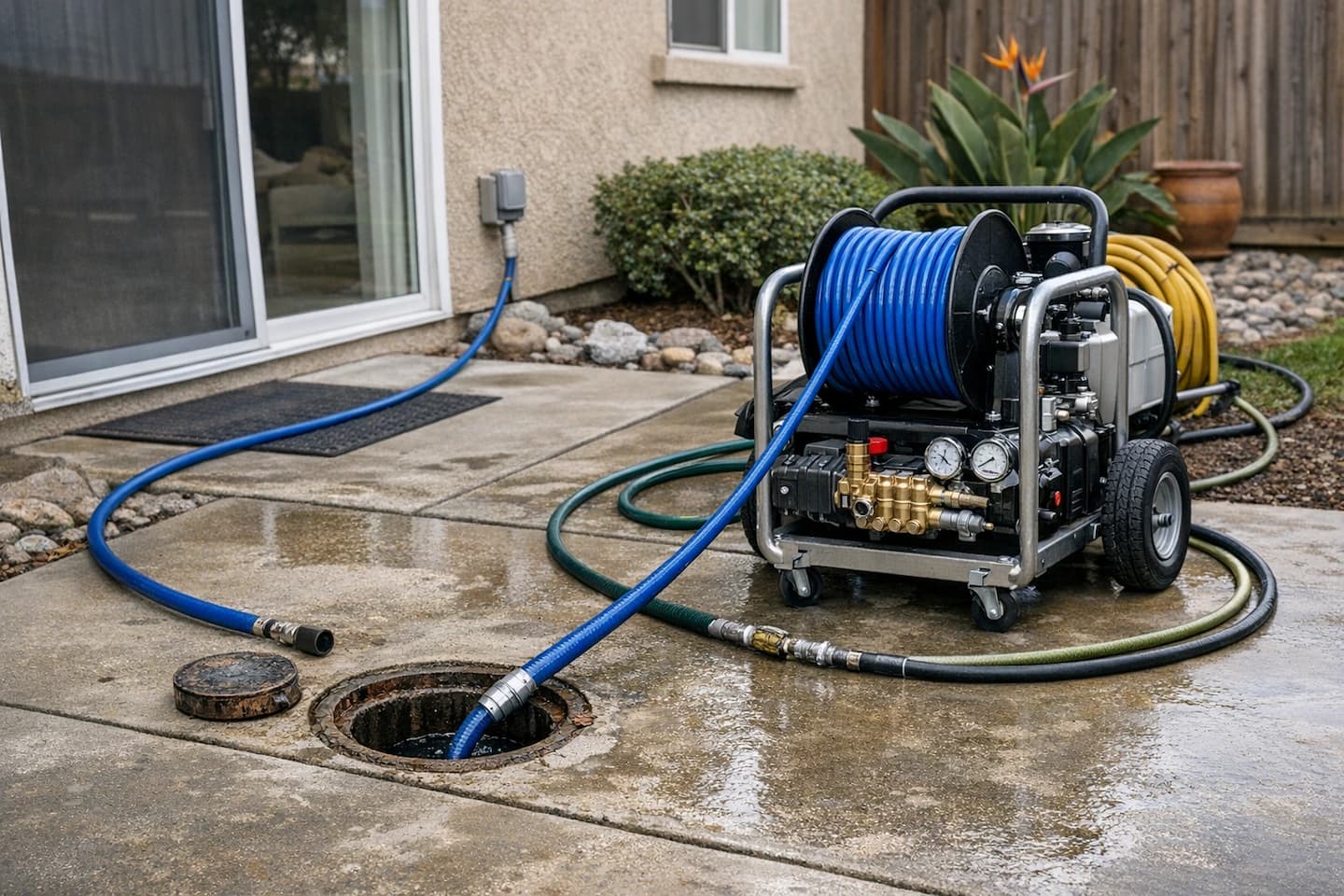
Dealing with recurring clogs, slow drains, gurgling, or a main sewer line backup? Hydro jetting uses high-pressure water to clean the entire inside of the pipe—breaking up grease, sludge, scale, and roots so your line runs like it should. We evaluate the line first, tune pressure to your pipe material, then verify performance after cleaning.
- Full-pipe cleaning (not just a “hole”) — longer-lasting results
- Pressure set for your system — safe for the right pipes
- Clean, organized service — clear scope before we start
Don’t just “open” the drain — clean the pipe walls for real.
If a clog keeps coming back, the issue usually isn’t a single blockage—it’s buildup along the pipe walls: grease, soap scum, sludge, mineral scale, or even early root intrusion. Hydro jetting is a professional drain and sewer cleaning method that uses high-pressure water jetting to remove that buildup and restore the pipe’s working diameter. That means faster drains, fewer repeats, and a cleaner line without harsh chemicals.
- Removes grease, sludge, and scale—not just the center “plug.”
- Great for recurring clogs, slow drains, and foul odors from buildup.
- Ideal for preventative maintenance on busy kitchen and main lines.
Signs you may need hydro jetting (not just a quick snaking)
A basic drain snake can open a path through a clog, but it often leaves greasy residue, sludge, or scale behind. If the problem returns—or you’re dealing with multiple slow drains—hydro jetting is usually the better solution because it cleans the line more thoroughly.
Common symptoms
- Recurring clogs in the same sink, tub, or toilet
- Slow drains that gradually worsen over weeks/months
- Gurgling sounds or air bubbles when water drains
- Sewer smell or “stale” drain odor from buildup
- Multiple fixtures backing up (often a main line issue)
- Water backing up in a tub/shower when another fixture runs
What you can do right now (safe steps)
- Stop running water in the area to prevent overflow
- Turn off appliances feeding the drain (dishwasher / washer)
- Check your cleanout (if you have one) for signs of backup
- Use towels/bucket for minor overflow and keep walkways dry
- Avoid harsh chemical drain cleaners (can damage seals/pipes)
- If sewage is present, keep kids/pets away and call for service
Why Vista homeowners choose Smart Plumbing USA for hydro jetting
Hydro jetting is powerful—but it needs to be done correctly. Our approach is built around line evaluation, pressure control, and clean verification, so you get lasting results without unnecessary risk to your plumbing.
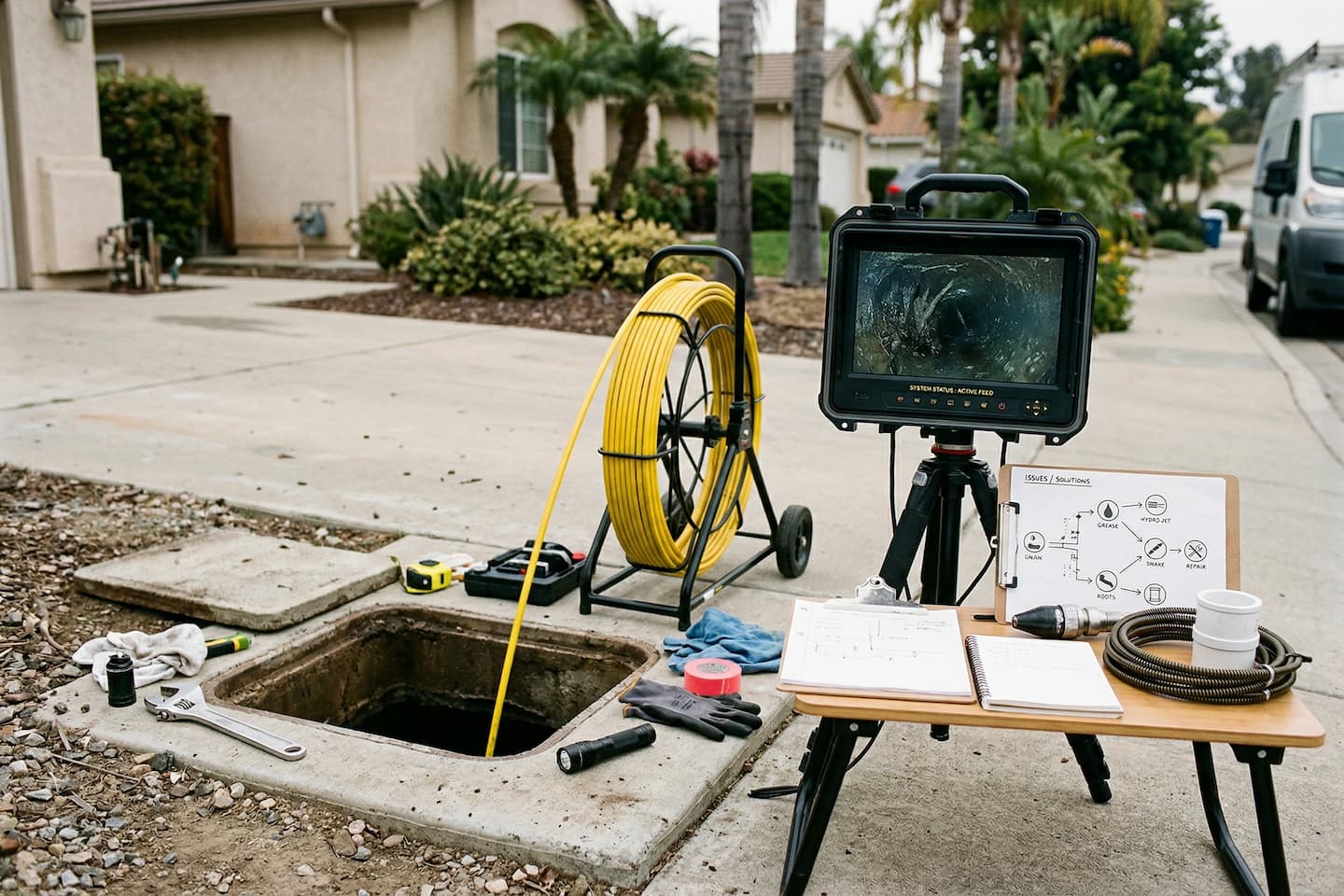
Camera-first decision making
We don’t blindly “blast” a line. We identify the real cause—grease, roots, scale, a belly, or a damaged section— and recommend the right solution (jetting, targeted repair, or ongoing maintenance).
Pressure tuned to your pipe
Pipe material matters (PVC/ABS, cast iron, clay, older lines). We choose the right nozzle and operating pressure based on what we find so cleaning is effective and appropriate.
Clean work + clear scope
You’ll get a straightforward plan before work starts, tidy service at the cleanout/fixture area, and practical tips to reduce future clogs—especially for kitchens and main sewer lines.
Our hydro jetting workflow (thorough, controlled, verified)
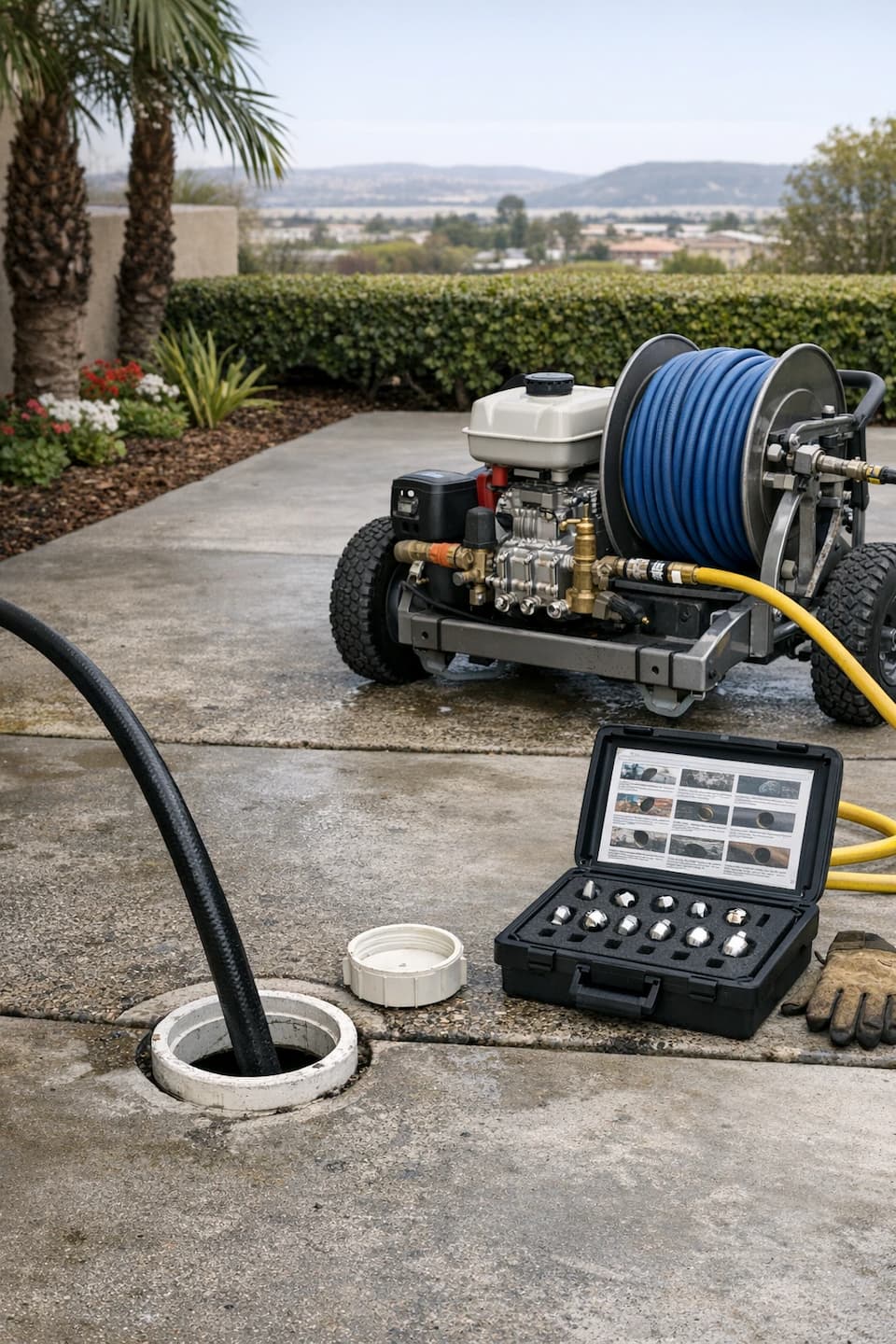
The goal is simple: remove the buildup that keeps causing slow drains and backups—without guessing. We focus on correct access, correct pressure, and a clean result you can feel in the fixtures.
- 1) Symptom review + line evaluation We identify whether the issue is fixture-level, branch line, or a main sewer line restriction. When appropriate, we recommend a camera inspection to confirm conditions.
- 2) Access & protection We use the best access point (cleanout when available) and protect the work area. Proper access helps jetting clean the line effectively and safely.
- 3) Hydro jetting (right nozzle + pressure) We remove grease, sludge, scale, and minor root intrusion using controlled high-pressure water and the nozzle style designed for the target material.
- 4) Flush + performance check We run water through the system to confirm improved flow and ensure loose debris is carried out—especially important after heavy grease or scale removal.
Kitchen drains & grease lines (the #1 cause of “repeat clogs”)
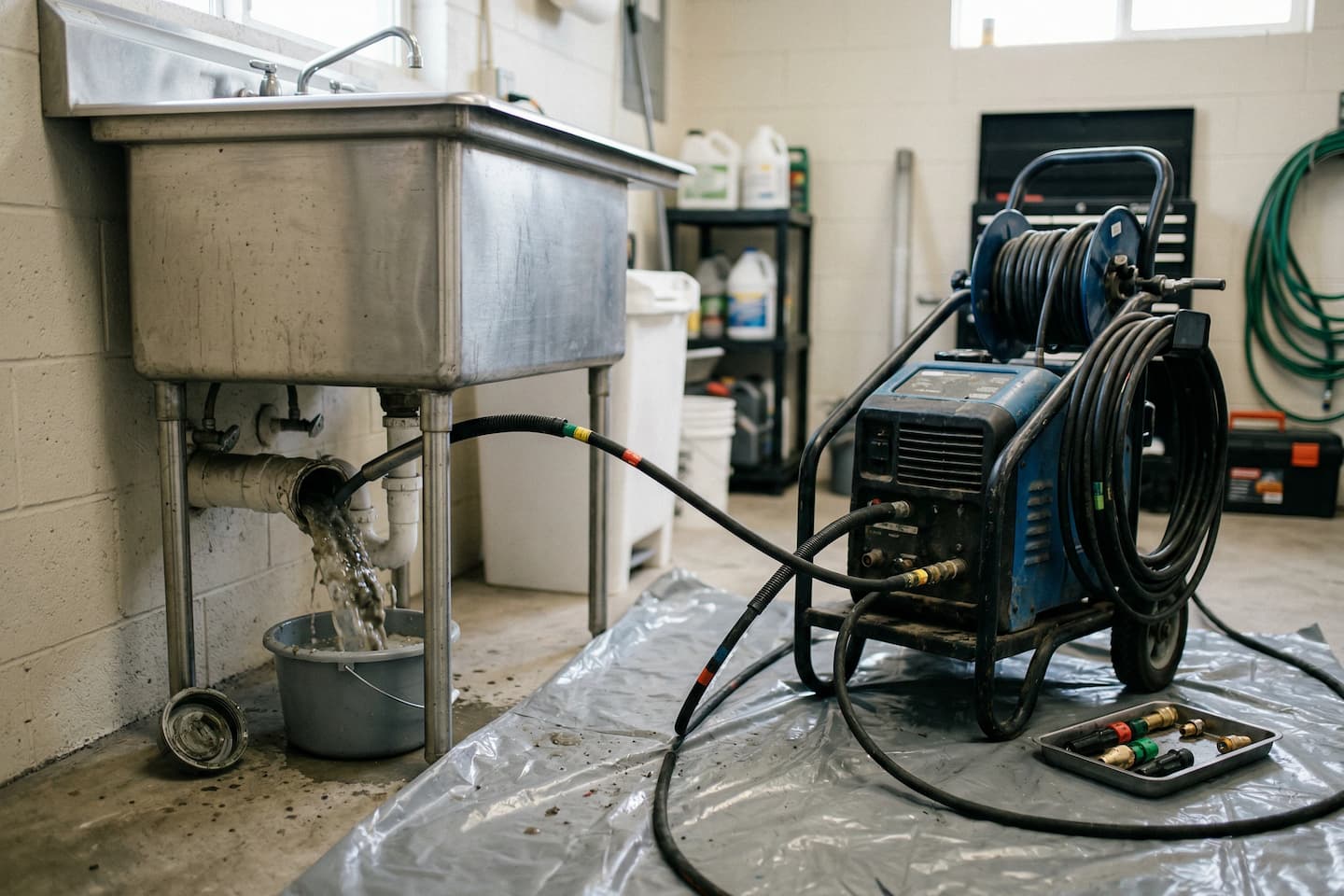
Kitchen lines clog differently than bathroom drains. Grease, oils, soap, and food residue can coat the pipe walls and slowly shrink the inside diameter. A snake may punch through, but the greasy lining stays behind—so the clog returns. Hydro jetting is ideal here because it scrubs the pipe walls and flushes debris out of the system.
What we commonly remove
- Grease and cooking oil buildup
- Soap scum and food residue
- Sludge and biofilm that causes odor
- Starchy buildup from disposers (rice, pasta, potato)
How to reduce future clogs
- Never pour grease down the drain (even “hot water flushes”)
- Use strainers and avoid fibrous scraps (celery, peels)
- Run cold water with the disposer and for a short rinse after
- Schedule preventative jetting for heavy-use kitchens
Main sewer line problems: roots, scale, and “multiple drains backing up”
When more than one drain is slow—or water backs up in a tub when a toilet flushes—your home may have a main sewer line restriction. In older or mixed-material systems, we often find a combination of grease, sludge, and mineral scale (especially on cast iron) that slowly tightens the line. If trees are nearby, root intrusion can also catch debris and trigger repeat backups.
Vista homeowner tip
If a plunger “helps for a day” but the problem returns quickly, that’s a classic sign of a line restriction (buildup or roots) rather than a one-time clog.
Typical causes we see
Grease accumulation, heavy sludge, wipes/foreign objects, mineral scale, sand/sediment, and root intrusion at joints. Hydro jetting can remove buildup and small root masses in many situations, but if the camera shows broken pipe, offsets, bellies, or severe collapse, we’ll recommend the right repair instead of forcing a cleaning.
Why fast action matters
Sewer backups can damage flooring and create sanitation issues quickly. Early intervention often means less overflow risk, less cleanup, and a clearer path to a long-term fix—whether that’s hydro jetting, targeted repair, or scheduled maintenance.
Hydro jetting vs. drain snaking: what’s the difference?
Both methods can help, but they solve different problems. Snaking is great for certain blockages—especially a single obstruction. Hydro jetting is best when the pipe is restricted by buildup (grease, sludge, scale) or you’re fighting repeat clogs. We’ll recommend the method that makes sense for your system and your goals.
- Drain snaking: opens a path through a clog, but can leave residue on pipe walls—common reason clogs return.
- Hydro jetting: cleans the inside of the pipe to remove grease, sludge, and scale—better for recurring issues and heavy buildup.
- When repair is needed: if we find broken pipe, major offsets, collapse, or severe bellies, cleaning alone won’t be a long-term fix.
Hydro Jetting FAQ
Quick answers about hydro jet drain cleaning and sewer jetting in Vista, CA. If you’re experiencing active backups, calling sooner can help reduce overflow risk.
Is hydro jetting safe for my plumbing?
Will hydro jetting remove roots?
Do I need a camera inspection before hydro jetting?
How long does hydro jetting take and how long does it last?
What should I avoid doing before service?
Request Hydro Jetting in Vista, CA
Tell us what’s happening (slow drains, recurring clogs, gurgling, odors, backups) and we’ll recommend the right next step. If you’re actively backing up, calling is the fastest option.
- Line evaluation first (often camera inspection for main lines)
- Right nozzle + pressure selection for your pipe material
- Deep cleaning: grease, sludge, scale, and minor roots
- Flow verification + prevention guidance after service
How it works
Quick Request Form
Share a few details and we’ll reply with next steps. For active backups or overflow risk, call now.
- Which fixture(s): kitchen sink, tub/shower, toilet, laundry, or multiple drains.
- How it behaves: slow drain, recurring clog, gurgling, odor, or backup/overflow.
- Any cleanout access (garage/yard) and whether wastewater shows there.