
Water Heater Repair in Vista, CA — Fast Diagnostics, Safe Fixes
No hot water, fluctuating temperature, rumbling noises, or a leak at the unit? We troubleshoot first, explain your best options clearly, and repair your water heater with safety checks and code-aware workmanship — so you can get reliable hot water back without guesswork.
- Same-day help when possible — restore hot water faster
- Repair vs. replace guidance — honest, practical options
- Safety-first service + tidy finish — respectful in-home work
Get reliable hot water again — without unnecessary replacements.
A water heater problem can feel urgent because it affects your entire routine. Smart Plumbing USA handles water heater repair in Vista with one simple rule: diagnose first, repair what’s actually failed. That means confirming whether the issue is electrical, gas/ignition, control-related, scaling/sediment, or a leak at valves and fittings — and then recommending the safest, most cost-effective fix. If the tank is truly end-of-life, we’ll tell you plainly and help you plan a smart replacement path.
- Clear troubleshooting (what failed, why it failed, and what it takes to fix it).
- Safety checks included (gas/electric, pressure relief, leak and venting basics).
- Verification after the repair (temperature stability + leak re-checks).
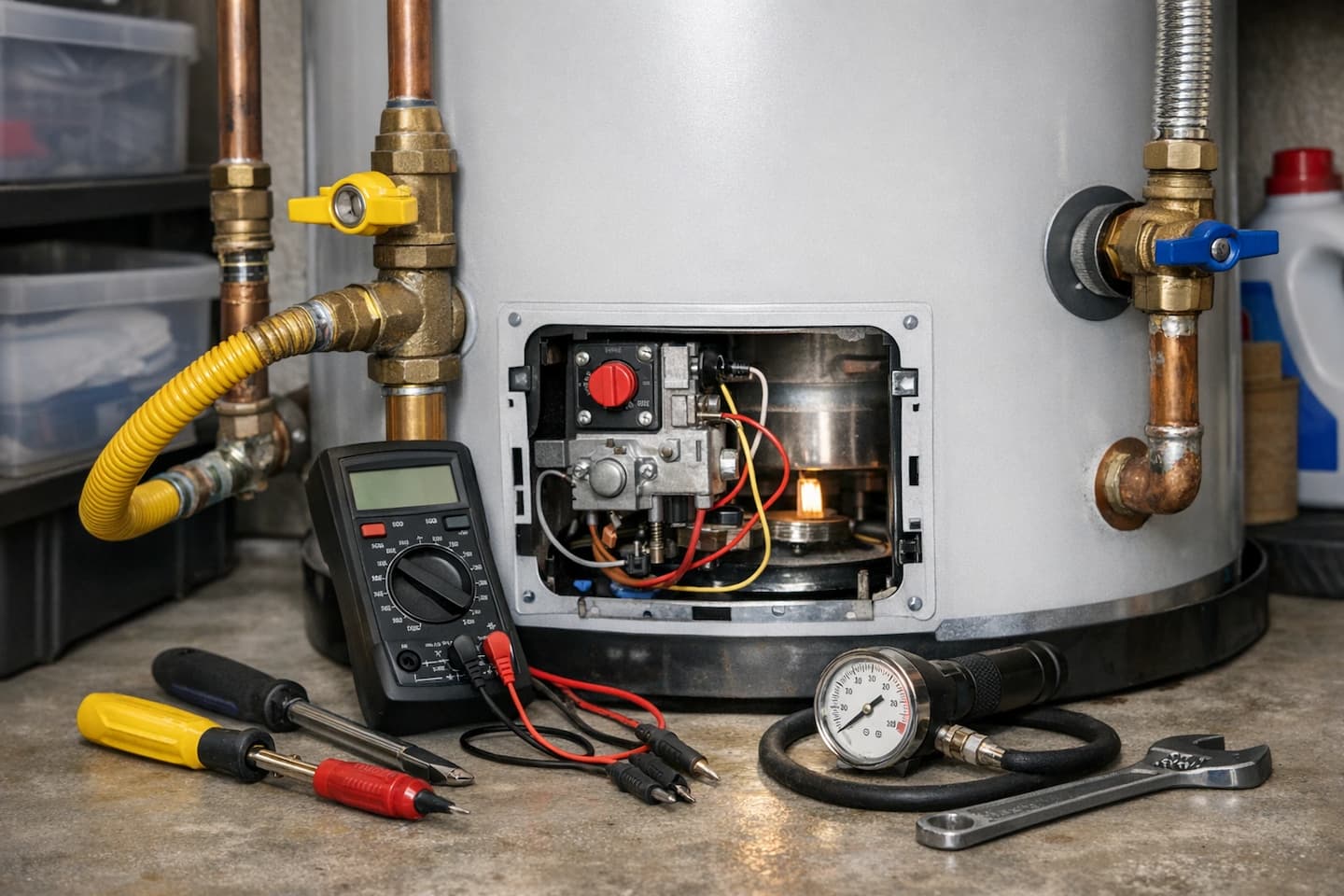
Signs your water heater needs repair (before it fails)
Some water heater issues are obvious — no hot water or water pooling around the unit. Others are early warning signs: temperature swings, popping sounds, or a relief valve dripping. Catching problems early often means a simpler repair and less risk of water damage.
Common water heater symptoms
- No hot water or only lukewarm water
- Hot water runs out quickly (recovery issues)
- Temperature fluctuates during showers
- Rumbling / popping noises (sediment or scaling)
- Rusty or discolored hot water, metallic odor
- Water at the base, wet pan, or dripping valves
- Breaker trips (electric) or pilot won’t stay lit (gas)
What you can do right now (safe steps)
- If leaking, shut off the cold-water supply to the unit (or main shutoff if needed)
- For electric units: avoid touching wet areas near wiring or panels
- For gas units: if you smell gas, leave the area and call for help
- Lower the thermostat if water is dangerously hot (scald risk)
- Take photos of the leak/area — helpful for documentation
- Avoid DIY adjustments to gas controls or T&P valves
Why Vista homeowners choose Smart Plumbing USA for water heater repair
Water heater service should feel organized and safe — not stressful. We focus on accurate diagnostics, practical repair options, and workmanship that reduces repeat failures. Whether you have a traditional tank unit or a tankless system, our process is built around safety checks, clean work, and verification before we leave.
Safety-first troubleshooting
Water heaters involve gas, electricity, pressure, and high temperatures. We start with safe shutoffs and checks, then address the root cause — not just symptoms.
Repair vs. replace clarity
We’ll tell you when a repair makes sense (controls, elements, ignition, valves) and when replacement is the safer long-term move (tank failure, severe corrosion, recurring major issues).
Clean workmanship & verification
We keep the jobsite tidy and verify results: stable temperature, proper operation, and leak re-checks. You get simple guidance on what to monitor next.
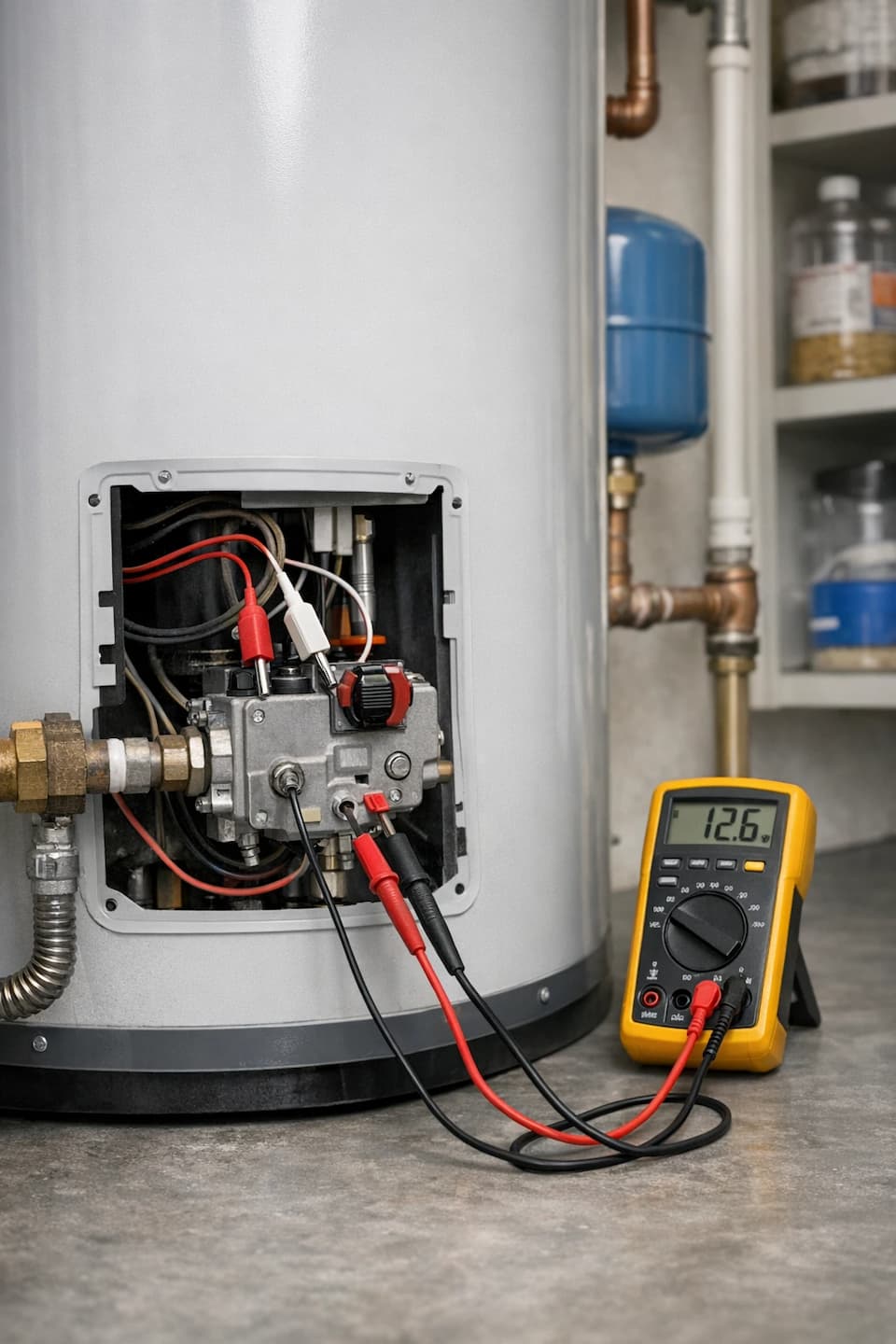
Our water heater repair workflow (safe, targeted, verified)
The goal is to restore safe, reliable hot water while preventing repeat issues. We identify whether the problem is supply-related, heating-related, control-related, or leak-related — then fix the real failure point.
- 1) Symptom review & safety checks We confirm what you’re experiencing (no hot water, temperature swings, noise, leaks) and check shutoffs, power, gas, venting basics, and visible hazards.
- 2) Diagnostics & source confirmation We test the components that control heating and recovery (thermostats, elements, gas controls, pilot/ignition, sensors) and confirm any leak source (valves, fittings, T&P discharge, tank).
- 3) Repair options (clear scope) You get practical options based on what failed — replace a specific part, correct a connection, address scaling/sediment, or plan replacement if the tank is compromised.
- 4) Verification & monitoring guidance We verify stable hot water delivery, re-check for leaks, and share simple “what to watch” guidance so you can stay confident after we leave.
Electric vs. gas water heater repairs (what usually fails)
Water heaters fail in predictable ways. Electric units often struggle with elements, thermostats, wiring, or breakers. Gas units commonly involve pilot/ignition, thermocouples/flame sensing, burners, or gas controls. We identify the failure point first, then repair only what’s necessary — and verify the system is operating safely.
Electric water heater checks
- Upper/lower thermostats and temperature calibration
- Heating elements (open circuits, scale buildup)
- High-limit reset and wiring connections
- Breaker/GFCI behavior and power delivery to the unit
Gas water heater checks
- Pilot light stability / ignition sequence
- Thermocouple or flame sensor performance
- Burner condition and combustion basics
- Gas control valve operation + venting basics
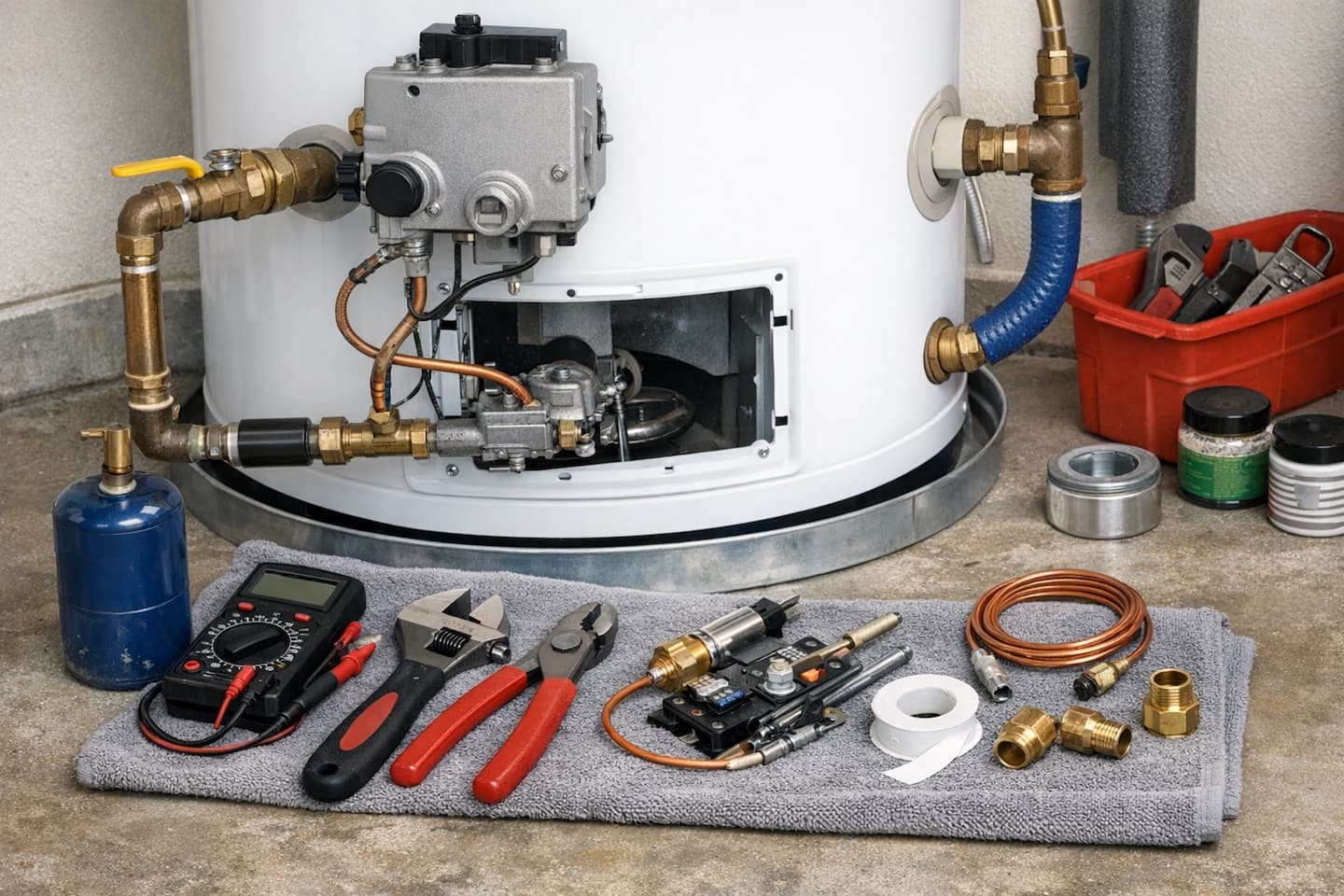
Temperature swings, noise, or “hot water runs out fast” issues
Not every water heater problem is a broken part. Many performance complaints in Vista come from sediment or scale buildup, thermostat calibration issues, partially failed elements, airflow/combustion problems on gas units, or tankless scaling that causes temperature instability. The key is to confirm what’s causing the symptom — then correct the root problem so it doesn’t come back.
Vista homeowner tip
If you hear popping or rumbling, it’s often sediment heating at the bottom of the tank. Addressing it early can improve efficiency and reduce wear on heating components.
Common causes we diagnose
Sediment/scale buildup, partially failed heating elements, thermostat drift, dip tube issues (short hot-water duration), mixing/tempering valve problems, recirculation-related heat loss, and tankless scale that triggers error codes or temperature swings. We test the system and recommend the most practical fix — from component repair to cleaning/descaling when appropriate.
Why it’s worth fixing promptly
Performance issues can turn into bigger failures: overheating, repeated shutoffs, damaged elements, stressed gas controls, and higher utility costs. Fixing the cause early often means lower repair cost and a more reliable hot water supply.
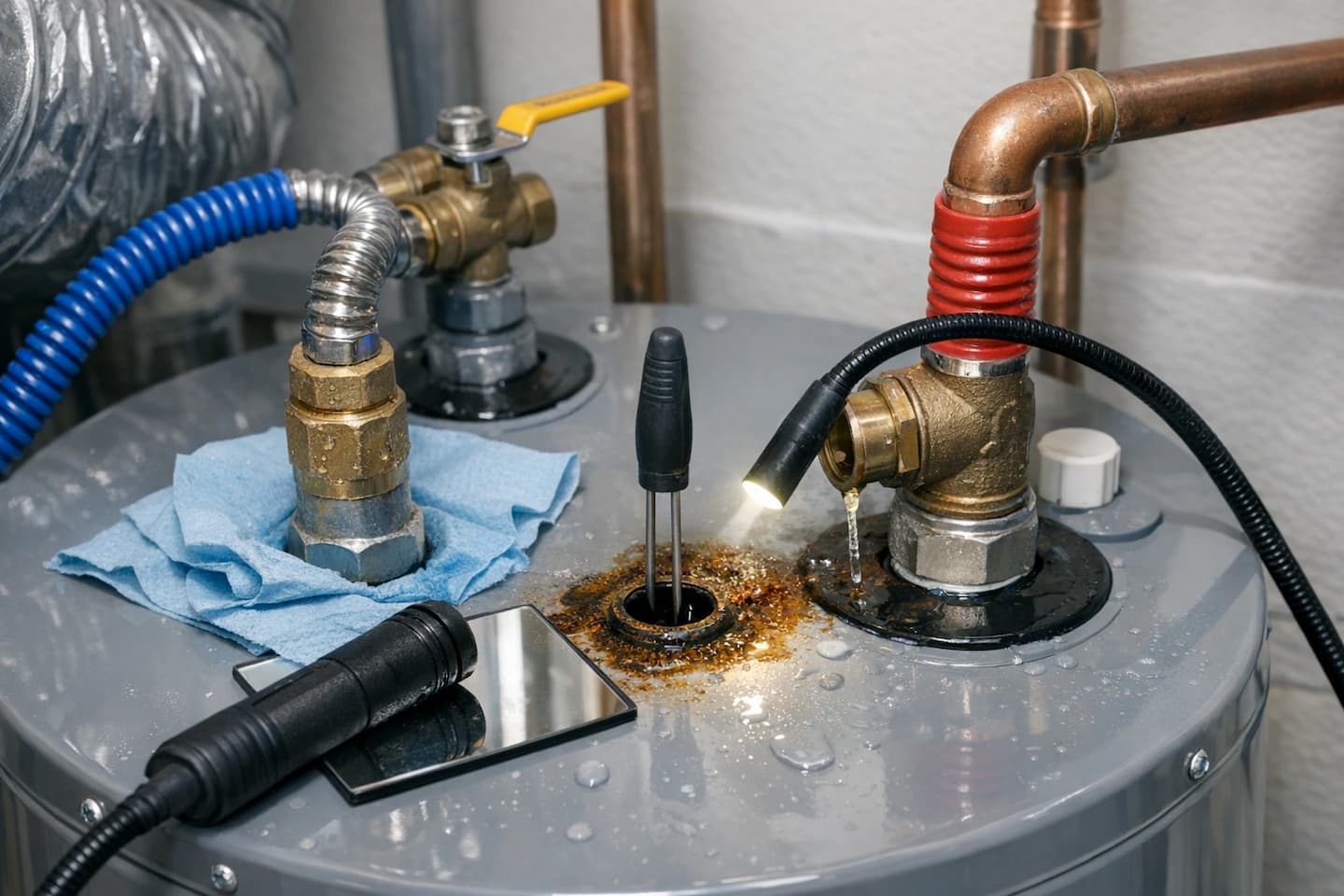
Water heater leaks: what’s normal, what’s urgent, and what’s end-of-life
Not every leak means the tank is done — but some leaks are a serious warning. We inspect common failure points (shutoff valves, flex connectors, unions, drain valves, T&P valve discharge, expansion tank issues) and determine whether a repair is appropriate, or if replacement planning is the safer long-term solution.
- Connection seepage: fittings and flex lines can loosen or corrode, creating slow leaks that collect in a pan or at the base.
- T&P discharge concerns: relief valve dripping can indicate overheating, excess pressure, or expansion tank issues — it should be evaluated quickly for safety.
- Tank-related leaks: rust, damp insulation, or active leaking from the tank body often indicates end-of-life and calls for replacement planning.
Water Heater Repair FAQ
A few quick answers before you schedule service. If you have active leaking, gas odor, or electrical concerns, calling sooner can help reduce risk and damage.
How long does a water heater repair usually take?
Should I repair or replace my water heater?
Why is my T&P relief valve dripping?
Do you repair tankless water heaters too?
Request Water Heater Repair in Vista, CA
Tell us what’s happening and we’ll recommend the right next step — diagnostics first, clear scope, and a safe repair that’s verified before we wrap up. If you have active leaking, no hot water, or safety concerns, calling is the fastest option.
- Accurate diagnostics (electric, gas/ignition, controls, scaling, leaks)
- Repair vs. replace options with clear scope and upfront communication
- Safety-first workmanship (gas/electric/pressure/temperature considerations)
- Verification after the fix (stable hot water + leak re-checks)
How it works
Quick Request Form
Share a few details and we’ll reply with next steps. For no hot water, active leaking, or safety concerns, call now.
- Water heater type (gas, electric, tankless) and approximate age, if known.
- What you’re seeing (leak location, noise, pilot issues, breaker trips, error code).
- When it happens (constant, only during use, after long idle, sudden failure).