
Water Pressure Regulator Repair and Replacement in Vista, CA
Smart Plumbing USA helps Vista homeowners diagnose high water pressure, low pressure, pressure fluctuations, water hammer, running toilets, dripping fixtures, leaking relief valves, and failing pressure reducing valves. We test the system first, explain what the pressure readings mean, and recommend adjustment, repair, or replacement based on the condition of the regulator and the home’s plumbing.
- Static and flowing pressure checked before recommendations
- Pressure regulator adjustment when the valve still responds correctly
- Replacement for leaking, failed, corroded, or unstable PRV assemblies
- Water heater expansion concerns reviewed when pressure is involved
Your Water Pressure Regulator Protects More Than Water Flow
A water pressure regulator, also called a pressure reducing valve or PRV, controls the pressure entering your home from the municipal supply. When it works correctly, it helps keep pressure stable enough for fixtures, valves, supply lines, water heaters, appliances, and piping to operate without unnecessary strain.
When the regulator fails, symptoms can show up throughout the house. Some homeowners notice forceful water, banging pipes, leaking fixtures, running toilets, or water heater relief valve discharge. Others experience weak pressure, pressure that changes from room to room, or flow that drops sharply when more than one fixture is open.
- Static pressure: the pressure reading when no fixtures are running. This helps show what the home is sitting at while the plumbing is at rest.
- Flowing pressure: pressure behavior while fixtures are being used. This helps separate a regulator issue from restriction, undersized piping, or clogged fixtures.
- Pressure creep: pressure that rises after setting the regulator may indicate an internal valve problem or a thermal expansion concern.
- Whole-house vs. fixture-specific: one weak faucet may be an aerator or cartridge issue, while the entire home points to the main supply side.
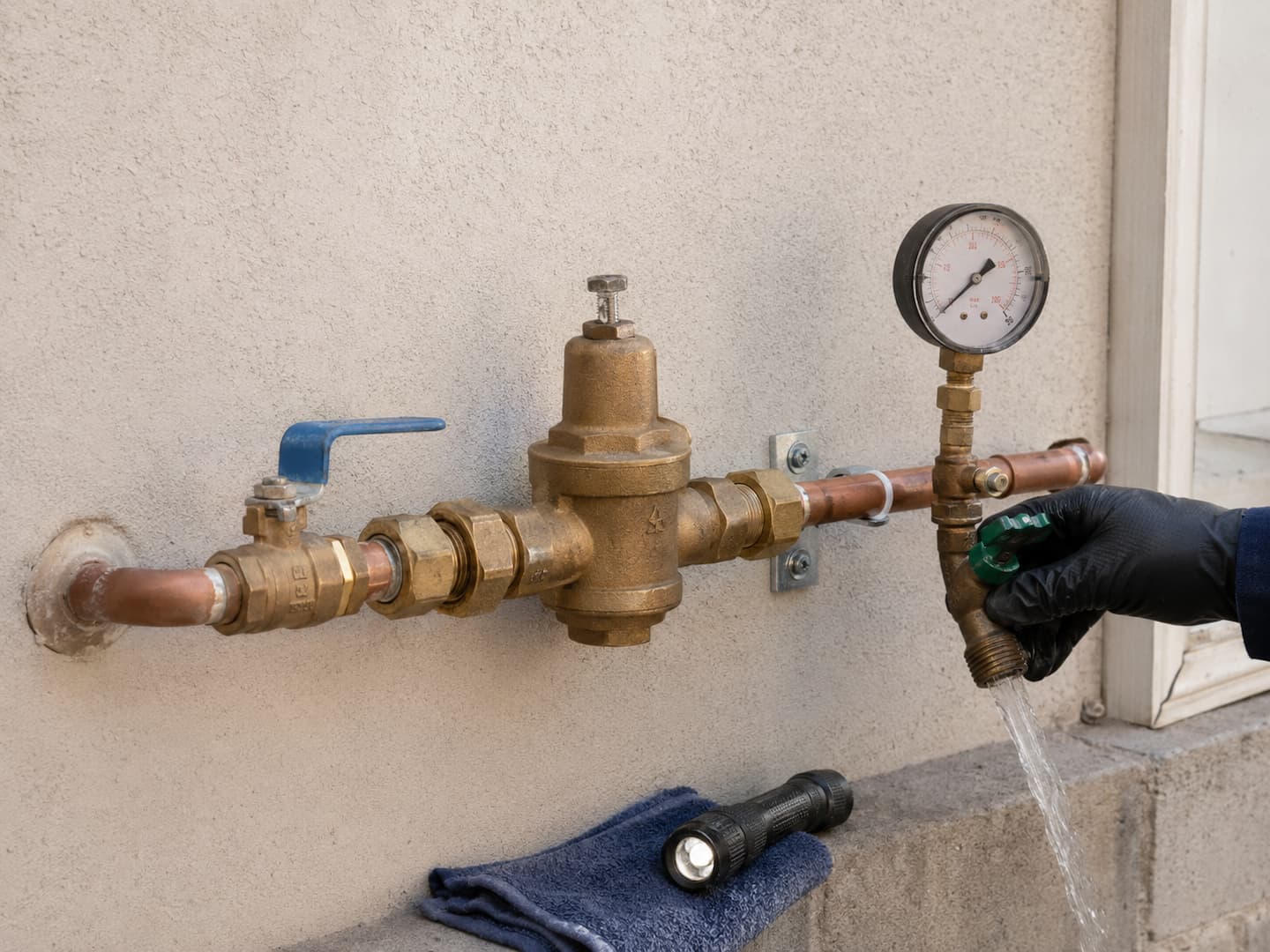
Signs Your Water Pressure Regulator May Need Service
Pressure regulator problems often feel like unrelated plumbing issues. The clues are in where the symptom appears, whether hot and cold water are affected, how pressure behaves after fixtures shut off, and whether the problem is isolated or whole-house.
Water pressure feels too high
Strong spray, splashing fixtures, noisy flow, and hard shutoff shock can point to excessive pressure entering the home.
High pressure concernLow pressure throughout the house
Weak flow at both hot and cold fixtures may involve a failed regulator, partially closed valve, main-line restriction, or supply issue.
Whole-house low flowPressure changes suddenly
Pressure that surges, drops, or changes after fixtures are used can indicate unstable regulation or another system-wide pressure condition.
Fluctuating pressurePipes bang or vibrate
Water hammer can happen when moving water stops suddenly. High pressure or a regulator issue can make the effect more noticeable.
Water hammer cluesToilets or faucets keep leaking
Repeated fixture leaks can be caused by worn parts, but excessive pressure can accelerate failure in fill valves, seals, cartridges, and supplies.
Fixture wear patternWater heater relief valve drips
Dripping at the temperature and pressure relief valve may involve thermal expansion, high pressure, water heater condition, or expansion control.
Water heater pressure cluePressure creeps back up
If pressure rises again after adjustment, the regulator may not be holding its setting or pressure may be building from thermal expansion.
PRV response issueNew appliances or hoses fail early
Washing machine hoses, icemaker lines, dishwasher connections, and appliance valves can be stressed by uncontrolled pressure.
Appliance protectionWe Test the System Before Recommending a Regulator Replacement
Replacing a pressure regulator without testing can miss the real issue. We look at pressure readings, valve condition, fixture behavior, thermal expansion, and whether the problem is isolated or whole-house.
Check static pressure
We use a pressure gauge at an appropriate connection point to see what the home’s water pressure is doing while the system is at rest.
Observe pressure while water flows
Pressure under use helps separate a regulator problem from restrictions such as closed valves, clogged aerators, old piping, or fixture-specific issues.
Inspect shutoffs and main-line valves
A partially closed main valve, aging shutoff, meter-side issue, or poor access can mimic pressure problems or complicate regulator service.
Evaluate the regulator body
Corrosion, seepage, damaged fittings, poor orientation, missing unions, or a regulator that no longer responds to adjustment may indicate replacement.
Check pressure creep
If pressure climbs after fixtures stop running, the regulator may not be holding or the system may be affected by thermal expansion.
Confirm the repair path
Based on readings and valve condition, we explain whether adjustment, regulator replacement, shutoff work, expansion control, or another service is needed.
Important: a pressure regulator is part of the main water supply system. If the home has no reliable shutoff, corroded fittings, or pressure-related water heater concerns, those issues should be addressed as part of the service plan.
Request Pressure Diagnosis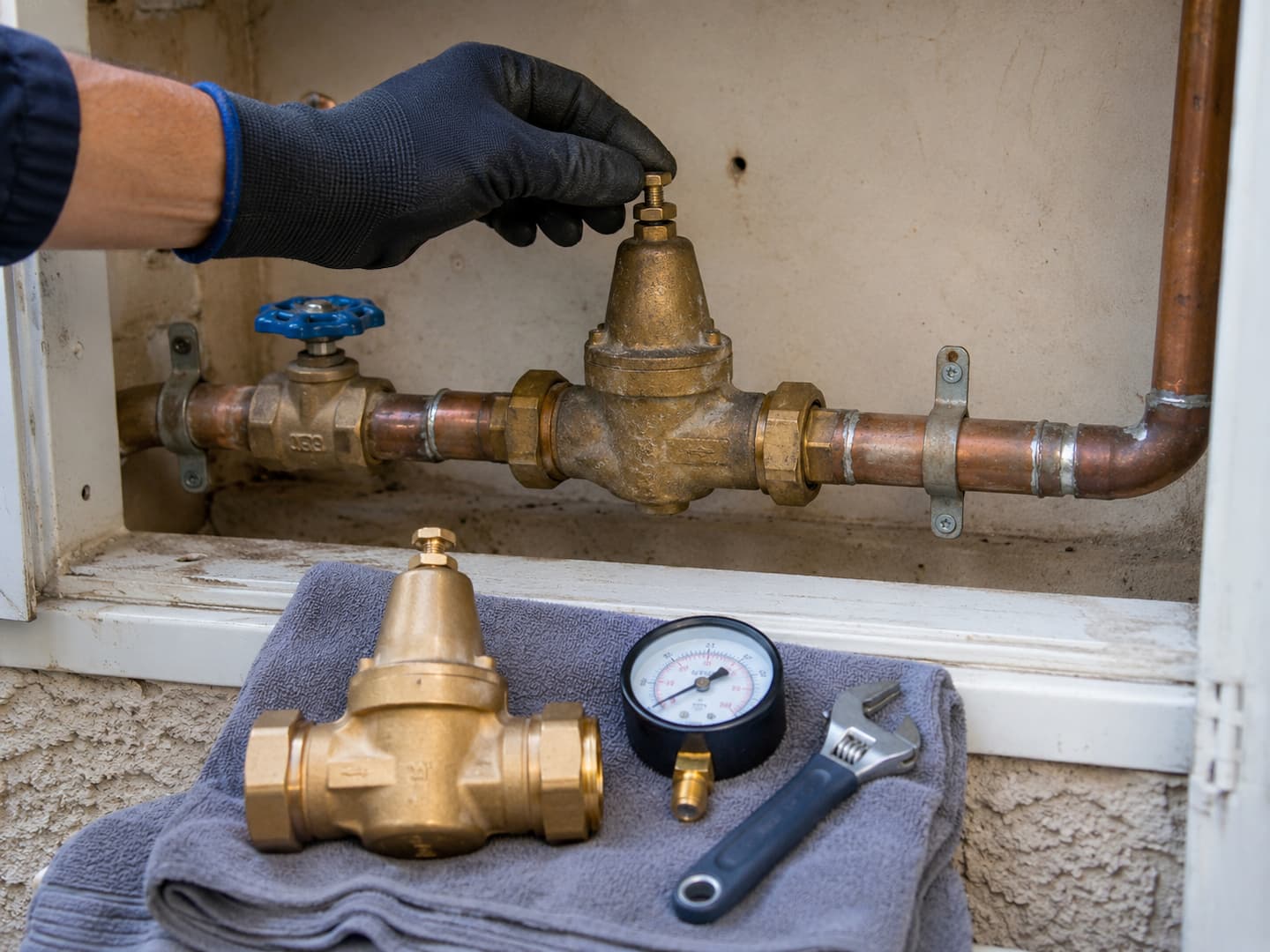
Can the Pressure Regulator Be Adjusted, or Does It Need Replacement?
Some pressure reducing valves only need careful adjustment. Others are too worn, corroded, or unstable to regulate safely. The difference is whether the valve responds correctly, holds its setting, and remains leak-free after testing.
Adjustment may make sense when:
- The regulator is accessible and in good physical condition
- The adjustment screw responds normally
- The pressure is slightly outside the desired range
- The pressure stabilizes after adjustment
- There is no visible leakage or heavy corrosion
- Thermal expansion is not causing pressure creep
Replacement is usually better when:
- Pressure remains too high after adjustment
- Pressure drops too low or fluctuates unpredictably
- The regulator leaks, seeps, or shows corrosion
- The valve chatters, vibrates, or causes noisy flow
- The regulator no longer holds its set pressure
- Nearby shutoffs or fittings also need correction
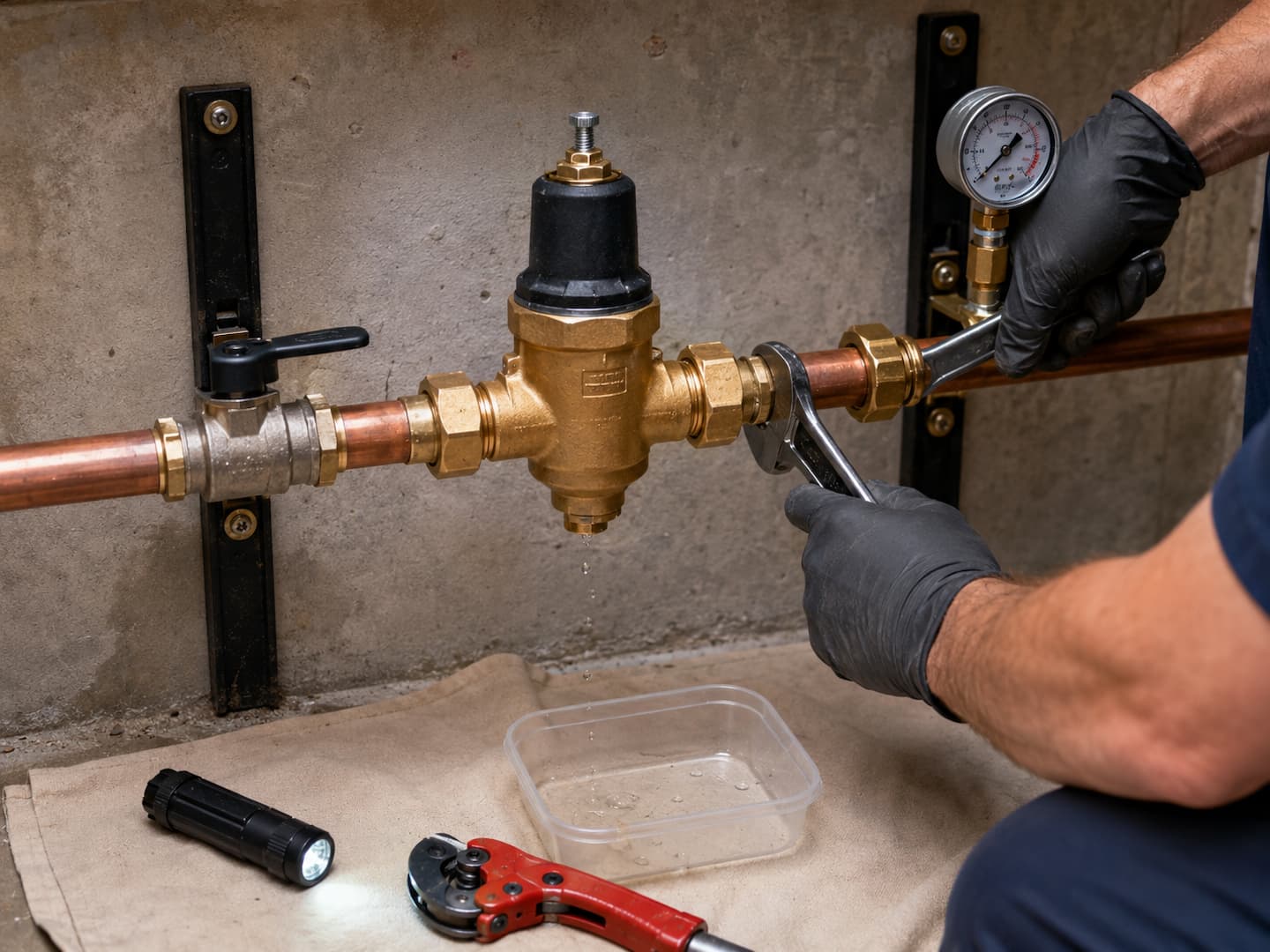
Replacing a Water Pressure Regulator the Right Way
A pressure regulator replacement should be planned around pipe size, connection type, valve orientation, shutoff access, pipe material, and testing after installation. The new regulator must be installed securely and adjusted to an appropriate working pressure for the home.
We test pressure and review symptoms so the replacement is solving the actual issue rather than masking another plumbing problem.
Main shutoff condition, working space, pipe access, and nearby valves matter before cutting into the supply line.
Pipe size, connection style, pressure range, serviceability, and installation orientation are considered before installation.
The regulator is installed with attention to flow direction, secure connections, pipe alignment, and future service access.
After installation, we check for leaks, set the pressure, test fixture performance, and monitor whether the setting holds.
Low or High Pressure Is Not Always a Bad Regulator
A pressure regulator is important, but it is only one part of the system. Before replacing it, we look for other causes that can create similar symptoms.
Partially Closed Main or Fixture Valves
A valve that was not fully reopened after prior work can reduce flow and make the entire home feel under-pressurized.
View pipe and valve serviceClogged Aerators or Fixture Cartridges
If only one faucet, shower, or fixture is weak, the problem may be at the fixture rather than the main pressure regulator.
Request fixture pressure checkLeaks or Hidden Water Loss
A hidden leak can reduce available pressure and create unexplained meter movement, stains, moisture, or a higher water bill.
View leak detectionAging or Restricted Piping
Corroded, scaled, or undersized piping can limit flow even when pressure at the regulator is set correctly.
View repiping serviceWater Softener or Filtration Restrictions
A clogged filter, bypass setting, or equipment restriction can affect flow after the water enters the home.
View water softener serviceMunicipal Supply or Neighborhood Changes
Utility-side pressure can vary. A regulator should manage normal supply pressure, but unusual changes may require testing and monitoring.
Call for pressure testing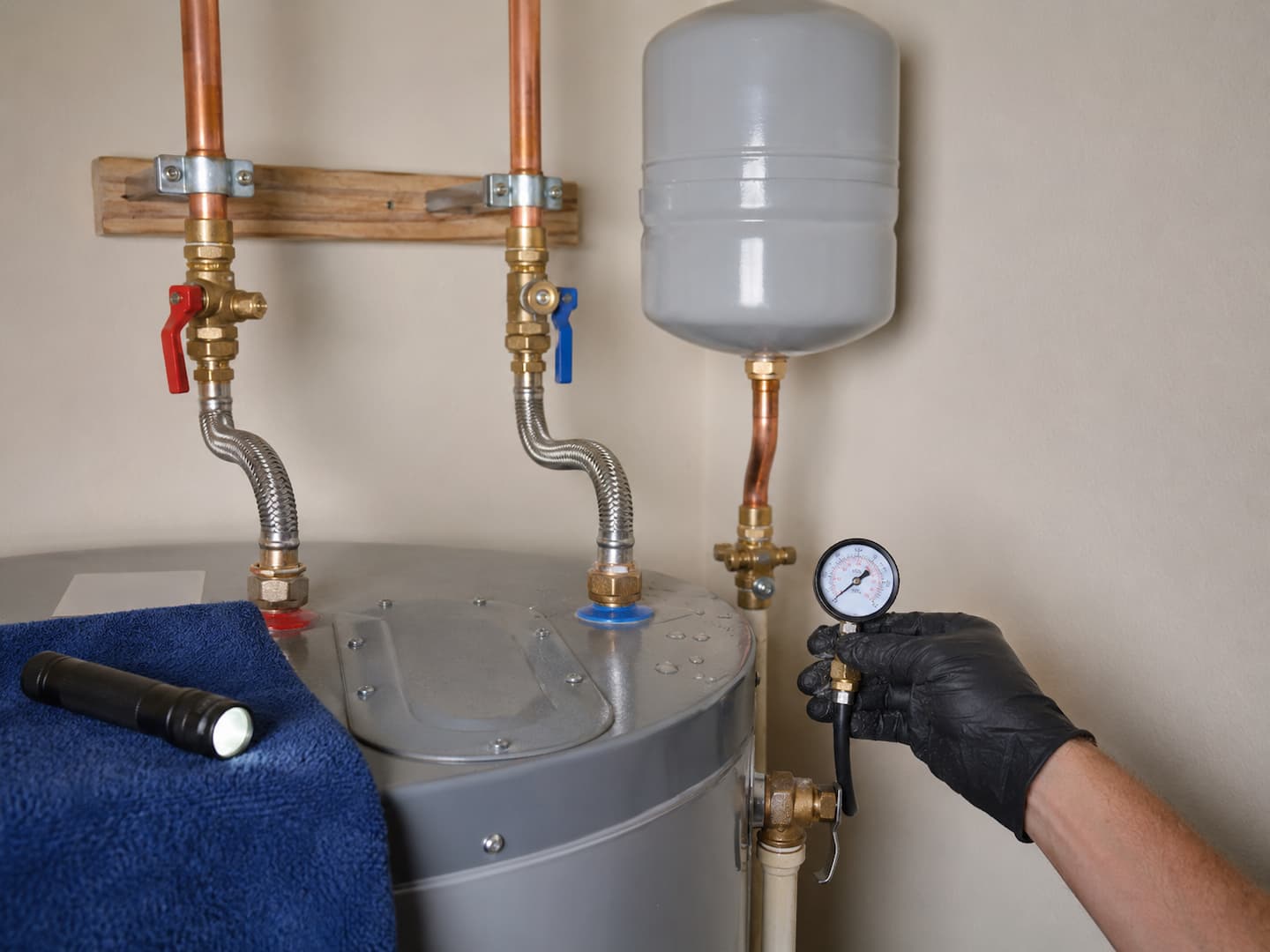
Why Pressure Regulator Service May Involve the Water Heater
When a pressure reducing valve or check valve keeps water from moving back toward the supply, the home can behave like a closed plumbing system. As water heats, pressure can rise. That is why pressure issues sometimes appear around the water heater, especially at the relief valve or expansion tank.
Pressure clues near the water heater
- T&P relief valve dripping or discharging
- Pressure rising after hot water recovery
- Expansion tank missing, undersized, or waterlogged
- Hot water surges or pressure changes after heating cycles
- Leaking fittings or supply connections near the heater
What we may check
- Static pressure before and after hot water recovery
- Pressure regulator setting and stability
- Expansion tank condition where present
- Water heater connection leaks or relief valve signs
- Whether the issue is pressure, heater condition, or both
Careful Pressure Work for Vista Homes
Pressure regulator service affects the whole plumbing system. The work should not be rushed or treated as a simple parts swap without testing, shutoff planning, and final verification.
Vista-based California C-36 plumbing contractor #1075429, providing residential plumbing service in Vista and nearby North County communities.
View license information →Pressure Readings Before Recommendations
We check what the pressure is doing before treating the regulator as the cause. This helps avoid unnecessary replacement.
Adjustment When Appropriate
If the regulator is in good condition and responds correctly, adjustment may be a reasonable first step.
Replacement When the Valve Fails
If the regulator leaks, creeps, fluctuates, will not adjust, or shows wear, replacement is usually the more reliable repair.
Main Shutoff and Access Awareness
Pressure regulator work often depends on safe shutoff access, pipe condition, unions, fittings, and room to service the valve.
Water Heater Expansion Consideration
We consider pressure behavior around the water heater when relief valve discharge, pressure creep, or expansion symptoms are present.
Final Pressure and Leak Testing
After adjustment or replacement, we recheck pressure, inspect connections, and confirm the home’s fixtures behave normally.
Water Pressure Regulator Repair and Replacement FAQ
These answers cover common residential pressure regulator questions. The correct repair depends on pressure readings, regulator condition, fixture behavior, and the rest of the plumbing system.
What does a water pressure regulator do?
How do I know if my pressure reducing valve is bad?
Can a water pressure regulator be repaired?
What is pressure creep?
Why is my water pressure low if I have a pressure regulator?
Is high water pressure dangerous for plumbing?
Does replacing a pressure regulator affect my water heater?
Can I adjust the regulator myself?
Is same-day pressure regulator service available in Vista?
Not sure whether the regulator is the real problem? Tell us whether the issue is high pressure, low pressure, pressure fluctuation, water hammer, leaking fixtures, or water heater relief valve discharge.
Call (858) 727-5522When Pressure Issues Point to a Bigger Plumbing Condition
Pressure symptoms sometimes connect to main-line valves, leaks, water heaters, pipe condition, or whole-house piping. These related services help address the broader system when needed.
Request Water Pressure Regulator Repair or Replacement in Vista, CA
Share what you are noticing: high pressure, low pressure, pressure changes, banging pipes, fixture leaks, running toilets, water heater relief valve discharge, or a regulator that has already been adjusted but will not hold.
- Static and flowing pressure testing
- Pressure reducing valve adjustment when appropriate
- PRV replacement for failed, leaking, or unstable regulators
- Main shutoff, service valve, and visible fitting review
- Water heater expansion and pressure creep evaluation
Quick Service Request
Complete the form and include any pressure readings or symptoms you have noticed.
- Whether the issue is high pressure, low pressure, or pressure that changes
- Whether hot and cold water are both affected
- Whether the whole home is affected or only certain fixtures
- Any gauge readings you have taken and where you measured them
- Whether pipes bang, toilets run, faucets drip, or the water heater relief valve leaks
- Whether the regulator is leaking, corroded, recently adjusted, or hard to access