
Toilet Repair and Installation in Vista, CA
From a toilet that runs between flushes to a leak at the base, weak flushing, repeated clogs, or a fixture that needs replacement, Smart Plumbing USA provides careful toilet diagnosis, repair, removal, and installation for Vista homeowners.
- Repair-first recommendations when the fixture remains serviceable
- Tank, bowl, base, flange, supply, and shutoff evaluated
- New toilets leveled, sealed, connected, and flush-tested
- Same-day appointments when current scheduling allows
A Toilet Problem Can Start in the Tank, at the Base, or Inside the Drain
Toilets look simple from the outside, but several separate systems have to work together. The tank must refill to the correct level, the flush mechanism must release and reseal, the bowl must move waste through its internal trap, and the connection at the floor must remain stable and watertight.
That is why replacing one visible part does not solve every problem. A worn flapper can cause continuous water loss, but it will not correct a damaged flange. A new wax ring can reseal the base, but it will not solve a restriction farther down the drain. We inspect the symptom in context before recommending a repair.
- Inside the tank: fill valve, float, flapper, flush valve, overflow tube, handle, chain, seals, and tank hardware.
- At the fixture: bowl and tank condition, tank-to-bowl connection, mounting bolts, seat, supply line, and shutoff valve.
- At the floor: wax or approved sealing system, toilet flange, closet bolts, floor stability, and correct fixture alignment.
- Beyond the toilet: internal trap restriction, branch drain clog, venting concern, main drain problem, or sewer line condition.
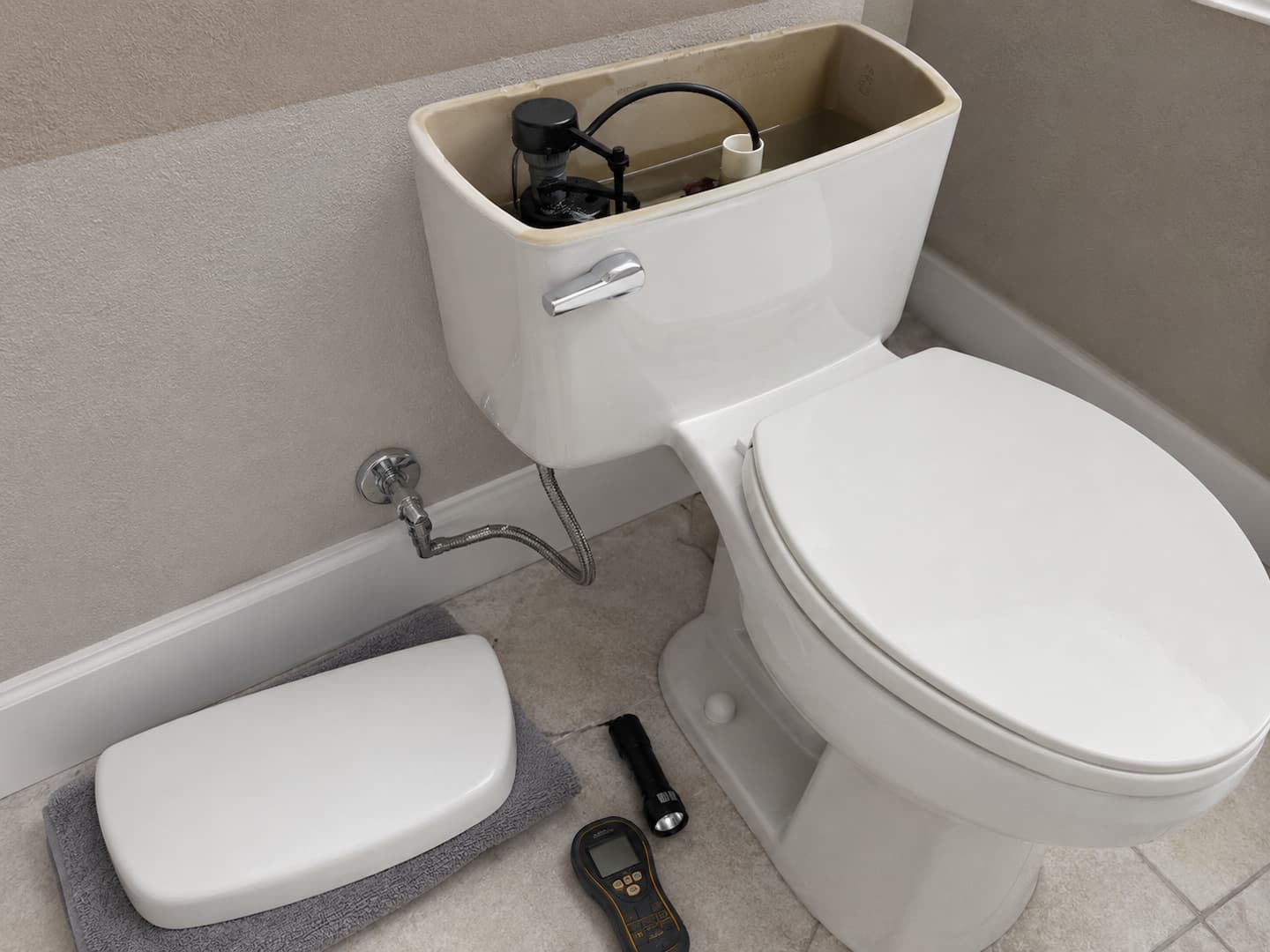
Toilet Problems We Diagnose and Repair
The same toilet can show several symptoms at once. Identifying when the problem occurs—during filling, flushing, draining, or while the fixture is not being used—helps narrow the cause.
Toilet keeps running or refills by itself
Water may be escaping through a worn flapper or flush valve seal, while an incorrect float setting, leaking fill valve, chain problem, or overflow condition can keep the tank cycling.
Tank and refill diagnosisTank fills slowly or does not refill
A restricted fill valve, partially closed shutoff, kinked supply line, debris, aging valve, or water-pressure issue can prevent the tank from filling normally.
Fill valve and supply checkWeak or incomplete flushing
Low tank water, an incorrect chain adjustment, restricted rim passages, a failing flush mechanism, bowl buildup, or a developing drain restriction can reduce flushing performance.
Flush performance inspectionWater appears around the toilet base
Base moisture may involve a failed seal, loose fixture, flange damage, cracked porcelain, tank condensation, or water traveling from a supply connection above.
Source confirmation before resetLeak between the tank and bowl
Tank bolts, washers, the tank-to-bowl gasket, flush valve connection, or cracked porcelain may allow water to appear only during or after flushing.
Tank connection repairToilet rocks, shifts, or feels loose
A loose toilet can damage its seal over time. The cause may involve mounting hardware, an uneven floor, incorrect shimming, flange height, flange damage, or weakened flooring.
Base and flange evaluationToilet clogs repeatedly
Frequent clogs may involve the toilet’s internal trap, excessive paper, a lodged object, weak flushing performance, a branch drain restriction, or a larger drainage problem.
Fixture or drain-line diagnosisGurgling, bubbling, or changing bowl water
A toilet that reacts when a shower, sink, or washing machine drains may point beyond the fixture to a drain, venting, main-line, or sewer concern.
Check the wider drainage systemRepairing the Component That Is Actually Causing the Problem
Many toilet problems can be corrected without replacing the complete fixture. The appropriate repair depends on the toilet design, part availability, porcelain condition, installation quality, and whether the underlying drain and flange remain serviceable.
Flapper and Flush Valve Repair
A worn or incorrectly matched flapper may allow water to leak from the tank into the bowl. Flush valve seals and overflow assemblies can also create recurring running or refill cycles.
Fill Valve and Float Adjustment
Fill valves control tank refill and shutoff. Repair may involve adjustment, debris removal, or valve replacement when the tank fills slowly, noisily, continuously, or to the wrong level.
Handle, Lever, and Chain Repair
Loose handles, broken trip levers, tangled chains, and incorrect chain length can prevent a complete flush or keep the flapper from closing correctly.
Tank-to-Bowl Leak Repair
Water between the tank and bowl may require replacement of the tank gasket, bolts, washers, seals, or related hardware after the porcelain is checked for cracking.
Wax Ring, Flange, and Base Repair
A leaking or rocking toilet may need removal, flange inspection, repair of damaged mounting points, a new sealing system, correct shimming, and a secure reset.
Shutoff Valve and Supply Line Repair
Corroded angle stops, leaking valve stems, old supply connectors, damaged seals, and restricted connections can affect refill performance or create water around the fixture.
A running toilet does not automatically need replacement. When the porcelain, flange, bowl passage, and overall fixture remain in good condition, replacing the failed internal component may be the most practical solution.
Request a Repair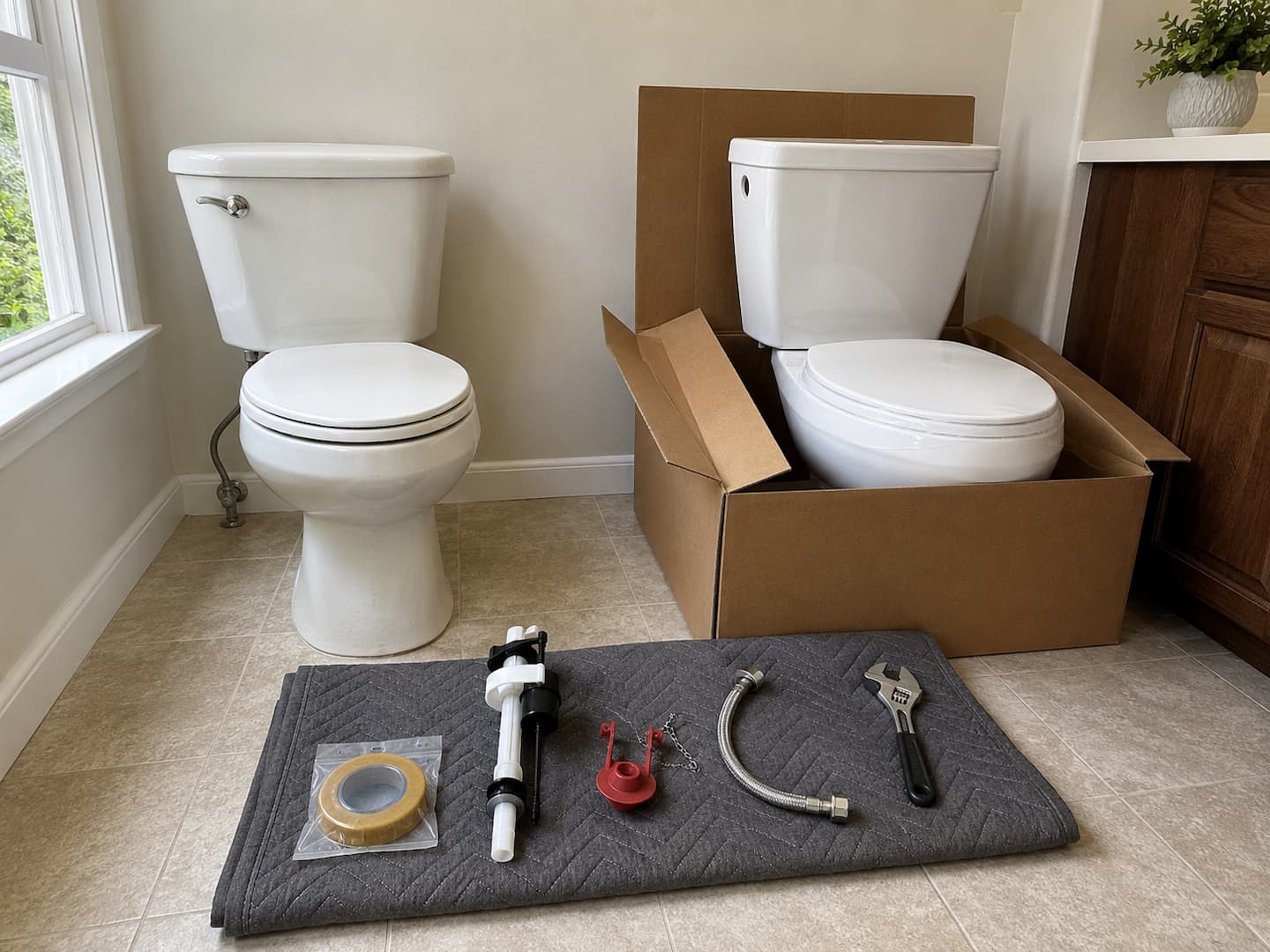
When Is It Better to Repair a Toilet, and When Should It Be Replaced?
The answer is not based on age alone. We consider the failed component, porcelain condition, reliability of available parts, flushing performance, stability at the floor, history of previous repairs, and what you want from the fixture.
Repair may be the practical choice when:
- The problem is isolated to a flapper, fill valve, handle, seal, gasket, or supply connection
- The tank and bowl are not cracked
- The toilet remains stable and properly supported
- Replacement parts are compatible and reasonably available
- Flushing performance was otherwise dependable
- The cost and scope of repair remain reasonable for the fixture
Replacement may make more sense when:
- The tank or bowl has a crack or damaged porcelain
- The fixture has required repeated repairs
- Chronic clogging continues despite a clear drain
- The toilet is uncomfortable, unstable, or poorly suited to the bathroom
- You want a different bowl shape, seat height, appearance, or flushing design
- A bathroom update already requires removing the existing fixture
A New Toilet Has to Fit the Bathroom and the Existing Plumbing
Toilet installation involves more than removing one fixture and setting another in its place. The replacement must match the available rough-in, clear nearby walls and doors, connect correctly to the water supply, sit securely on the finished floor, and seal properly to the flange.
We review the rough-in, bathroom clearance, supply location, bowl dimensions, fixture design, and any special installation requirements.
The water is shut off, the fixture is drained and disconnected, and the old toilet is removed with attention to surrounding flooring and finishes.
We check flange condition, mounting points, height, floor stability, and signs of previous leakage before covering the connection with a new fixture.
The toilet is aligned, sealed, stabilized, fastened without stressing the porcelain, and connected to a suitable shutoff and supply line.
We run multiple operating cycles, check the tank and bowl connections, inspect the base and supply, and confirm stable fixture operation.
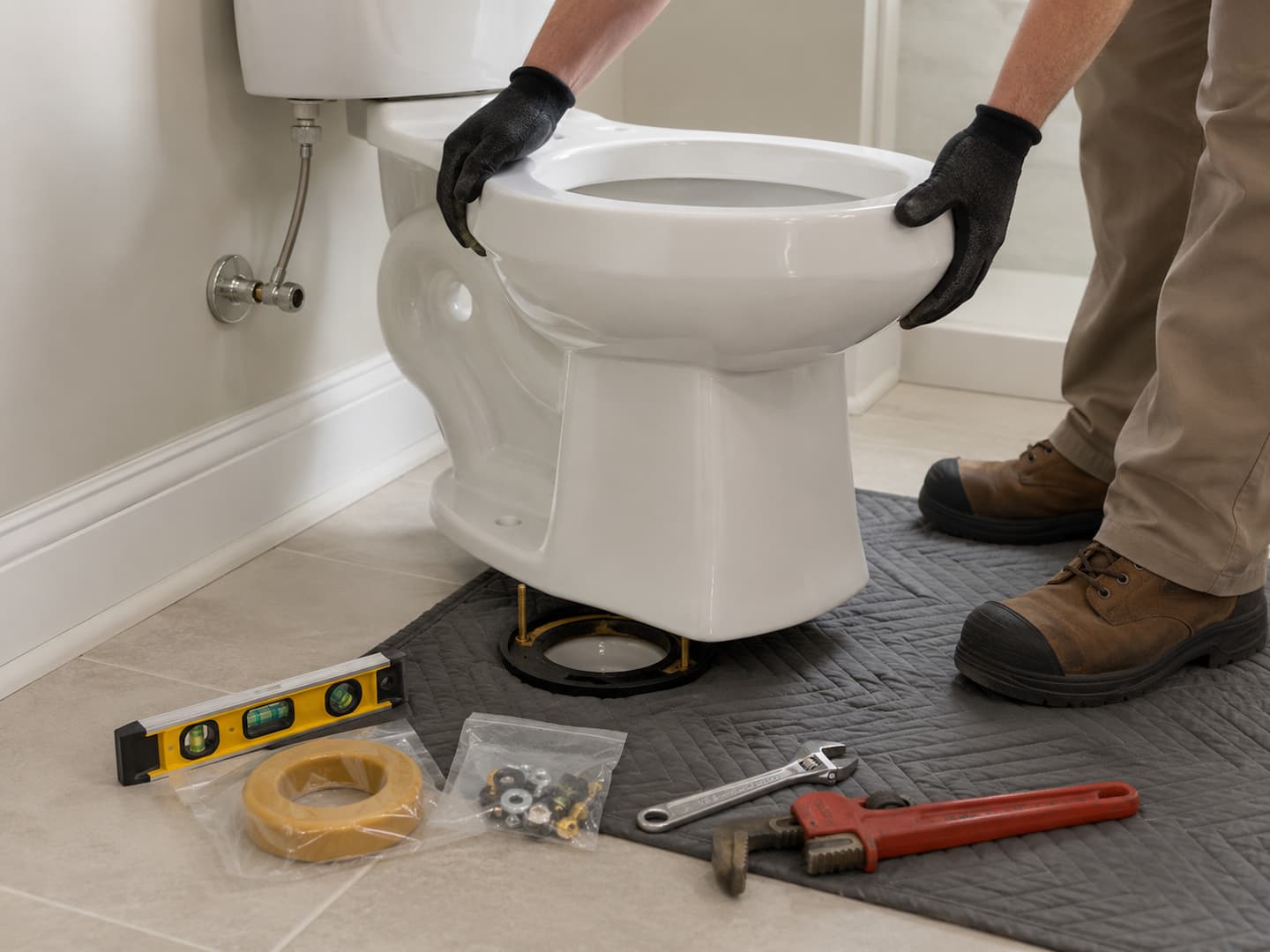
What to Consider Before Choosing a New Toilet
Appearance matters, but compatibility and everyday comfort matter just as much. Measuring first can prevent clearance problems, supply-line conflicts, an exposed floor footprint, or a fixture that does not align with the existing drain connection.
Rough-In Measurement
The distance from the finished wall to the center of the closet bolts affects which toilet will fit the existing drain location. Baseboard thickness and the actual finished wall should be considered.
Bowl Shape and Bathroom Clearance
Elongated and round-front bowls use space differently. Door swing, vanity clearance, shower access, and comfortable movement around the fixture should be checked.
Seat and Bowl Height
Standard and taller configurations feel different in daily use. Household comfort, mobility needs, children, and available bathroom dimensions may influence the choice.
One-Piece or Two-Piece Design
One-piece and two-piece toilets differ in weight, handling, seam design, appearance, part access, and installation requirements. The best choice depends on the bathroom and model.
Flushing Design and Water Use
Gravity, dual-flush, pressure-assisted, and other designs can differ in sound, maintenance, parts, and performance. Product suitability matters more than choosing by appearance alone.
Bidet and Electrical Requirements
Bidet seats and integrated smart fixtures may require compatible bowl dimensions, suitable water connections, additional clearance, and a properly located electrical receptacle.
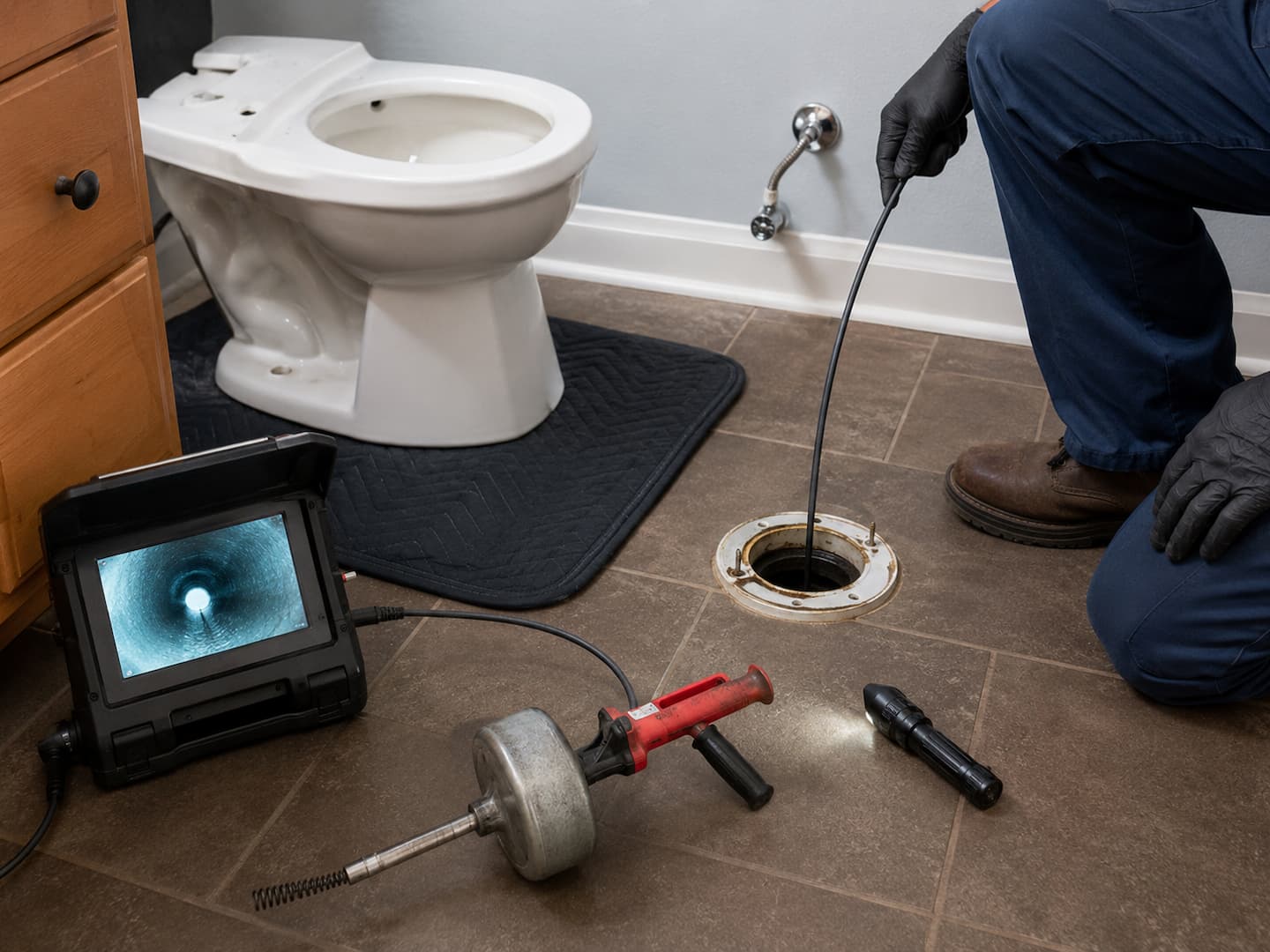
Is It a Toilet Clog or a Drain and Sewer Problem?
A toilet that will not drain is not always a problem with the toilet itself. The correct service depends on whether the restriction is inside the fixture trap, in the nearby branch line, or farther into the home’s main drainage system.
Signs the problem may be isolated to one toilet
- Only one toilet is affected
- Nearby sinks, tubs, and showers drain normally
- The problem began after excess paper or a possible object entered the bowl
- The bowl rises during flushing but other fixtures do not react
- Clogging is occasional rather than recurring throughout the home
Signs the problem may extend beyond the toilet
- Several toilets or drains are slow or backing up
- The shower or tub gurgles when the toilet is flushed
- The toilet bubbles when another fixture drains
- Sewer odors or wastewater appear inside the home
- The same problem returns shortly after temporary clearing
Careful Work Around an Essential Bathroom Fixture
Toilet work affects water supply, drainage, finished flooring, sanitation, and one of the most frequently used fixtures in the home. The service should address the technical problem without creating unnecessary disruption around it.
Vista-based California C-36 plumbing contractor #1075429, providing residential plumbing service in Vista and nearby North County communities.
View license information →Diagnosis Before Recommendation
We look beyond the most visible symptom and check the components, connections, seal, stability, and drainage behavior relevant to the problem.
Repair When Repair Is Reasonable
A serviceable fixture with an isolated failed component should not automatically be treated as a complete replacement project.
Flange and Floor Condition Checked
When a toilet is removed, the connection beneath it is evaluated before a new seal or fixture conceals the area again.
Care Around Bathroom Finishes
The work area is handled carefully around tile, flooring, walls, cabinetry, and nearby fixtures during removal, repair, and installation.
Clear Scope Before Work
The recommended repair or installation scope is explained before authorized work moves forward, including concerns found after fixture removal.
Testing Before Completion
Fill operation, shutoff, flushing, tank connections, supply connection, fixture stability, and base area are checked before the visit is complete.
Toilet Repair and Installation FAQ
These answers cover common residential toilet problems. The actual repair depends on what is found at the fixture and how the surrounding plumbing behaves.
Can a toilet that keeps running usually be repaired?
Why is my toilet leaking around the base?
Should I repair my toilet or replace it?
Can you install a toilet that I already purchased?
Do you repair clogged toilets?
Why does my toilet gurgle when the shower or sink drains?
Can the toilet shutoff valve and supply line be replaced at the same visit?
Do you install taller, elongated, dual-flush, or bidet-ready toilets?
Is same-day toilet repair available in Vista?
Not sure whether you need repair, drain service, or replacement? Describe what happens when the toilet fills, flushes, or drains. We will help identify the appropriate next step.
Call (858) 727-5522When the Problem Extends Beyond the Toilet
Some toilet symptoms originate in nearby piping or the wider drainage system. These related services help address the underlying condition when a fixture-level repair is not enough.
Request Toilet Repair or Installation in Vista, CA
Tell us what the toilet is doing, when the problem occurs, and whether water is actively leaking or the fixture is unusable. We will use those details to help determine the appropriate service.
- Running, noisy, slow-filling, or weak-flushing toilets
- Leaks at the base, tank, bolts, supply, or shutoff valve
- Loose toilets, damaged seals, flange concerns, and resets
- Recurring clogs, bubbling, gurgling, and drainage problems
- New toilet installation, replacement, and fixture upgrades
Quick Service Request
Complete the form and include any details you have. Photos can be useful when available.
- Whether the toilet runs, leaks, clogs, rocks, or flushes poorly
- Where water appears and when it becomes visible
- Whether other toilets, tubs, showers, or sinks are affected
- Whether the toilet shutoff valve closes completely
- For installation, the brand and model if already purchased