
Whole-House Water Filtration in Vista, CA
Treat the water where it enters your home, not one pitcher at a time. Smart Plumbing USA installs whole-house filtration systems around the water you have, the change you want, and the flow your household actually uses.
- Water concerns reviewed before equipment is selected
- System sized for household flow and existing pipe size
- Accessible bypass, shutoffs, and service clearances
- Pressure, connections, and water quality checked at startup
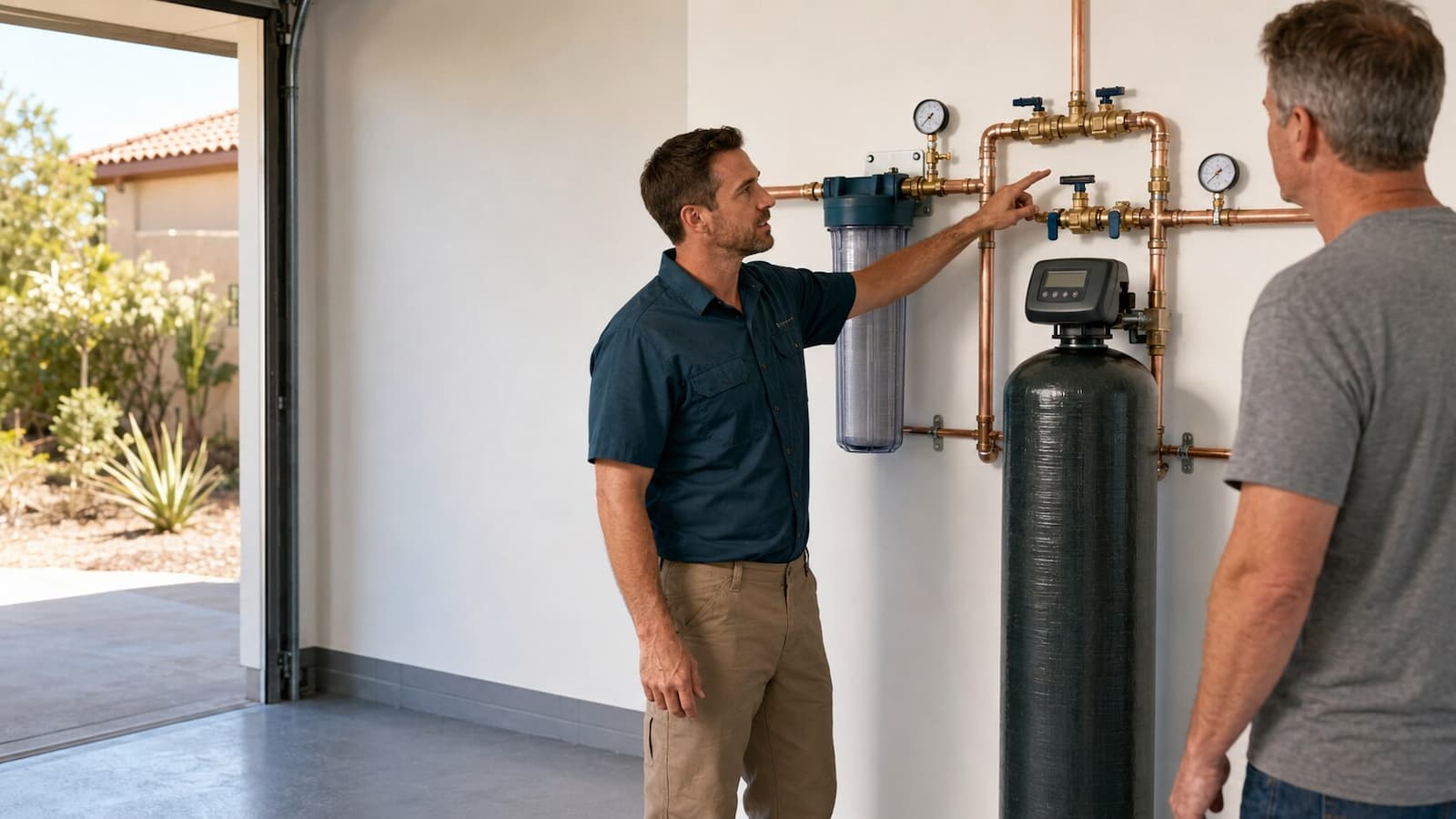
What Do You Want the System to Change?
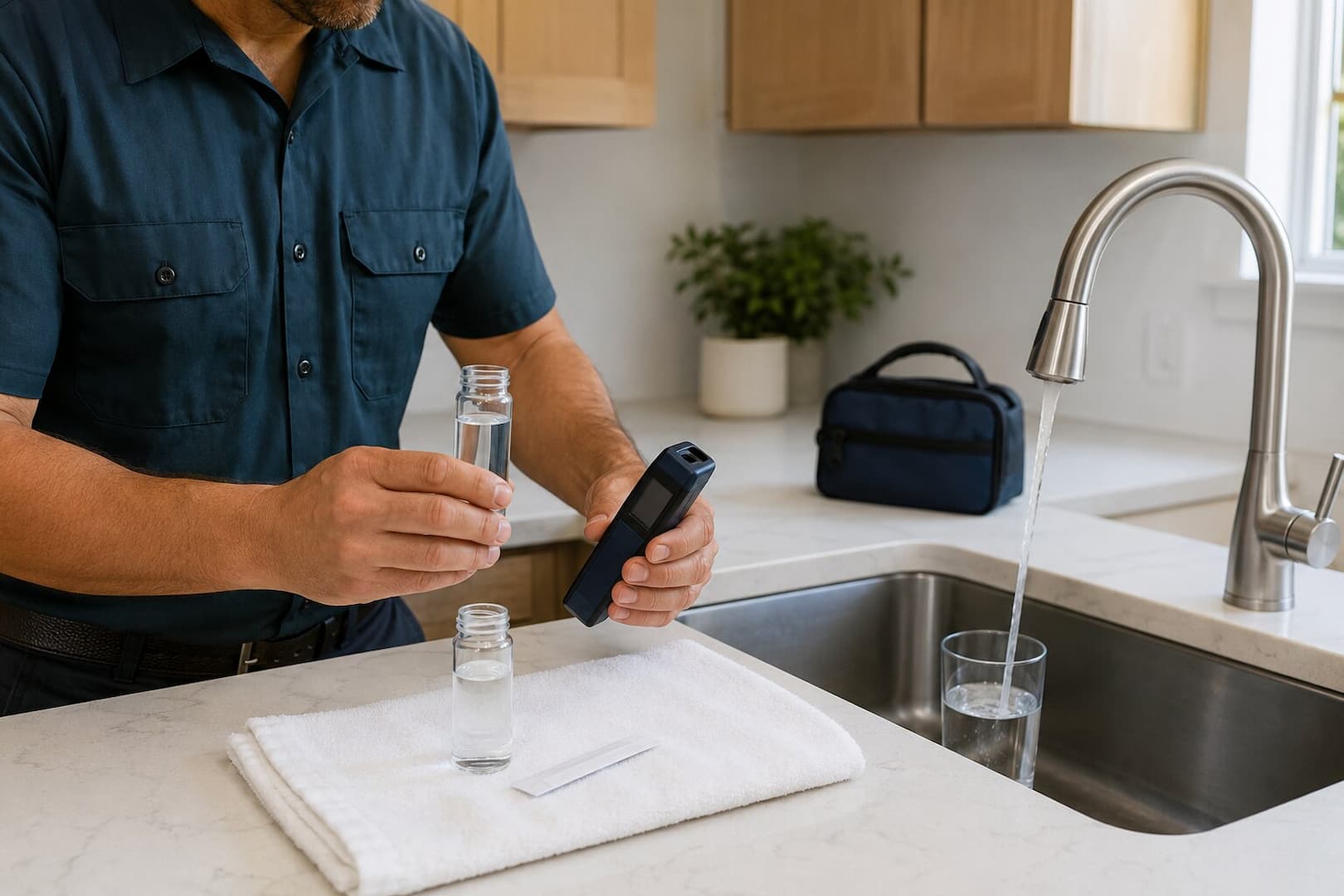
The phrase “whole-house filter” covers a surprising amount of equipment. Start with what is actually bothering you. From there, the water report—or a test when the concern is specific—helps narrow the choices without buying stages you do not need.
Disinfectant taste or odor
Properly selected carbon media can reduce the taste and smell associated with the disinfectant used in municipal water. Media type and contact time matter.
Sand, grit, or visible sediment
A serviceable sediment stage catches particulate before it reaches the carbon tank, fixtures, and appliance inlet screens.
White scale and hard-water spots
Carbon does not remove calcium and magnesium. If scale is the main complaint, a softener or conditioning approach belongs in the conversation.
A specific drinking-water concern
Some goals are better handled at the kitchen tap with a certified point-of-use system. Testing helps avoid buying equipment for the wrong target.
City Water Can Meet Standards and Still Leave Room for Personal Preferences
Vista Irrigation District reported that its 2024 tap water met federal and state drinking-water standards. That does not make optional treatment pointless. You may dislike a disinfectant taste, notice occasional particulate, or simply want the water to feel consistent from the kitchen to the shower. Those are legitimate preferences; they do not need a scare story.
A Good Filter Should Improve the Water Without Choking the House
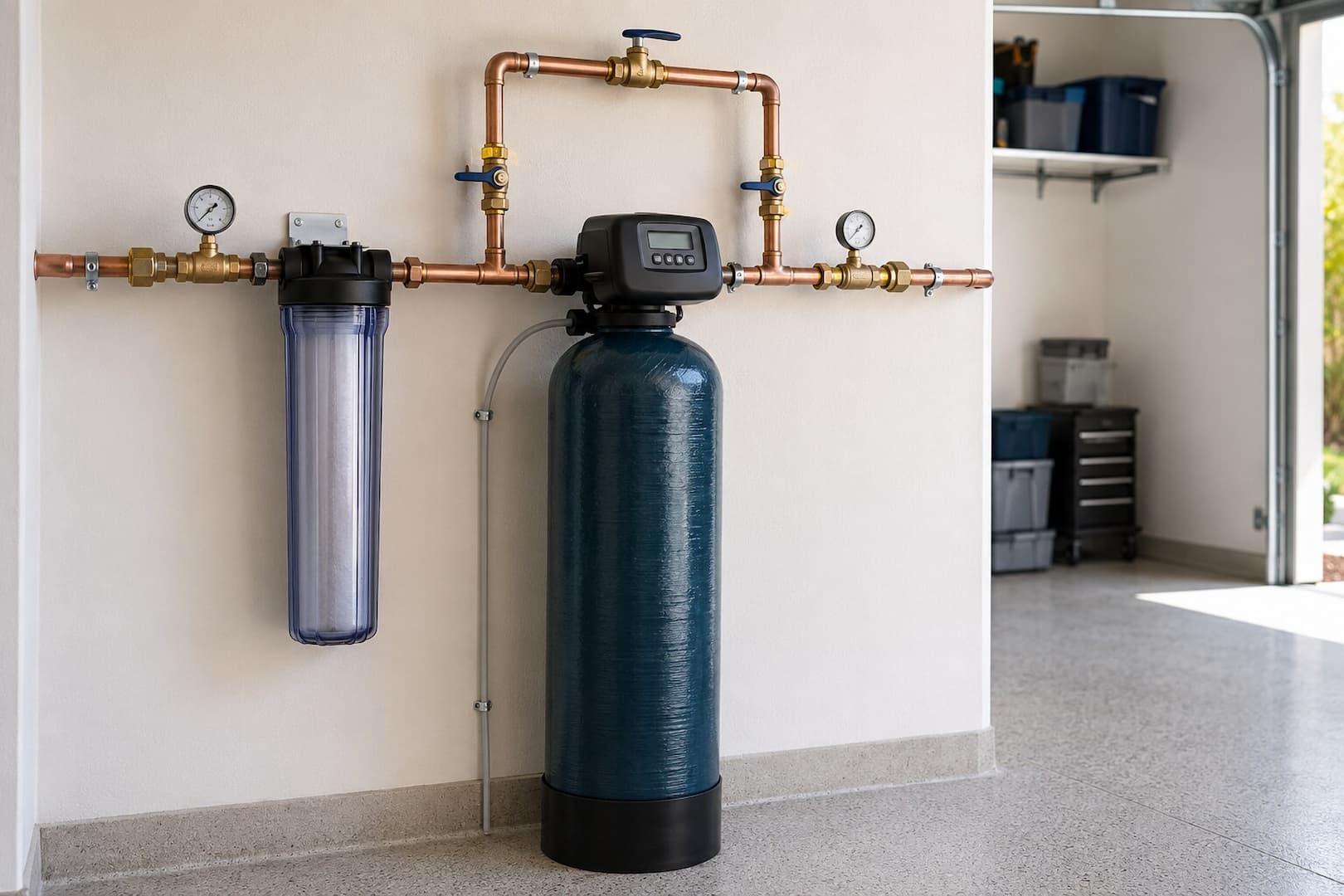
Two systems can use nearly identical tanks and behave very differently once two showers and the washing machine run together. The quiet part of the job is hydraulic. Media volume, valve size, and piping all have to support the home’s real demand. Pressure readings then tell us whether the finished installation behaves as planned.
- INFlow and pipe sizeWe review the main-line size and likely peak demand before choosing a tank, valve head, or cartridge housing.
- PSIPressure before and afterBaseline and startup readings help catch an undersized housing, a restriction, or an unrelated pressure problem.
- BPBypass and shutoffsA sensible bypass lets the home receive water while the equipment is serviced and isolates the unit without improvisation.
- SVRoom to maintain itCartridge bowls need clearance below. Valves, unions, controls, and drain connections should remain reachable after installation.
Each Stage Has One Job—and the Order Matters
The final arrangement depends on your water and equipment. For a common city-water installation, the route may look like this:
Main shutoff and inlet
Water enters through an accessible shutoff. We check pressure, pipe condition, and usable wall or floor space before making the tie-in.
Sediment protection
A prefilter can protect the media bed and downstream fixtures from grit. The housing must be large enough to avoid unnecessary pressure loss.
Carbon filtration
Water moves through the selected carbon media. Tank size, flow rate, and contact time influence real-world performance.
Optional treatment, then home
If hardness treatment is included, equipment order follows manufacturer requirements. Filtered water then feeds the home’s cold and hot branches.
Already have a softener? We can review the current layout and determine whether a new filtration stage can be added without creating a tight service area or an avoidable flow restriction.
Compare water softening options →What a Standard Whole-House Filter Does Not Fix
This is where many sales pitches go sideways. Filtration is useful, but only when the media targets the concern. These four problems may call for a different repair or a second treatment stage.
Hard-water scale
Standard carbon media does not remove dissolved hardness minerals. For crusty faucets, spotted glass, and scale in the water heater, see our water softener installation service.
High or unstable pressure
A filter cannot repair a failing pressure-reducing valve. If pressure is already high or fluctuating, we may recommend pressure regulator testing or replacement first.
Dissolved solids at the drinking tap
Carbon is not reverse osmosis. If the goal involves dissolved solids or a contaminant best handled at one faucet, an appropriately certified point-of-use system may make more sense.
Unknown staining or well-water problems
Orange, black, blue-green, or sulfur-like symptoms have different causes. Test first; guessing can leave the original problem untouched and burden the plumbing with unnecessary equipment.
How We Plan and Install the System
- 01
Define the goal
Tell us what you notice and what you want to change. We review the utility report or testing when the concern is specific.
- 02
Check the plumbing
We look at pipe size, pressure, shutoff condition, available drainage, mounting space, and a practical route for the bypass.
- 03
Match the equipment
Media, capacity, housing size, and service requirements are matched to the water goal and expected household flow.
- 04
Build a clean tie-in
We isolate the water, install the filtration train and bypass, support the piping, and leave usable room for future service.
- 05
Flush and verify
The system is flushed per manufacturer instructions. We check for leaks, compare pressure, test operation, and review maintenance.
Maintenance Should Be Clear Before You Buy
Cartridge changes and media life are not universal calendar dates. Sediment load, household use, rated capacity, pressure drop, and the manufacturer’s instructions all matter. We show you what to watch instead of handing over a vague “maintenance-free” promise.
What Shapes the Installation Price?
A useful estimate names both the equipment and the plumbing work. Sometimes the main is open and straightforward. Sometimes a tired shutoff, tight corner, or long exterior route changes the job. Looking at the tie-in first keeps the price tied to your home instead of a package photo.
Request a Filtration EstimateSediment, taste and odor, or a named reduction claim can require different tanks, cartridges, and capacities.
Larger homes, simultaneous fixtures, and larger main lines may need higher-flow valves and more media.
Accessible copper in a garage is a different job from a cramped enclosure, finished wall, or exposed exterior main.
Shutoffs, unions, gauges, pipe supports, adapters, and corrections to a weak existing valve affect the final scope.
Backwashing systems may require a proper drain route and power. Exterior equipment may also need a suitable protective setup.
Questions Vista Homeowners Ask Before Installing
The equipment lasts longer than the sales conversation, so it pays to settle the practical details now.
Does a whole-house filter treat every faucet and shower?
Can filtration reduce chlorine or chloramine?
Where can the system be installed?
Can you add filtration to an existing softener?
Is a whole-house filter the same as a water softener?
Will the filter reduce my water pressure?
How often are filters or media replaced?
Do I need a water test before installation?
Get a Whole-House Filtration Estimate for Your Vista Home
Tell us what you notice in the water and where the main line enters the property. From there, we can sort out the treatment goal, available flow, pressure, installation space, and the less glamorous detail that matters later: whether anyone can comfortably service the system.
- The main water-line location, if you know it
- Your main concern: taste, odor, sediment, scale, or a specific test result
- Any existing softener, filter, pressure regulator, or recent main-line work
- Photos of the proposed garage, utility-room, or exterior installation area
Request Water Filtration Service
Share the symptoms you notice and the best number to reach you. If you already have a water report, test result, or equipment model in mind, mention it in the message.