
Water Shutoff Valve Repair in Vista, CA
A shutoff valve has one job: stop the water when you need it to. If the handle is frozen, the stem leaks, or the valve closes but water keeps moving, Smart Plumbing USA can inspect the valve, check the surrounding pipe, and recommend a focused repair or replacement.
- Main water shutoff valves
- Angle stops below sinks and toilets
- Laundry and appliance water valves
- Leak and operation testing after service
Shutoff Problems We Diagnose and Repair
Water around a valve does not always mean the valve body has failed. The leak may come from the stem, compression joint, threaded adapter, supply connector or pipe behind it. We dry the area, operate the system when safe, and confirm the source before replacing parts.
Valve will not close
A stuck gate, damaged stem, mineral buildup or internal wear can prevent complete shutoff. Repeated force often makes the failure worse.
Leak around the handle
Moisture at the stem or packing area may be repairable on some valves. Condition and valve design decide whether service or replacement is practical.
Leak at the pipe connection
Compression nuts, threaded adapters, soldered joints and damaged stub-outs require different repair methods. The valve may be only part of the leak path.
Handle is broken or missing
A cracked wheel, stripped stem or loose lever can leave the valve difficult to operate. We check whether the internal mechanism is still reliable.
Water keeps passing when closed
Older multi-turn valves may feel closed while still allowing flow. A new quarter-turn valve is often the cleaner long-term solution.
Corrosion or green mineral tracks
Surface discoloration is not always an active leak, but crust, pitting and repeated dampness deserve a closer look before the valve is needed in an emergency.
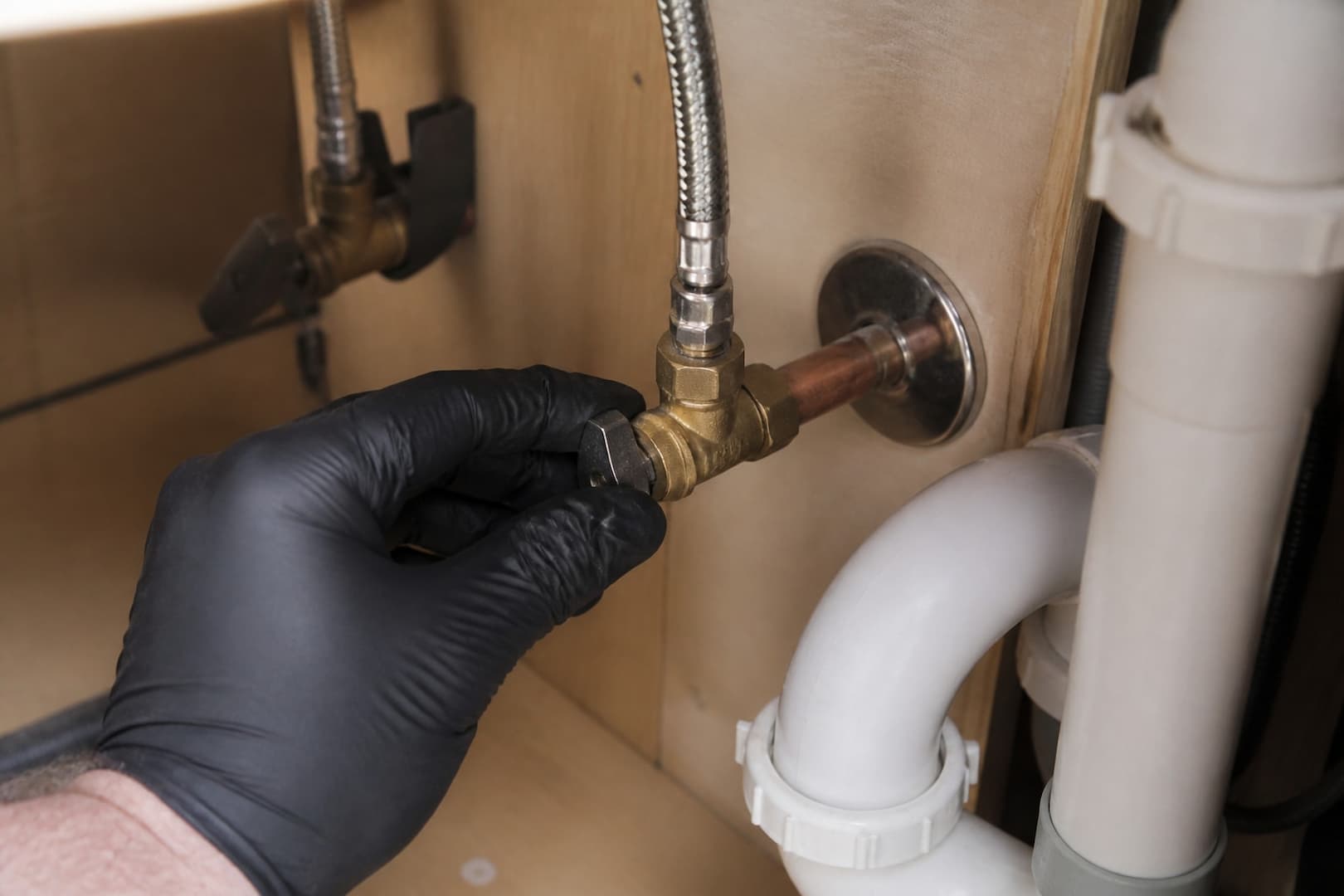
Angle Stops Protect One Fixture at a Time
The shutoffs beneath a sink or toilet let you isolate that fixture without turning off the whole house. They also sit in cabinets and tight spaces where a slow drip can swell wood before anyone notices.
We check the valve body, stem, pipe connection and supply line together. Replacing the angle stop without addressing a worn connector or damaged copper stub-out can leave the real weak point in place. When the fixture is already being replaced, it may be sensible to deal with questionable shutoffs at the same time.
- Identify whether the valve isolates one fixture or the whole home
- Confirm the leak source before disturbing a pressurized connection
- Inspect the pipe material, adapter and available working length
- Choose a valve and connection method compatible with the existing system
- Restore water gradually and test the valve open, closed and under normal use
A Controlled Replacement from Isolation to Final Test
Valve work can turn into an emergency if the system is not isolated or the pipe is too fragile to support the planned connection. We plan that part before removing the old valve.
Identify the isolation point
We determine what must be shut down and whether the available upstream valve operates.
Inspect pipe and access
Material, corrosion, wall clearance and usable pipe length shape the repair method.
Replace the approved component
The old valve and related connector are removed as needed, and the new assembly is installed without unnecessary stress.
Restore and verify
Water returns gradually. We check the joints, cycle the valve and confirm that it actually stops flow.
Water Shutoffs Found Around a Vista Home
The name changes with location, but the decision is similar: can the valve isolate the intended line without leaking or damaging the connected pipe?
Main shutoff
The homeowner-side valve that isolates the house. Ball valves are common replacements when the layout permits.
Angle stop
The compact fixture valve below sinks and toilets, often joined to a braided supply connector.
Laundry valve
Hot and cold washing-machine valves may be individual stops or part of a valve box.
Appliance valve
Dedicated refrigerator, dishwasher and other water-fed appliance connections need accessible, reliable shutoffs.
Tighten, Repair, or Replace the Valve?
A slight stem seep on a serviceable valve is different from a corroded body or a valve that no longer closes. The surrounding pipe condition can be more important than the age printed on the part.
A limited repair may be reasonable
- The body and pipe connection remain sound.
- The leak is isolated to serviceable packing or a replaceable handle component.
- The valve closes fully and operates without excessive force.
- Repair will not leave a badly corroded connector in service.
Replacement is usually the safer path
- The valve does not stop flow or the stem is stripped.
- The body, nut or attached pipe shows significant corrosion or damage.
- The handle is seized and operation risks breaking the connection.
- A fixture replacement already requires disconnecting an unreliable valve.
- The existing valve design has failed repeatedly.
Valve Work Planned Around the Pipe That Is Already There
A shutoff replacement is not just a parts swap. Copper, PEX, CPVC and older galvanized piping need different transition methods and different amounts of safe working room. We explain if access must be enlarged or if a weak adjacent section should be included in the scope.
Water Shutoff Valve Repair in Vista, CA FAQ
Can a leaking shutoff valve be repaired without replacing it?
Sometimes. A serviceable packing nut or stem seal may respond to a limited repair. Replacement is more practical when the body is corroded, the stem is damaged, the valve will not close, or the connection itself is leaking.
Should I replace old multi-turn angle stops with quarter-turn valves?
Quarter-turn valves are easy to operate and are often a sensible replacement. Compatibility still depends on the pipe material, available stub-out length, cabinet clearance and condition of the existing connection.
What if the main water shutoff does not work?
Call before attempting removal. The next isolation point may be at the meter or another upstream control, and access rules can depend on the water provider. Utility-owned equipment should not be operated or altered without authorization.
Can you replace the supply line at the same time?
Yes, when it is included in the approved scope. A worn, kinked or corroded connector can be replaced with the valve so the new shutoff is not attached to an obvious weak point.
Does a shutoff valve replacement require a permit in Vista?
Many like-for-like component repairs do not require a permit, while larger alterations may. Requirements depend on the exact scope, and the City of Vista Building Division is the final authority.
Is a water shutoff valve the same as a pressure regulator?
No. A shutoff isolates flow; a pressure regulator reduces and stabilizes downstream pressure. Some homes have both components near the service entrance, but they perform different jobs.
Need a Shutoff Valve You Can Rely On?
Tell us where the valve is located, whether it leaks, and whether it still stops the water. If water is active, call instead of waiting for a form response.