
Plumbing Inspection in Vista, CA
A plumbing inspection should answer useful questions: what is visible today, which findings need attention, and what deserves a closer test. We inspect the agreed scope, explain the limits, and give you a practical next step.
- Buyer and homeowner inspections
- Supply, drain and fixture review
- Water heater and pressure checks
- Clear findings, not vague alarms
One Label, Several Different Needs
“Inspect the plumbing” can mean a quick look at one wet cabinet or a broader review of the accessible system. We ask why you need the inspection before we decide what belongs on the checklist.
Home buyer review
Look beyond a general home inspection when the property has older piping, past leaks, questionable water pressure, slow drains or a water heater that needs a closer plumbing assessment.
Homeowner checkup
Review accessible valves, supplies, fixtures and equipment before small signs become disruptive. This is useful when several components are reaching a similar age.
Targeted diagnosis
Focus on one concern: unexplained meter movement, a musty cabinet, pressure that changes during use, a repeating drain odor or a water heater symptom.
Remodel planning
Check accessible connections, shutoffs, supply and drain locations, fixture requirements and known weak points before new finishes limit access.
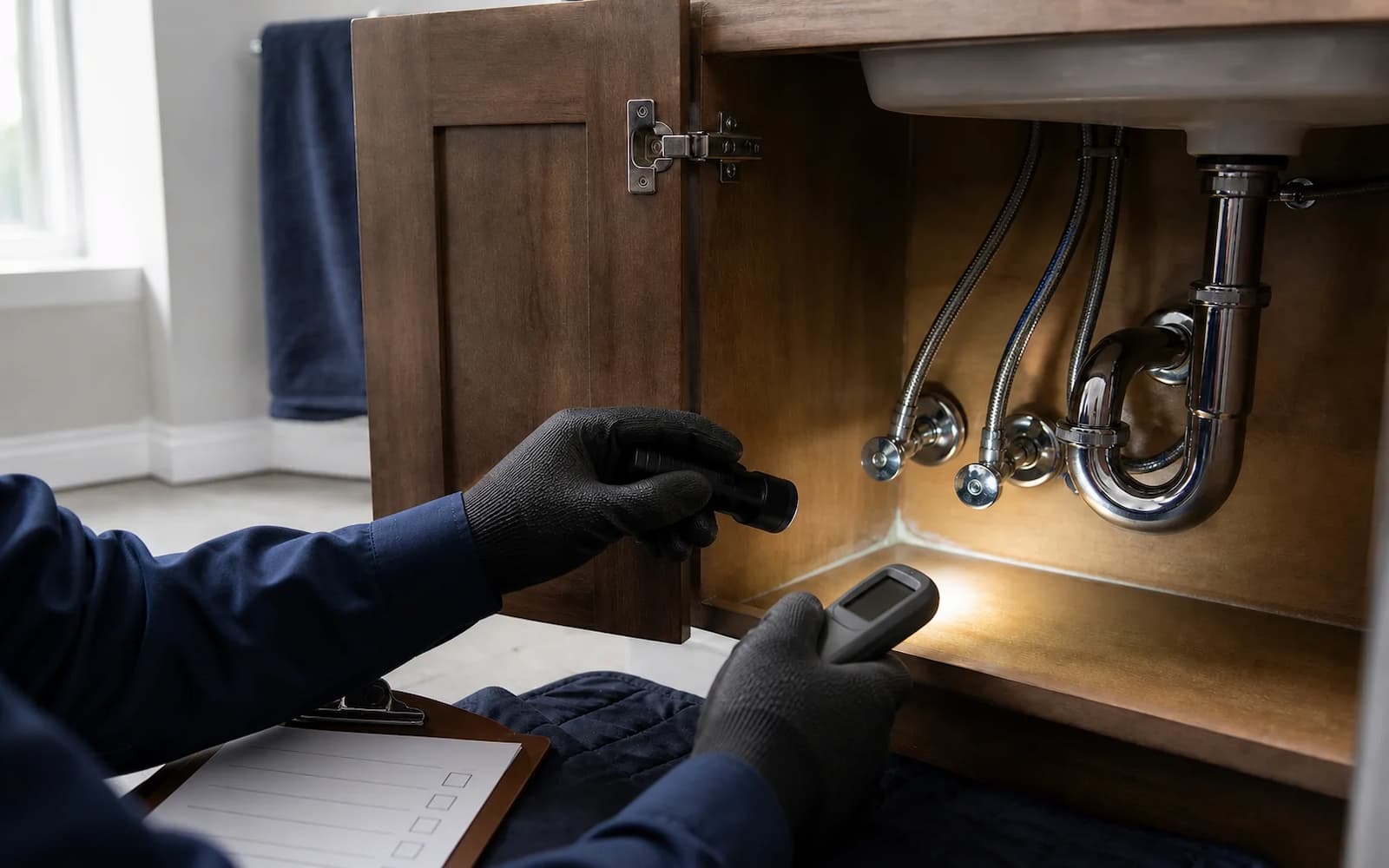
A Room-by-Room Plumbing Review
Under a sink, the cabinet floor often tells part of the story. Staining can be old and dry; a clean cabinet may still hide a valve that will not close. We look at condition and function rather than counting fixtures from the doorway.
The agreed scope may cover kitchens, bathrooms, laundry connections, hose bibbs, the water heater area and accessible main controls. In occupied homes, stored items and locked spaces can limit what is seen, so access is worth arranging before the appointment.
- Visible supply piping, corrosion, unsupported lines and active leak signs
- Main and fixture shutoffs, braided connectors and appliance hoses where accessible
- Faucets, toilets, showers, tubs, traps and exposed drain connections
- Functional flow and drainage observations at included fixtures
- Water pressure and regulator behavior when part of the requested scope
- Water heater condition, connections, safety components and visible venting
Two Sides of the System Need Different Checks
A supply leak can be pressurized even when nobody is using water. Drain piping only reveals some problems while a fixture is running. Treating those systems as one quick visual pass leaves gaps.
Water supply and fixtures
- Visible copper, PEX or other accessible supply materials
- Signs of corrosion, past patching, movement or active seepage
- Main shutoff, pressure regulator and fixture stop condition
- Toilet operation, faucet flow and fixture connection leaks
- Water heater tank or tankless unit and accessible connections
- Pressure concerns, water hammer symptoms and unexplained usage clues
Drain, waste and sewer clues
- Traps, tailpieces, disposals and visible drain joints
- Slow drainage, gurgling, odors and signs of prior backup
- Toilet base stability and visible evidence around the flange area
- Accessible cleanout location and condition
- Whether one fixture or several fixtures share the symptom
- Reasons a sewer camera or focused drain test may be worthwhile
A camera inspection is a separate diagnostic unless it is specifically included in the appointment.
Useful Findings Start with a Defined Scope
Before the appointment, tell us whether this is for a purchase, maintenance, a remodel or a specific symptom. That keeps the inspection focused and makes the result easier to use.
Set the purpose
We note the property type, concerns, deadline, occupied status and any report or photo needs.
Confirm access
Utilities, water heater area, sink cabinets, main shutoff and cleanouts should be reachable where possible.
Inspect and test
We follow the agreed checklist and investigate findings with appropriate non-invasive checks.
Review next steps
You learn what was observed, what carries priority, and whether repair or deeper diagnostics are recommended.
Findings You Can Turn into a Plan
A long list without context is hard to use. We separate an active leak from routine wear, and we distinguish a visible defect from a clue that still needs diagnosis.
If you need a written report for a real-estate timeline, say so while scheduling. The format, included photos, delivery timing and fee should be confirmed before the visit rather than assumed afterward.
- Location and component observed
- What was visible or reproduced during the inspection
- Whether the item needs immediate action, planned repair or monitoring
- The next trade, test or repair step when one is recommended
- Limitations that prevented a complete view or functional test
What a Plumbing Inspection Can and Cannot Tell You
A careful inspection reduces uncertainty. It does not make concealed plumbing visible or guarantee how long every component will last.
It can help you
- Document accessible conditions on the day of the visit
- Find active leaks and visible deterioration
- Recognize patterns that justify a focused diagnostic
- Prioritize repairs instead of treating every note as urgent
- Plan access before a remodel covers important connections
It does not automatically include
- Opening walls, ceilings, cabinets or concrete
- A sewer camera, hydrostatic test or specialized leak detection
- Mold, asbestos or environmental sampling
- A City of Vista code or permit inspection
- A guarantee against future failure in an aging system
- Engineering analysis or a complete record of past repairs
Questions to Ask Before You Book
What is included in a plumbing inspection?
The agreed scope may include accessible supply piping, shutoff valves, fixture connections, drains and traps, toilets, faucets, visible leak signs, water pressure, the water heater, accessible cleanouts and drainage observations. The checklist depends on the property and inspection purpose.
Is this the same as a general home inspection?
No. A plumber focuses on the plumbing system and can investigate plumbing-specific concerns in greater detail. A general home inspection covers many building systems and may recommend a licensed plumber when it identifies a concern.
Does the inspection include a sewer camera?
Not automatically. A sewer camera should be written into the requested scope. It may be useful for recurring backups, mature trees, older sewer piping, a real-estate transaction or other signs that the buried line deserves a closer look.
Can you see pipes behind walls or under the slab?
A standard inspection is visual and non-invasive, so concealed piping cannot be viewed directly. Moisture readings, pressure behavior, meter movement and other diagnostic methods may identify reasons for further leak detection, access or testing.
Will I receive written findings?
The deliverable should be agreed before the visit. We can provide a clear summary of observed conditions, priority items and recommended next steps; ask when scheduling if you need photos or a written report for a transaction.
Is this a City of Vista code inspection?
No. A private condition inspection does not replace a City permit inspection, code determination or official record review. The City of Vista Building Division is the authority for municipal permits and inspections.
When should a homeowner schedule an inspection?
Useful times include before buying a home, before a remodel, after recurring leaks or drain trouble, when water use changes without explanation, or when an older system has several aging valves, fixtures or appliances.
How should I prepare the property?
Clear stored items from under sinks, provide access to the water heater and main shutoff, unlock gates, and share any prior reports or symptoms. Confirm whether utilities are on if the property is vacant.
Tell Us What You Need the Inspection to Answer
Share the property type, the reason for the visit, your deadline and any known symptom. We will help define a useful scope before the appointment.