
Garbage Disposal Repair and Installation in Vista, CA
Smart Plumbing USA helps Vista homeowners with garbage disposals that hum, jam, leak, drain slowly, smell bad, trip the reset, or need replacement. We inspect the disposal, sink flange, dishwasher connection, discharge piping, trap, switch behavior, and nearby drain connection before recommending repair or installation.
- Repair-first evaluation when the unit remains serviceable
- Leak source checked at the flange, body, outlet, and dishwasher inlet
- New disposal installation with drain and dishwasher connection testing
- Same-day appointments when current scheduling allows
A Disposal Problem Is Not Always Just the Disposal
The garbage disposal sits at the center of several kitchen plumbing connections. It attaches to the sink flange above, the discharge outlet and trap below, the dishwasher inlet on the side, and the electrical control that powers the motor. A problem in any one of those points can look like a disposal failure.
That is why a good diagnosis looks at the full assembly. A humming disposal may be jammed, overloaded, or failing internally. A leak may come from the flange, gasket, outlet connection, dishwasher hose, or the unit body. A slow sink may be caused by the disposal chamber, the trap, or the downstream kitchen drain line.
- At the sink: sink flange, mounting assembly, putty or gasket seal, locking ring, and movement at the connection.
- Inside the unit: grind chamber, impeller plate, jammed objects, reset behavior, motor condition, vibration, and noise.
- At the drain: discharge elbow, gasket, trap alignment, slip joints, clogs, and kitchen branch-drain performance.
- At the dishwasher line: dishwasher inlet, hose clamp, knockout plug, air gap or high loop arrangement, and backup symptoms.
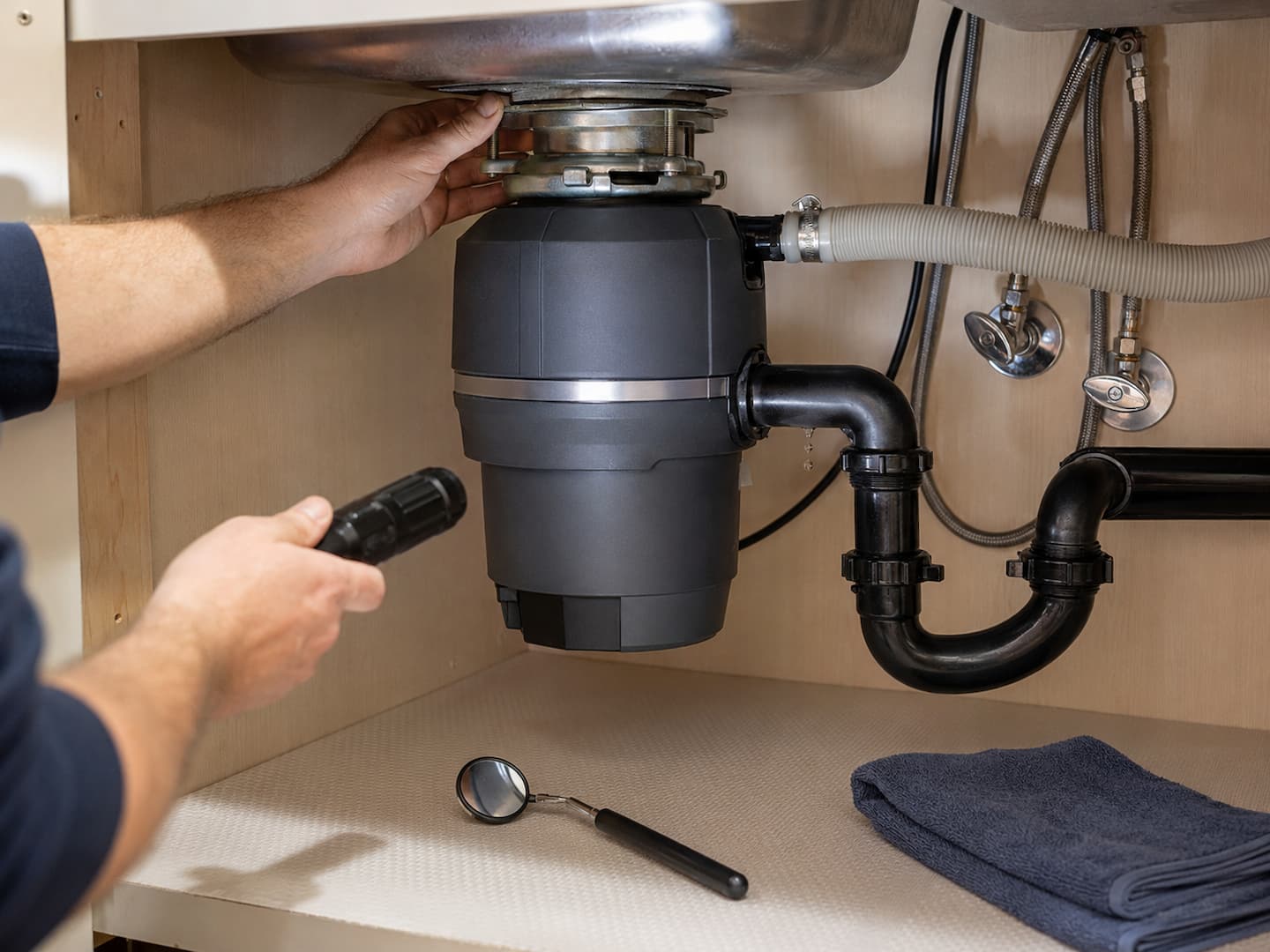
Garbage Disposal Problems We Diagnose and Repair
The sound, leak location, and drain behavior usually point toward the likely failure area. Tell us what happens when you flip the switch, run water, use the dishwasher, or drain the sink.
Disposal hums but does not spin
A humming disposal may be receiving power but unable to rotate because of a jammed impeller plate, lodged object, overload, worn motor, or internal failure.
Jam and motor evaluationDisposal does not turn on
The unit may need reset, may not be receiving power, may have overheated, or may have a failed internal motor. We check reset behavior and visible connections.
Reset and power behavior checkDisposal is jammed or rattling
A small utensil, bone fragment, hard food waste, glass, or other object can lodge in the chamber and cause rattling, grinding, or immediate lockup.
Obstruction and chamber inspectionLeak from the top or sink flange
Water at the top of the unit may come from the flange seal, mounting assembly, loose connection, worn gasket, sink surface, or movement at the disposal body.
Flange and mounting checkLeak from the side or outlet
Side leaks often involve the discharge elbow, gasket, trap connection, dishwasher inlet, hose clamp, or drain piping rather than the motor chamber itself.
Discharge and dishwasher connectionLeak from the bottom of the unit
Water from the bottom can indicate an internal housing seal or motor-body failure. In many cases, replacement is safer than trying to patch the unit.
Replacement likelyKitchen sink drains slowly
Slow drainage may involve buildup inside the disposal, a clogged trap, misaligned piping, grease in the branch line, or a downstream kitchen drain restriction.
Drain path diagnosisBad odor from the disposal
Odor may come from food residue, biofilm, a poorly draining trap, splash guard buildup, dishwasher connection issues, or water not flushing the chamber fully.
Cleaning and drainage checkRepairing the Right Part of the Disposal Assembly
Some garbage disposal problems can be corrected without replacing the whole unit. Others point to an unsafe, unreliable, or internally damaged disposal. We identify the failure point before recommending the next step.
Jam and Obstruction Clearing
If the unit hums, locks up, or rattles, we check for safe access, lodged objects, chamber obstruction, and whether the disposal can rotate normally after the obstruction is addressed.
Reset and Overload Diagnosis
A disposal that shuts off repeatedly may be overheating, jammed, overloaded, or failing internally. Repeated resets without diagnosis can make the problem worse.
Sink Flange and Mounting Leak Repair
Leaks from the top may require resealing, tightening, gasket replacement, or resetting the mounting assembly if the unit has shifted or the seal has failed.
Discharge Outlet and Trap Repair
Leaks or drainage problems may come from the disposal outlet, discharge elbow, gasket, P-trap, slip joint, or pipe alignment beneath the sink.
Dishwasher Connection Correction
A dishwasher that backs up into the sink or fails to drain properly may involve the disposal inlet, hose routing, knockout plug, clamp, air gap, or high loop.
Odor and Slow Drain Troubleshooting
Odors and slow draining can involve residue in the chamber, poor flushing, a dirty splash guard, a partial trap restriction, or a downstream kitchen drain issue.
Safety note: never put your hand inside a garbage disposal. If the unit is jammed, humming, smoking, leaking, or repeatedly tripping reset, stop running it and schedule service.
Request Disposal Repair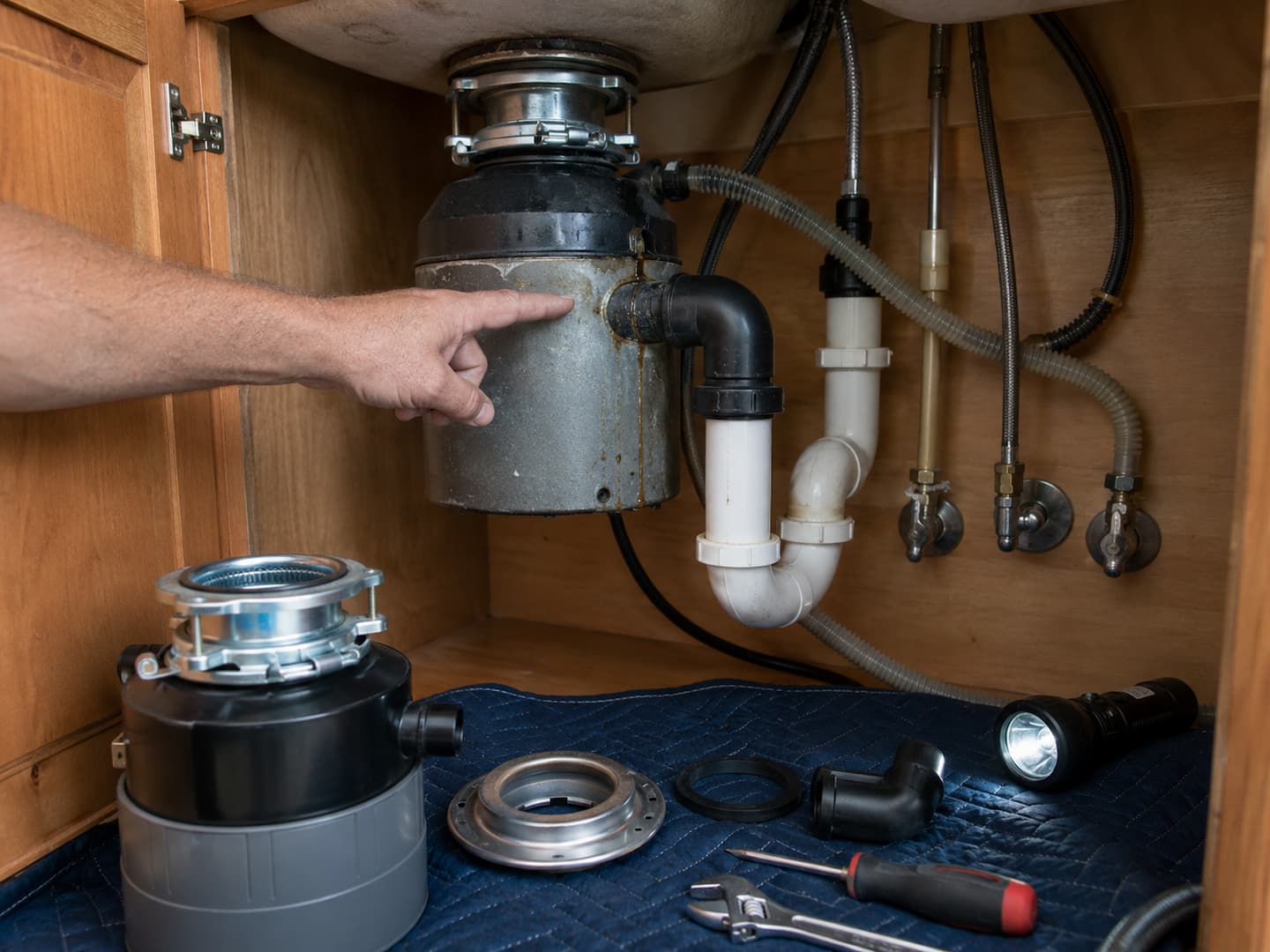
Should You Repair the Disposal or Replace It?
The best choice depends on the failure point, age, motor condition, leak location, availability of parts, and whether the unit has a pattern of repeated problems. We explain what we find before recommending repair or replacement.
Repair may make sense when:
- The unit is jammed but the motor still operates normally
- The reset issue is caused by an obstruction or overload
- The leak is at the sink flange or discharge connection
- The dishwasher hose or inlet connection needs correction
- The trap or drain connection is loose or misaligned
- The disposal is newer and otherwise performs reliably
Replacement may be better when:
- Water leaks from the bottom or body of the disposal
- The motor hums but cannot be freed safely
- The unit smokes, overheats, or trips reset repeatedly
- Internal corrosion or housing damage is visible
- The disposal is noisy, weak, or unreliable after prior repairs
- You want a quieter, stronger, or better-suited replacement
A New Disposal Must Match the Sink, Drain, Dishwasher, and Power Setup
Garbage disposal installation is not only about hanging a new unit under the sink. The new disposal must fit the cabinet space, align with the existing trap, connect correctly to the dishwasher when applicable, seal at the sink flange, and operate without excessive vibration or leaks.
We review cabinet clearance, sink opening, existing mount, drain alignment, dishwasher connection, switch setup, and intended usage.
The unit is disconnected, supported, removed carefully, and the sink flange and drain connections are inspected before installation.
The flange area is cleaned, sealed, and assembled so the new disposal has a stable, watertight connection to the sink.
The discharge elbow, gasket, trap alignment, hose clamp, and dishwasher inlet are handled according to the actual kitchen setup.
We check for vibration, noise, sink drainage, flange leaks, discharge leaks, dishwasher connection leaks, and normal operation.
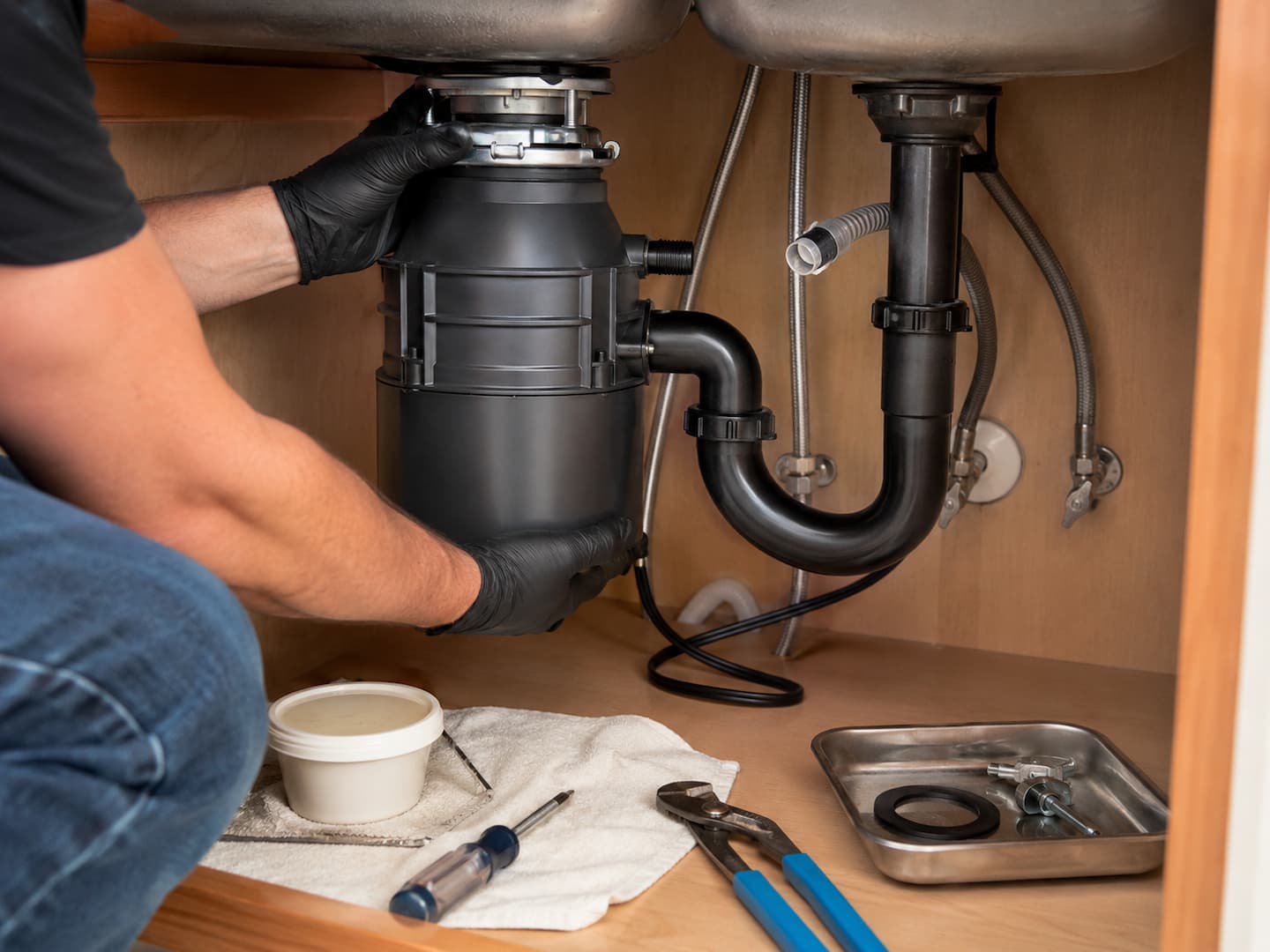
What to Consider Before Choosing a New Garbage Disposal
A replacement disposal should match the way your kitchen is used. Unit size, noise level, available cabinet space, dishwasher connection, sink material, drain alignment, and expected food waste all affect the installation and long-term performance.
Motor Size and Household Use
Light-use kitchens may not need the same unit as a busy household that cooks daily. The goal is a disposal sized appropriately for expected use, not simply the largest model available.
Continuous Feed or Batch Feed
Most homes use continuous-feed disposals controlled by a wall or air switch. Batch-feed models operate differently and may be considered for certain safety or preference reasons.
Noise and Vibration
Some units include sound insulation and vibration-reduction features. Cabinet construction, sink type, mount condition, and drain alignment also influence how loud a disposal feels.
Cabinet and Drain Clearance
Larger or deeper units may affect storage space, trap alignment, and access to nearby plumbing. The replacement should fit the cabinet and existing drain layout cleanly.
Dishwasher Connection
If the dishwasher drains through the disposal, the inlet, hose routing, knockout plug, clamp, air gap, or high loop must be handled correctly during installation.
Septic and Local Use Considerations
If your property uses a septic system or has special kitchen drainage concerns, disposal use and selection should be considered carefully before installation.
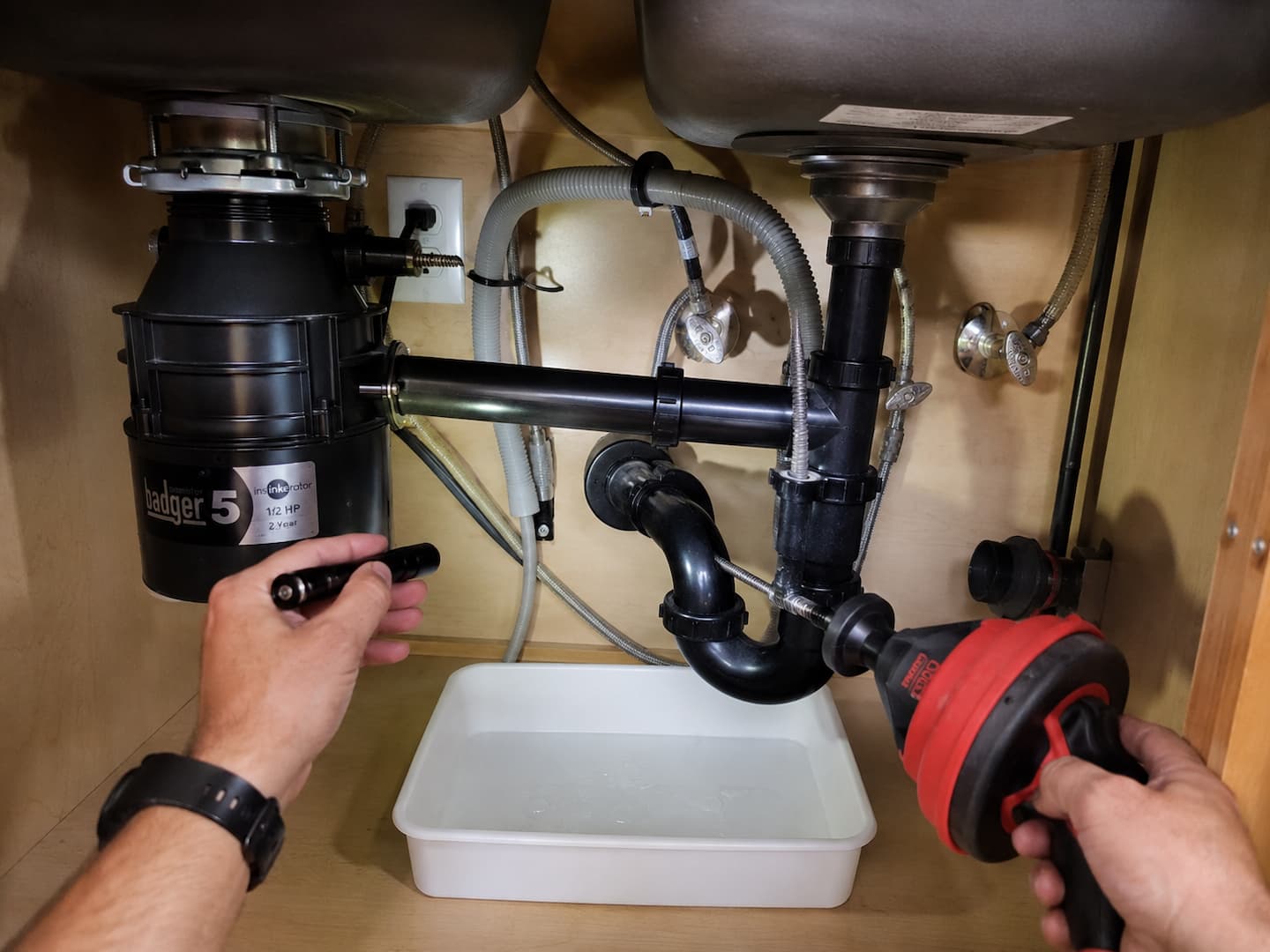
Disposal Problem, Dishwasher Backup, or Kitchen Drain Clog?
A disposal is connected to the rest of the sink plumbing. If water backs up, smells bad, drains slowly, or moves between the sink and dishwasher, the problem may involve the disposal, the dishwasher connection, the trap, or the downstream kitchen drain.
Signs the issue may be disposal-level
- The unit hums, jams, rattles, or fails to grind
- The leak starts directly at the disposal body or mounting point
- Water drains normally when the disposal is bypassed or not involved
- The reset button trips after a jam or overload
- The sink problem began after a known object entered the unit
Signs the drain system may be involved
- Both sides of a double sink back up
- The dishwasher backs up into the sink or disposal
- Water drains slowly even when the disposal runs
- The P-trap or branch line repeatedly clogs with grease buildup
- Odor returns soon after cleaning the disposal chamber
Simple Habits That Help a Disposal Last Longer
Many disposal problems come from overloading the unit, putting the wrong materials through it, or treating it like a trash can. A few better habits can reduce clogs, odor, jams, and premature wear.
Better habits during use
- Run cold water before, during, and briefly after disposal use
- Feed waste gradually instead of packing the chamber
- Cut larger soft scraps into smaller pieces before grinding
- Listen for unusual vibration, rattling, or slowing
- Stop using the disposal if it hums but does not spin
- Use regular cleaning methods appropriate for the unit and manufacturer guidance
Items that commonly cause problems
- Grease, fats, and oils that cool and coat the drain
- Fibrous foods such as celery, corn husks, and artichoke leaves
- Expanding starches such as rice, pasta, and potato peels
- Hard materials such as bones, shells, pits, glass, or utensils
- Large quantities of coffee grounds or eggshells
- Chemical drain cleaners that may damage parts or piping
Careful Work Under the Sink, Where Small Mistakes Cause Messy Problems
Garbage disposal service affects the sink, cabinet, drain piping, dishwasher discharge, electrical control, and daily kitchen use. The work should be clean, stable, watertight, and tested before the job is considered complete.
Vista-based California C-36 plumbing contractor #1075429, providing residential plumbing service in Vista and nearby North County communities.
View license information →Full Assembly Diagnosis
We check the disposal, flange, mounting assembly, discharge outlet, trap, dishwasher inlet, and visible drain piping instead of assuming the unit alone is the problem.
Repair When It Makes Sense
A jam, connection leak, gasket issue, or trap problem may be repairable. An internally leaking or failing unit usually calls for a more reliable replacement.
Clean Cabinet Work
Under-sink work is handled carefully around cabinet floors, stored items, water lines, drain connections, dishwasher hoses, and nearby finishes.
Dishwasher Connection Awareness
If the dishwasher drains through the disposal, the inlet and hose routing must be correct so water does not back up into the sink or appliance.
Clear Scope Before Work
We explain what failed and whether repair, replacement, drain cleaning, or another plumbing service is the appropriate next step.
Final Operation Testing
We check operation, vibration, drainage, flange area, side connections, dishwasher line, and cabinet area for leaks before wrapping up.
Garbage Disposal Repair and Installation FAQ
These answers cover common residential disposal problems. The actual repair depends on what is found at the unit, sink connection, drain, and dishwasher line.
Why is my garbage disposal humming but not spinning?
Can a leaking garbage disposal be repaired?
Why does my kitchen sink back up when I use the disposal?
Why is dishwasher water backing up into the sink or disposal?
Should I repair my disposal or replace it?
Can you install a garbage disposal I already purchased?
Do I need a plumber or an electrician for disposal problems?
Is same-day garbage disposal service available in Vista?
Not sure whether the disposal, drain, or dishwasher connection is the issue? Describe the sound, leak location, and drain behavior. We will help identify the appropriate next step.
Call (858) 727-5522When the Problem Extends Beyond the Disposal
Some disposal symptoms are connected to nearby sink plumbing, drain restrictions, dishwasher discharge, or a leak under the cabinet. These related services help address the broader condition.
Request Garbage Disposal Repair or Installation in Vista, CA
Tell us what the disposal is doing, where the leak appears, whether the sink or dishwasher backs up, and whether the unit still turns on. We will use those details to help determine the appropriate service.
- Garbage disposal humming, jammed, rattling, or not turning on
- Leaks from the flange, discharge outlet, dishwasher inlet, or unit body
- Kitchen sink slow drainage, backup, odor, or disposal-related clogging
- Dishwasher connection concerns and under-sink drain connection issues
- New disposal installation, replacement, and unit compatibility review
Quick Service Request
Complete the form and include any details you have. Photos can be useful when available.
- Whether the disposal hums, jams, leaks, rattles, smells, or will not turn on
- Where water appears: top flange, side outlet, dishwasher line, bottom, or cabinet floor
- Whether the dishwasher backs up or drains through the disposal
- Whether both sides of the sink drain slowly or only the disposal side is affected
- For installation, the brand and model if already purchased