
Shower Valve Repair and Replacement in Vista, CA
Smart Plumbing USA repairs and replaces shower valves for Vista homeowners dealing with dripping shower heads, stuck handles, no hot water in the shower, sudden temperature changes, weak shower pressure, leaking trim plates, failed cartridges, tub spout diverter problems, and hidden leaks behind the shower wall.
- Shower cartridge, stem, handle, trim, and valve diagnostics
- Pressure-balancing and thermostatic shower valve troubleshooting
- Repair when the internal parts are serviceable and available
- Full valve replacement when the body is leaking, seized, outdated, or damaged
A Shower Valve Problem Is Not Always Obvious from the Outside
The shower valve is the control point inside the wall that mixes hot and cold water and sends water to the shower head, tub spout, or both depending on the setup. When it begins to fail, the symptoms can look simple — a drip, stiff handle, or temperature issue — but the cause may be a worn cartridge, damaged stem, failed pressure balance spool, bad diverter, corroded valve body, or a leak inside the wall.
The right repair depends on the valve type, brand, age, access, part availability, condition of the surrounding piping, and whether water is leaking externally or behind the wall. We check the full assembly before deciding whether the best solution is a cartridge replacement, trim repair, diverter repair, or complete shower valve replacement.
- Temperature control issues: sudden hot/cold swings, no hot water at the shower only, or a handle that no longer controls temperature correctly.
- Shutoff issues: shower keeps dripping, handle will not fully close, or water continues running after the valve is turned off.
- Pressure issues: weak flow at one shower, poor hot/cold balance, or pressure changes when another fixture is used.
- Leak concerns: moisture around the trim plate, loose escutcheon, stains below the shower, damp wall, or suspected valve-body seepage.
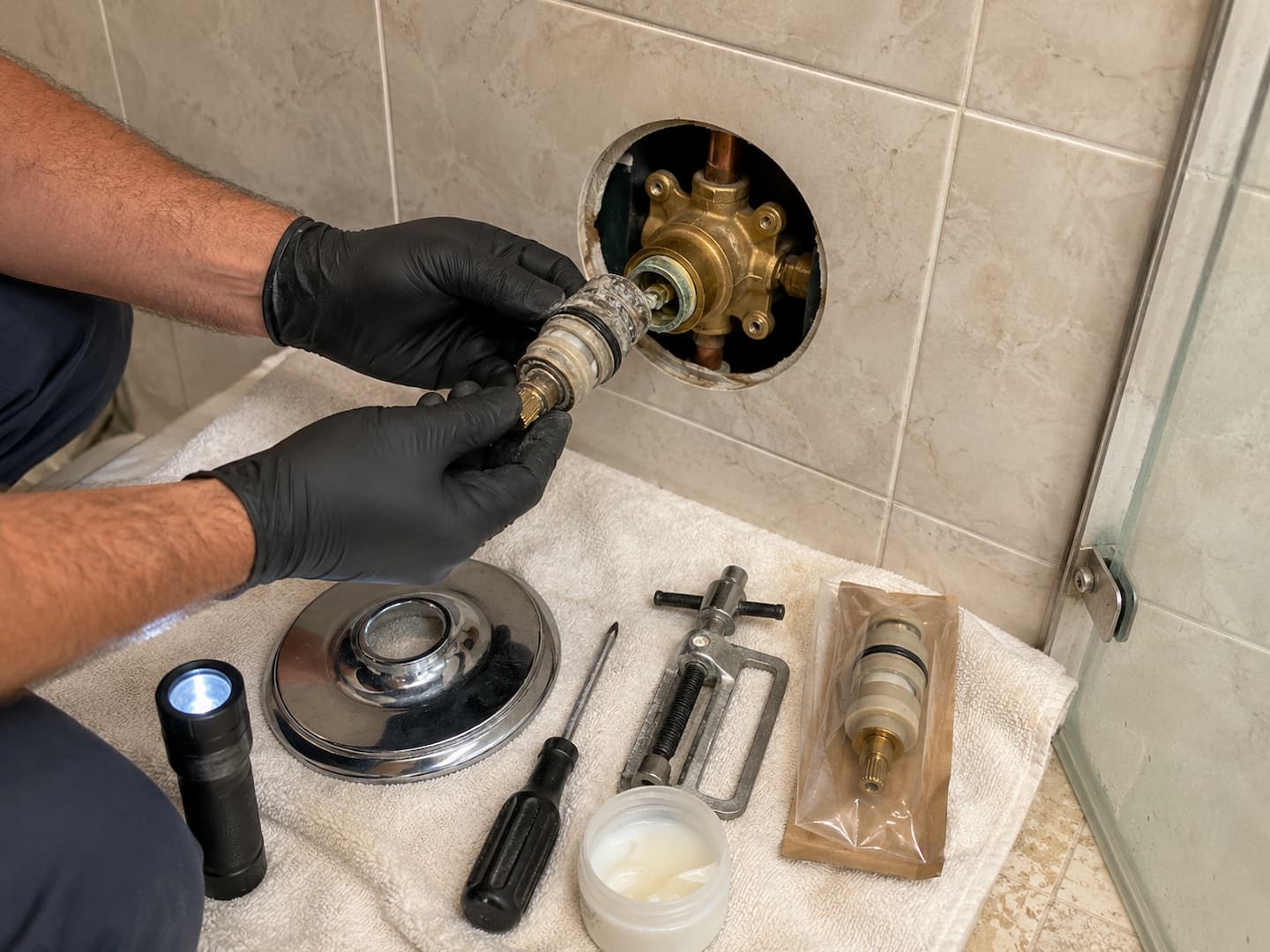
Signs Your Shower Valve Needs Repair or Replacement
Shower valve problems usually start small, then become more frustrating: temperature swings, a handle that gets harder to turn, a drip that never stops, or pressure that no longer feels right. These symptoms help narrow down whether the issue is inside the valve, at the shower head, at the tub spout diverter, or somewhere else in the plumbing system.
Shower keeps dripping
A constant drip after the handle is off often points to a worn cartridge, stem, seat, seal, or internal valve wear.
Drip after shutoffNo hot water in the shower
If other fixtures have hot water but the shower does not, the shower valve cartridge, limit stop, or balancing mechanism may be involved.
Temperature issueSudden hot and cold changes
Temperature swings can come from a pressure-balancing issue, failing cartridge, incorrect setting, water heater issue, or pressure changes.
Mixing problemHandle is stiff or stripped
Hard turning, spinning handles, broken stops, or loose trim can signal cartridge wear, stem damage, mineral buildup, or worn handle hardware.
Handle problemWeak pressure at one shower
Low flow at one shower may be caused by the shower head, cartridge restriction, valve stop position, debris, or a problem inside the valve.
Local pressure issueLeak around the trim plate
Water near the escutcheon or wall opening may indicate trim sealing problems, tub/shower splash, or a valve/body leak behind the wall.
Wall leak clueTub spout and shower run together
Water coming from both outlets can involve a failing tub spout diverter, valve diverter, restriction, or incorrect tub/shower setup.
Diverter problemWater stains below the shower
Ceiling stains, damp drywall, or musty smell after shower use can point to a valve leak, drain issue, tub spout leak, or shower enclosure leak.
Leak source diagnosisWe Identify Whether the Problem Is the Valve, Cartridge, Diverter, Pressure, or Leak Source
A shower valve sits behind the wall, so guessing can lead to unnecessary tile damage, repeated part swaps, or a leak that keeps returning. We narrow the issue before recommending a repair path.
Symptom review
We ask when the problem happens: all the time, only with hot water, only after use, only at one shower, or only when another fixture runs.
Fixture comparison
We compare nearby faucets, tubs, and other showers to separate a shower-specific valve issue from water heater, pressure, or supply concerns.
Trim and handle inspection
Loose handles, missing stops, damaged trim, mineral buildup, and water behind the escutcheon can reveal what needs attention.
Cartridge or stem evaluation
We determine whether the internal cartridge, stem, seals, balancing spool, or valve stops can be serviced without replacing the entire valve body.
Leak source confirmation
If there is moisture, we look for signs of valve seepage, tub spout leakage, shower arm leakage, drain issues, tile/grout leaks, or enclosure failure.
Repair or replacement plan
We explain whether a cartridge/trim repair is enough or whether a full shower valve replacement is the safer long-term option.
Important: if a shower will not shut off, leaks into the wall, or causes visible ceiling stains below, it should be addressed quickly. Water inside a wall cavity can damage framing, drywall, insulation, flooring, and nearby finishes.
Request Shower Valve Diagnosis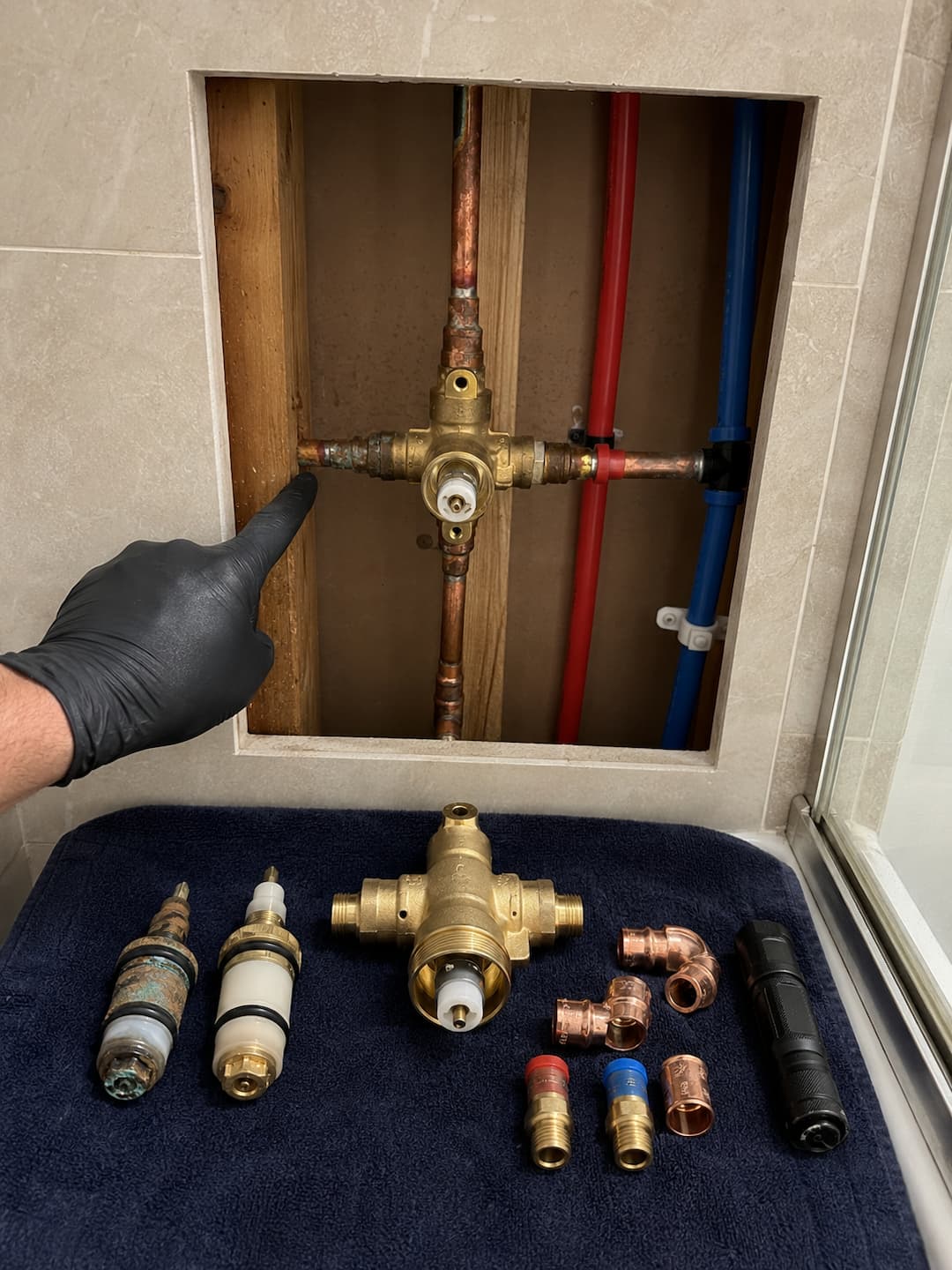
When a Cartridge Repair Is Enough — and When the Whole Shower Valve Should Be Replaced
Not every shower valve problem requires opening the wall. Many issues can be solved with a correct cartridge, stem, handle, trim, seal, or diverter repair. Full replacement becomes the better option when the valve body itself is leaking, corroded, obsolete, incorrectly installed, or no longer compatible with available parts.
Repair may make sense when:
- The valve body is not leaking inside the wall
- The correct cartridge or stem is available
- The handle, trim, or cartridge is the main failure point
- Temperature control can be restored with serviceable parts
- The valve is not heavily corroded or physically damaged
- The shower design does not require a remodel-level change
Replacement is usually better when:
- The valve body is leaking behind the wall
- Parts are discontinued, unknown, or unreliable
- The valve is seized, cracked, badly corroded, or incorrectly installed
- Temperature or pressure issues return after cartridge replacement
- The shower is being remodeled or trim compatibility matters
- You want a modern pressure-balancing or thermostatic valve upgrade
Shower Valve Parts and Problems We Commonly Service
Different valve designs fail in different ways. A correct diagnosis starts with identifying the assembly and how it controls flow, temperature, pressure balance, and tub/shower direction.
Shower Cartridge Replacement
A worn or stuck cartridge can cause dripping, stiff handle movement, poor temperature control, weak flow, or water that will not fully shut off.
Pressure-Balancing Valves
These valves help manage temperature swings when pressure changes. If the balancing mechanism sticks or fails, hot/cold control may become unreliable.
Thermostatic Shower Valves
Thermostatic assemblies are designed for more precise temperature control, but they require proper diagnosis when temperature settings drift or fail.
Tub/Shower Diverters
Diverter issues can send water to the tub spout and shower head at the same time, reduce shower flow, or make switching between outlets difficult.
Trim, Handle, and Escutcheon Issues
Loose handles, stripped set screws, damaged trim, missing seals, or poor escutcheon fit can create usability issues and water-entry points.
Valve Body Replacement
If the rough-in valve is leaking, obsolete, damaged, or not compatible with needed trim, replacing the valve body may be the best long-term repair.
A Shower Valve Leak Can Hide Behind Tile, Trim, or Drywall
Water around a shower does not always mean the valve is leaking. It can come from a shower arm, tub spout, drain, grout, enclosure, caulking, or trim seal. But when the valve body, cartridge, or connections behind the wall leak, the damage can spread quietly before it becomes obvious.
Possible shower valve leak clues
- Water stains on the ceiling below the shower
- Damp drywall, soft wall, or swelling near the valve wall
- Musty smell after showers
- Water appearing around the trim plate
- Dripping sound inside the wall after use
- Moisture that appears only when the shower runs
What we check before opening access
- Shower head arm and drop-ear connection
- Tub spout and diverter behavior
- Valve trim and escutcheon seal
- Cartridge area and visible valve seepage
- Drain and overflow clues when applicable
- Moisture location and timing after use
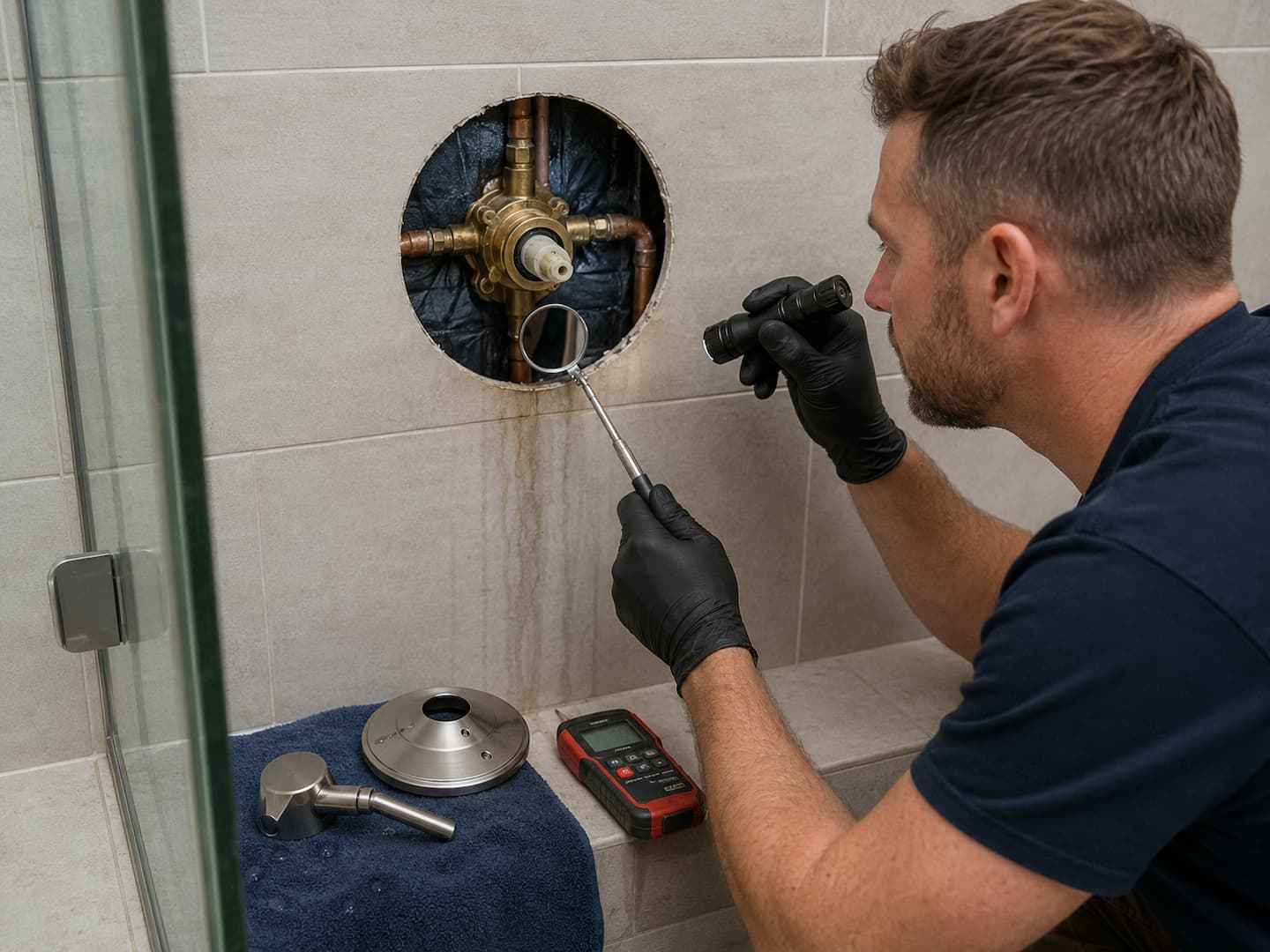
Practical Shower Valve Repairs for Vista Homes
Shower valve work should be accurate, clean, and realistic. The goal is not to replace parts blindly — it is to restore proper shutoff, temperature control, flow, and leak-free operation with the least unnecessary disruption.
Vista-based California C-36 plumbing contractor #1075429, providing residential plumbing repair and fixture service throughout Vista and nearby North County communities.
View license information →Valve-Specific Diagnosis
We separate shower valve issues from shower head, water heater, pressure, diverter, drain, or enclosure problems.
Repair When Parts Are Serviceable
Cartridge, stem, seal, handle, trim, and diverter repairs are considered when the valve body is still in reliable condition.
Replacement When It Is the Better Fix
If the valve is leaking inside the wall, obsolete, corroded, seized, or incompatible with needed trim, we explain replacement options.
Clean Access Planning
We consider whether access is possible from the front, rear wall, drywall side, or remodel opening before recommending invasive work.
Moisture and Damage Awareness
If a leak is suspected, we check timing, moisture clues, and nearby components so the true source is addressed.
Final Function Testing
After service, we test shutoff, temperature range, flow, diverter function, trim fit, and visible leak points.
Shower Valve Repair and Replacement FAQ
These answers cover common questions about shower valve problems. The right repair depends on valve type, part availability, access, leak location, and whether the issue is isolated to the shower or connected to a broader plumbing condition.
What does a shower valve do?
Why does my shower keep dripping after I turn it off?
Can a shower valve be repaired without opening the wall?
Why do I have hot water at the sink but not in the shower?
What is the difference between replacing a cartridge and replacing the whole valve?
Can a bad shower valve cause temperature swings?
Why does water come out of the tub spout and shower head at the same time?
Should I replace my shower valve during a bathroom remodel?
Is same-day shower valve service available in Vista?
Not sure whether the shower valve is the problem? Tell us what you notice: dripping, no hot water, temperature swings, low flow, a stuck handle, diverter trouble, or moisture near the shower wall.
Call (858) 727-5522When a Shower Valve Problem Points to Another Plumbing Issue
Shower symptoms can overlap with pressure problems, water heater issues, hidden leaks, or pipe conditions. These related services may be relevant depending on what the diagnosis shows.
Request Shower Valve Repair or Replacement in Vista, CA
Share what is happening with your shower and we will help identify the right next step — cartridge repair, diverter service, trim/handle repair, leak diagnosis, or full valve replacement.
- Dripping shower head or shower that will not fully shut off
- No hot water, no cold water, or sudden temperature changes
- Stuck, loose, stripped, or hard-to-turn shower handle
- Weak pressure at one shower or poor tub/shower diverter function
- Moisture near trim, shower wall, ceiling below, or suspected hidden leak
Quick Service Request
Complete the form and include any details you have about the shower valve, symptoms, and timing.
- Is the issue constant or only when the shower is running?
- Does the shower drip after shutoff?
- Is the problem hot water, cold water, pressure, or handle movement?
- Is this a shower-only valve or a tub/shower combination?
- Do other fixtures have the same hot water or pressure issue?
- Is there moisture, staining, or a musty smell near or below the shower?