
Leak Detection & Repair in Vista, CA — Fast, Precise, Clean
Seeing higher water bills, damp drywall, musty smells, or unexplained low pressure? We pinpoint hidden leaks with a diagnostics-first approach, then fix the issue with code-aware workmanship and minimal disruption.
- Non-invasive locating when possible — less mess
- Clear options before work starts — no guesswork
- Repair done right + tidy finish — respectful in-home service
Stop the leak at the source — with clean, verified repairs.
Leaks don’t just waste water — they quietly damage cabinets, drywall, flooring, and substructures. Smart Plumbing USA handles leak detection and repair with a simple rule: prove the source first, then perform a durable, code-aware fix that prevents repeat issues. Whether it’s an under-sink drip, a hidden pipe leak behind a wall, or a water heater connection seep, we’ll pinpoint what failed and explain your best repair options clearly.
- Diagnostics-first approach (no guessing, no “replace everything”).
- Repairs that hold: correct parts, correct install, clean finish.
- Verification after the fix (re-checks so you can move on confidently).
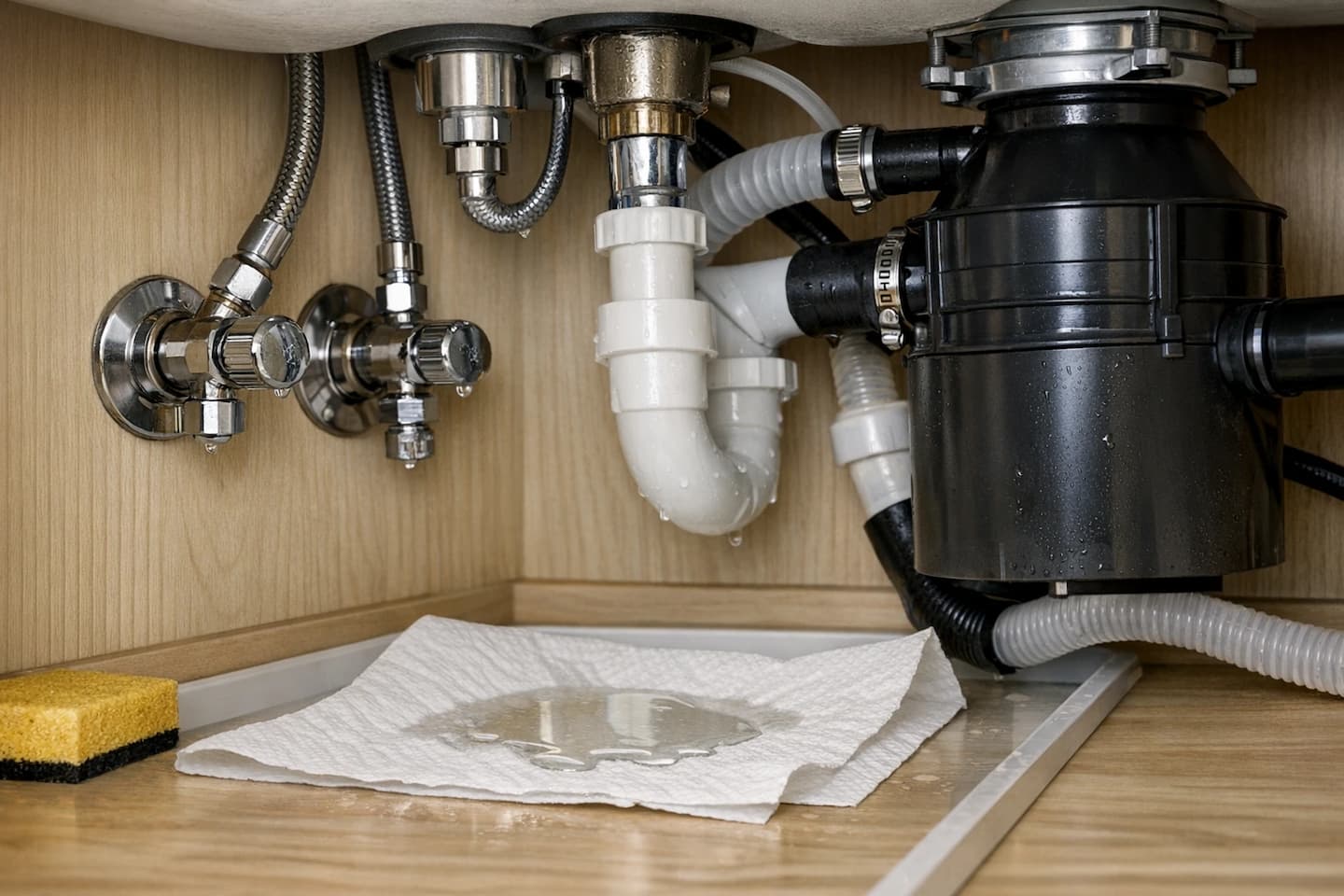
How to know you have a leak (even if you can’t see it)
Some leaks are obvious — water under a sink, a dripping faucet, or a toilet that won’t stop running. Others are subtle: moisture behind walls, a slow drain-side drip, or a tiny supply line seep that only shows up as staining weeks later. These are the most common signals Vista homeowners notice before bigger damage happens.
Common leak symptoms
- Unexplained increase in water bill or frequent meter movement
- Stains on drywall/ceilings, bubbling paint, warped baseboards
- Musty odor, recurring dampness, or flooring that feels soft
- Water in cabinets, around toilets, or near the water heater
- Low pressure or sputtering at fixtures (sometimes leak-related)
What you can do right now (safe steps)
- Shut off the nearest angle stop if the leak is at a fixture
- For active leaks, use the home’s main shutoff to prevent damage
- Dry the area and remove items from wet cabinets to reduce swelling
- Document with photos (helpful for tracking and damage records)
- Avoid harsh drain chemicals — they can worsen seals/fittings
Why homeowners choose Smart Plumbing USA for leak detection
Leak service should feel organized and professional — not stressful. We focus on accurate diagnostics, practical repair options, and workmanship that looks clean when we’re done. Whether the issue is a supply line seep, a drain-side drip, or a hidden pipe leak, our process is built to reduce disruption and prevent repeat failures.
Diagnostics-first, not guesswork
We isolate the system (supply vs. drain), narrow the zone, then confirm the source before recommending repairs. That’s how you avoid unnecessary part swaps and repeated visits.
Code-aware, durable repairs
We use correct fittings, seals, and connection methods for a fix that holds. We also check adjacent failure points that commonly leak next (valves, nearby joints, appliance tie-ins).
Clean workmanship & clear scope
You get straightforward options, a clear scope, and a jobsite kept tidy — especially important for cabinet work, wall/ceiling access, and water heater areas.
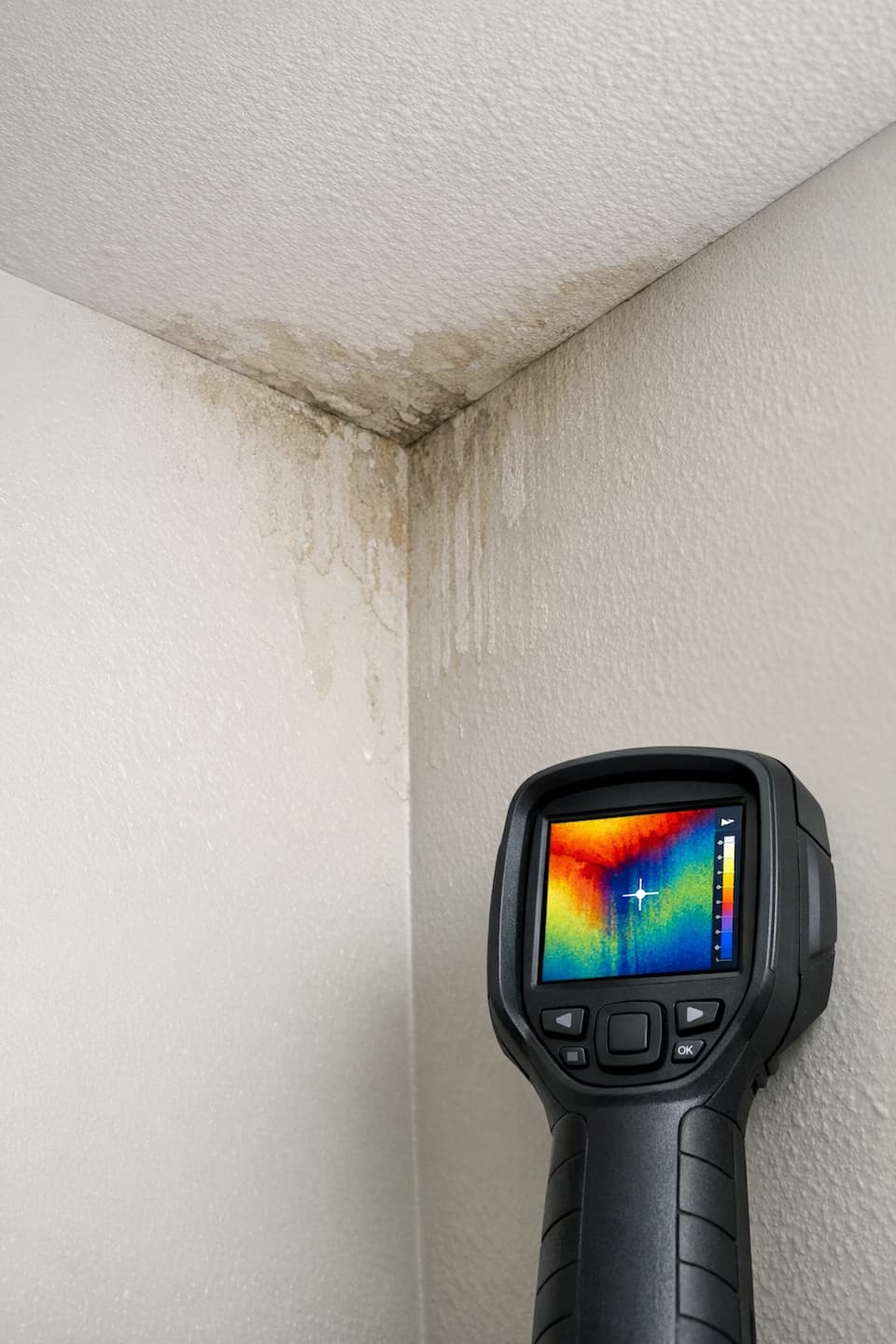
Our leak detection workflow (accurate, targeted, verified)
The goal is to identify the exact failure point with minimal disruption. We separate supply-side leaks (pressurized lines) from drain-side leaks (only during/after use), then confirm the source before moving into repair.
- 1) Symptom review & system isolation We evaluate visible signs (stains, cabinet moisture, pooling, odor, bill spikes) and isolate fixtures/lines to determine supply vs. drain behavior.
- 2) Source confirmation We inspect valves, connections, fittings, fixture components, and likely leak paths. For hidden leaks, we use moisture data to confirm the zone.
- 3) Repair options (clear scope) You’ll get practical options based on what failed — tighten/rebuild/replace or rework a connection — with the goal of a durable, code-aware fix.
- 4) Verification & monitoring guidance We re-check the repair and advise what to monitor (pressure changes, damp return, cabinet swelling, staining) so you know the problem is resolved.
Under-sink leaks & drain leaks (the most common “slow damage” issues)
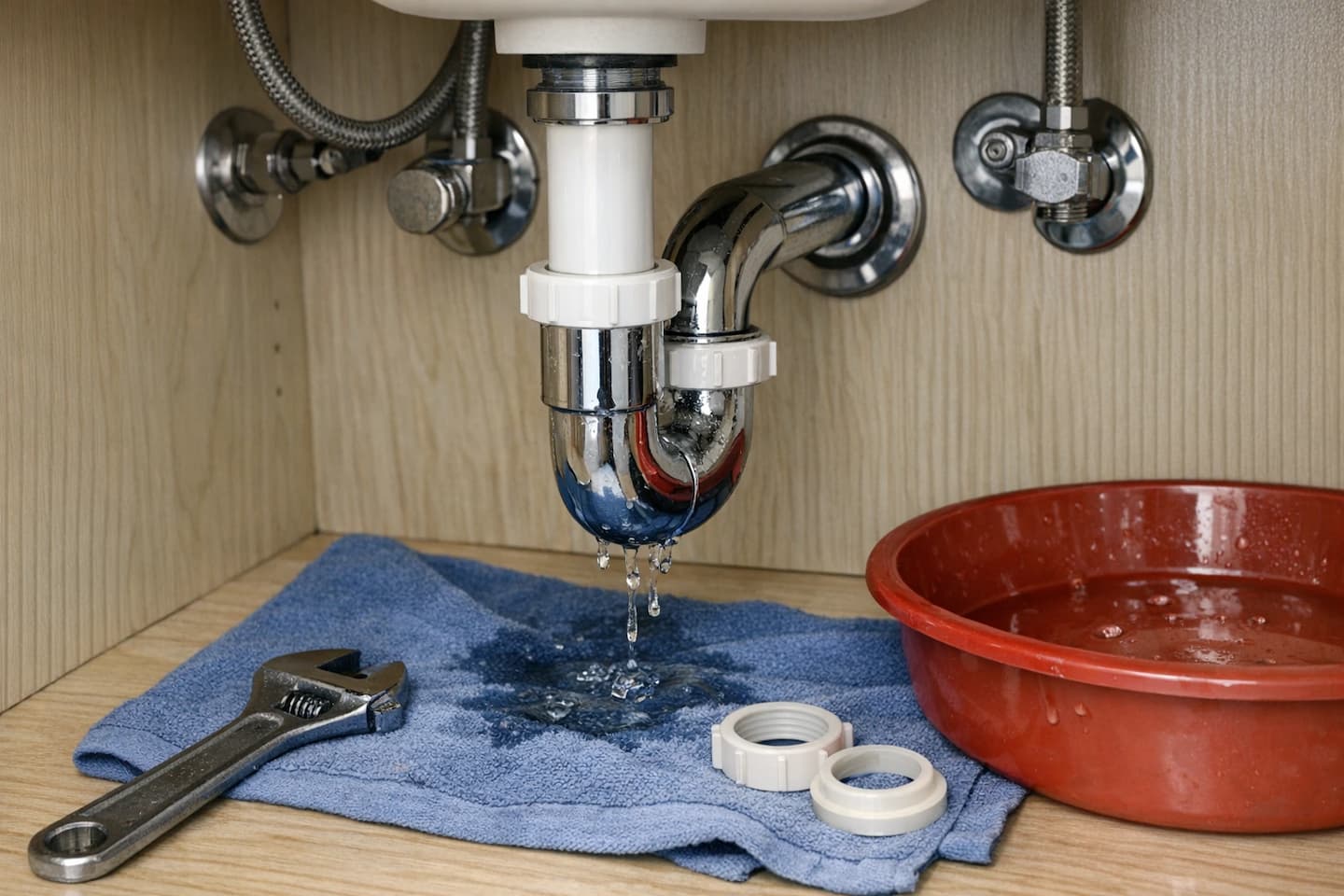
Many cabinet leaks aren’t dramatic — they’re persistent. A tiny slip-joint drip, a misaligned P-trap, or a worn supply line can quietly swell wood, loosen laminate, and create odor over time. We check both sides of the system: pressurized supply lines (valves, hoses, faucet feeds) and the drain assembly (tailpiece, trap, disposer and dishwasher connections).
Supply-side checks
- Angle stops (shutoff valves) and valve stems
- Supply lines (micro-sprays, pinholes, corrosion)
- Faucet connections and pull-down sprayer hoses
- Appliance tie-ins (dishwasher, filtered water)
Drain-side checks
- P-trap alignment, slip joints, and sealing washers
- Tailpiece and extension connections
- Disposer outlet and dishwasher inlet
- Cracked fittings or stressed piping from movement
Hidden leaks behind walls, ceilings, or under floors
Hidden plumbing leaks often show up as secondary symptoms — staining, bubbling paint, a musty smell, or flooring that feels slightly soft. In Vista homes, we commonly see issues from aging supply lines, loose compression fittings, pinhole corrosion, shower valve seepage, toilet seal problems, and intermittent leaks that only happen during use. The key is confirming where water is entering the structure, not just where it finally appears.
Vista homeowner tip
If you notice new ceiling stains after showers or “random” damp drywall near a bathroom, the source is often upstream (valves, supplies, shower bodies) — not the spot where the stain forms.
Typical hidden leak sources
Behind-wall pipe leaks, shower valve bodies and diverters, tub waste/overflow assemblies, toilet wax ring seepage, dishwasher and icemaker lines, and small supply-side pinholes that wick into drywall, insulation, or framing. We also check nearby connections that can “sweat” or drip intermittently under pressure changes.
Why fast detection matters
Trapped moisture can swell cabinetry, loosen flooring, and create odors that don’t go away until the source is fixed. Catching a hidden leak early often means a smaller access area, less drywall/cabinet replacement, and fewer chances for repeated staining or microbial growth conditions.
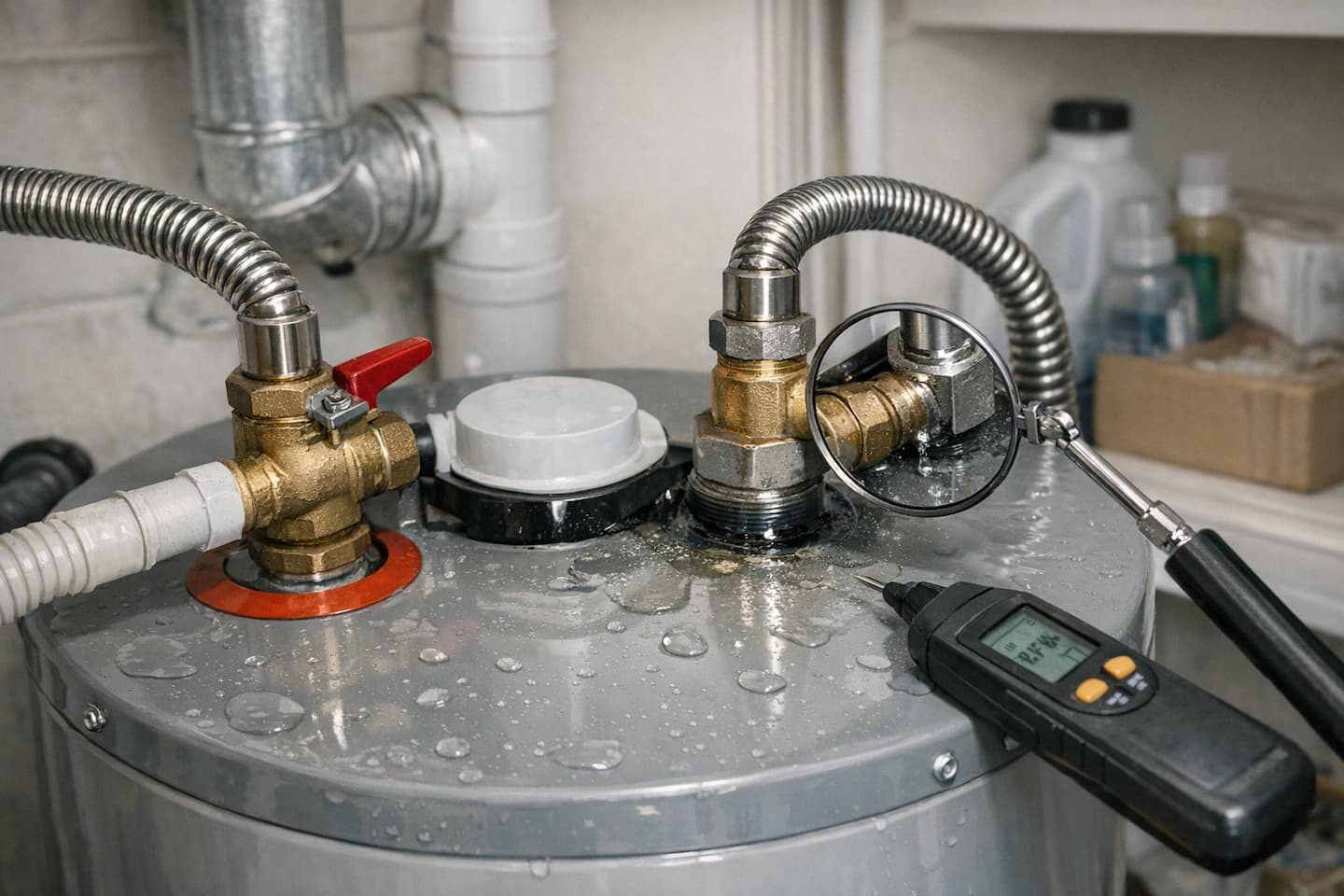
Water heater leaks: connections, valves, and early warning signs
Water heater leaks don’t always mean the tank is failing — many start at fittings, valves, or discharge lines. We inspect the cold/hot connections, shutoff valve, T&P valve discharge, drain valve, and nearby joints to determine whether a repair is appropriate, or if replacement planning is the safer long-term solution.
- Connection seepage: fittings, dielectric unions, and flex lines can loosen or corrode, creating slow leaks that pool at the base or inside a pan.
- T&P discharge issues: pressure/temperature relief dripping, a blocked discharge line, or no proper drain path should be evaluated quickly for safety.
- Tank-related leaks: rust, damp insulation, or active leaking from the tank body typically indicates end-of-life and calls for replacement planning.
Leak Detection & Repair FAQ
A few quick answers before you schedule service. If you’re seeing active leaking or rapid water use, calling sooner can help reduce damage.
How do you tell if it’s a supply leak or a drain leak?
Can you find a hidden leak without opening walls everywhere?
What should I do immediately if the leak is active?
Do you verify the repair after it’s completed?
Request Leak Detection & Repair in Vista, CA
Tell us what you’re seeing and we’ll recommend the right next step—diagnostics first, clear scope, and a clean repair that’s verified before we wrap up. If water is actively leaking, calling is the fastest option.
- Accurate source confirmation (supply vs. drain, visible vs. hidden)
- Practical repair options with clear scope and upfront communication
- Code-aware workmanship: correct fittings, seals, and connections
- Verification after the fix (re-checks and monitoring guidance)
How it works
Quick Request Form
Share a few details and we’ll reply with next steps. For active leaks or shutoff situations, call now.
- Where the leak shows up (kitchen, bath, laundry, water heater area).
- When it happens (constant vs. only during/after use).
- Any visible signs (staining, bubbling paint, cabinet swelling, pooling).