
Repiping in Vista, CA — Whole-Home & Partial Repipe Done Right
Low water pressure, rusty water, frequent leaks, or old galvanized / polybutylene lines? Repiping replaces aging supply piping with modern materials (like PEX or copper) so your home has reliable flow, clean water, and fewer surprise failures. We plan routes carefully, protect your home, and pressure-test everything before we wrap up.
- Clear repipe plan & routing — minimal disruption
- PEX or copper options — explained, not pushed
- Pressure-tested workmanship — verified before we leave
Replace aging pipes — restore pressure, clarity, and peace of mind.
Repiping is the most direct way to solve recurring plumbing problems caused by old or failing supply lines. If your home has frequent leaks, corroded galvanized pipes, polybutylene concerns, or persistent low pressure, a repipe replaces those weak points with modern, reliable piping and cleaner connections to every fixture. Smart Plumbing USA designs a practical route, protects your home during work, and finishes with full-system verification.
- Stop repeat leaks and “patch fatigue” from constant repairs.
- Improve flow and consistency at showers, faucets, and appliances.
- Modern materials and clean tie-ins for long-term reliability.
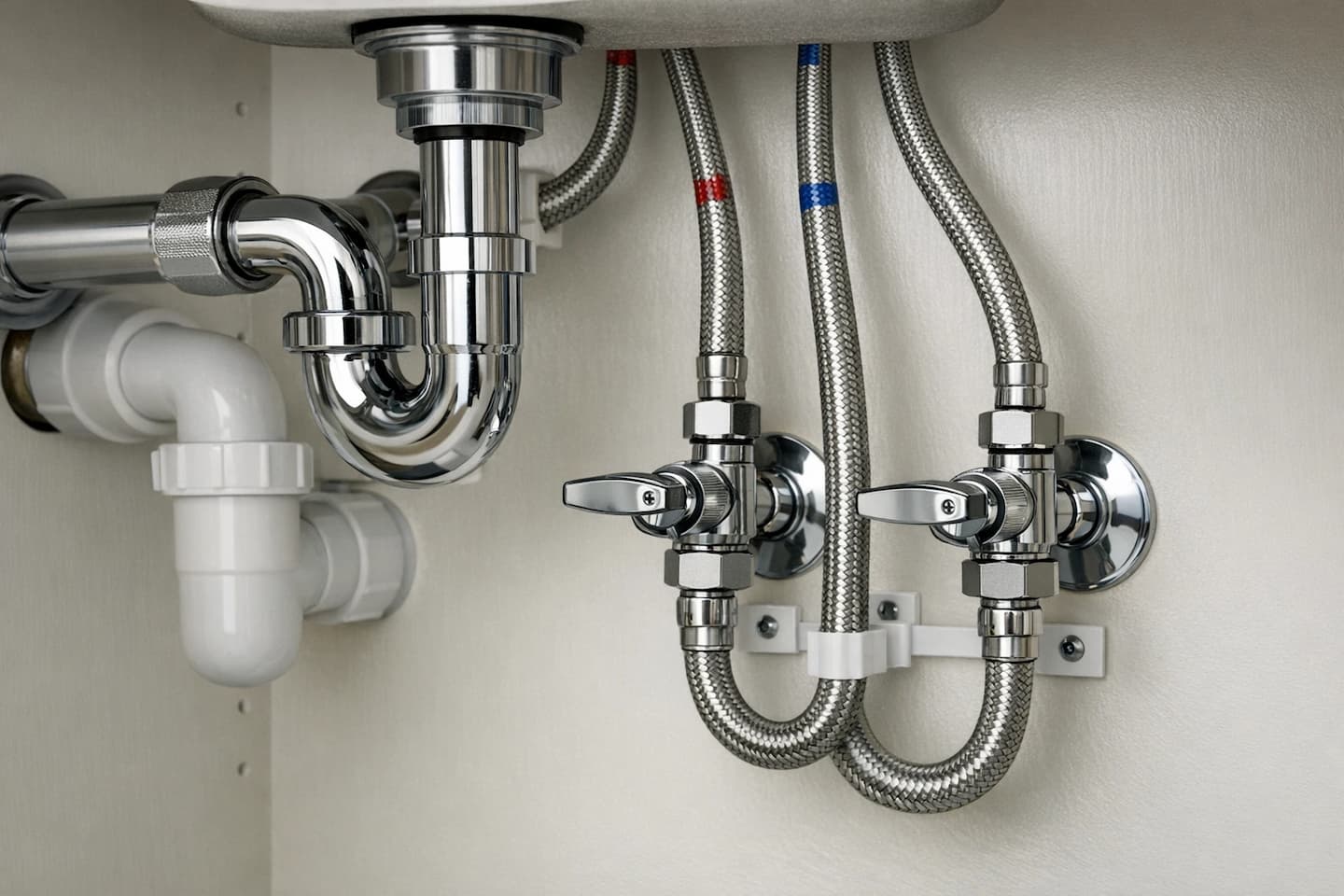
How to know it’s time to repipe (not just another repair)
A single leak can often be repaired. But when plumbing problems keep returning, the real issue is frequently the piping itself: corrosion, failing joints, brittle sections, or outdated materials that don’t age well. These are the most common signs Vista homeowners notice before they decide on a whole-house or partial repipe.
Common “repipe” signals
- Recurring leaks (especially pinholes or “new leak every few months”)
- Rusty / brown water, metallic taste, or sediment in aerators
- Low water pressure that worsens over time (often corrosion-related)
- Multiple repairs and patches throughout the home
- Noisy pipes, water hammer, or inconsistent hot/cold performance
What you can do right now (safe steps)
- Locate and test your main water shutoff (and know where it is)
- Check your water meter for movement when no fixtures are running
- Take photos of any corrosion, stains, or past repairs for reference
- Avoid “temporary fixes” that hide damage (especially in walls/ceilings)
- Schedule an evaluation to confirm pipe type, access, and best route
Why homeowners choose Smart Plumbing USA for repiping
Repiping is a big project — it should feel organized, clean, and predictable. We focus on route planning, material clarity, and verification. That means fewer surprises, fewer “extra holes,” and a finished system you can trust for years.
Smart routing to reduce disruption
We map fixture groups and choose access paths that keep openings minimal when possible (attic, crawlspace, closets, and targeted wall access). The goal is a clean installation and a layout that makes future service easier — not harder.
PEX vs. copper — explained clearly
We review the pros/cons based on your home, water conditions, and budget. You’ll understand what’s being installed, how it will be supported/secured, and how fixture tie-ins and shutoffs will be handled.
Pressure-tested, code-aware results
A repipe isn’t “done” until it’s verified. We pressure test, check fixture performance, confirm hot/cold behavior, and complete the jobsite walkthrough so you know what changed and how to maintain it.
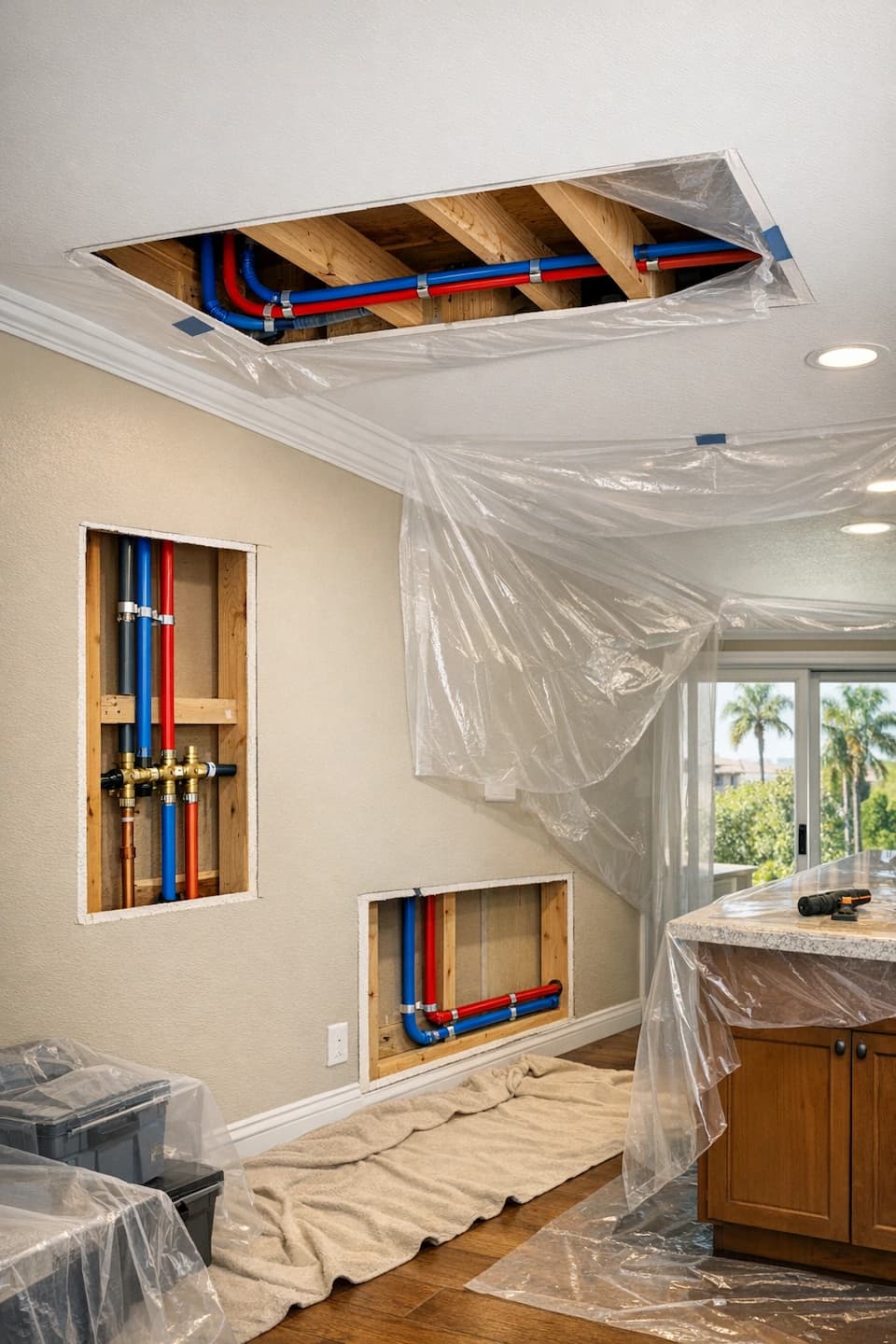
Our repiping workflow (planned, protected, and verified)
Repiping shouldn’t feel chaotic. We confirm what you have, map the best route, install carefully, and verify performance. Whether it’s a whole-house repipe or a targeted section replacement, our goal is the same: reliable supply lines and clean fixture tie-ins.
- 1) On-site evaluation We identify pipe material (galvanized, copper, CPVC, polybutylene), review leak history and pressure, and assess access (slab, crawlspace, attic).
- 2) Route planning & scope We map fixture groups, choose the cleanest route, confirm shutoff strategy, and explain material options so you know what’s being replaced and why.
- 3) Home protection & staged water shutdown We protect floors/work areas, stage the work so disruptions are manageable, and keep you informed about water-off windows.
- 4) Installation + pressure testing New lines are installed, supported/secured properly, and pressure-tested. We then verify fixture performance and hot/cold behavior.
What gets replaced during a repipe (and what we upgrade while we’re there)
A proper repipe is more than just “new pipe.” It’s a complete, organized supply system: clean transitions, secure support, and sensible shutoff control. We replace failing supply runs and also address common weak points that create future service calls — especially at fixture tie-ins and water heater connections.
Supply distribution (home-wide)
- Hot and cold main runs and branches to fixture groups
- Clean routing through attic/crawlspace when possible
- Secure supports/clamps to prevent movement and noise
- Proper transitions and fittings (no “mixed-material guesswork”)
Shutoffs & tie-ins (where leaks love to start)
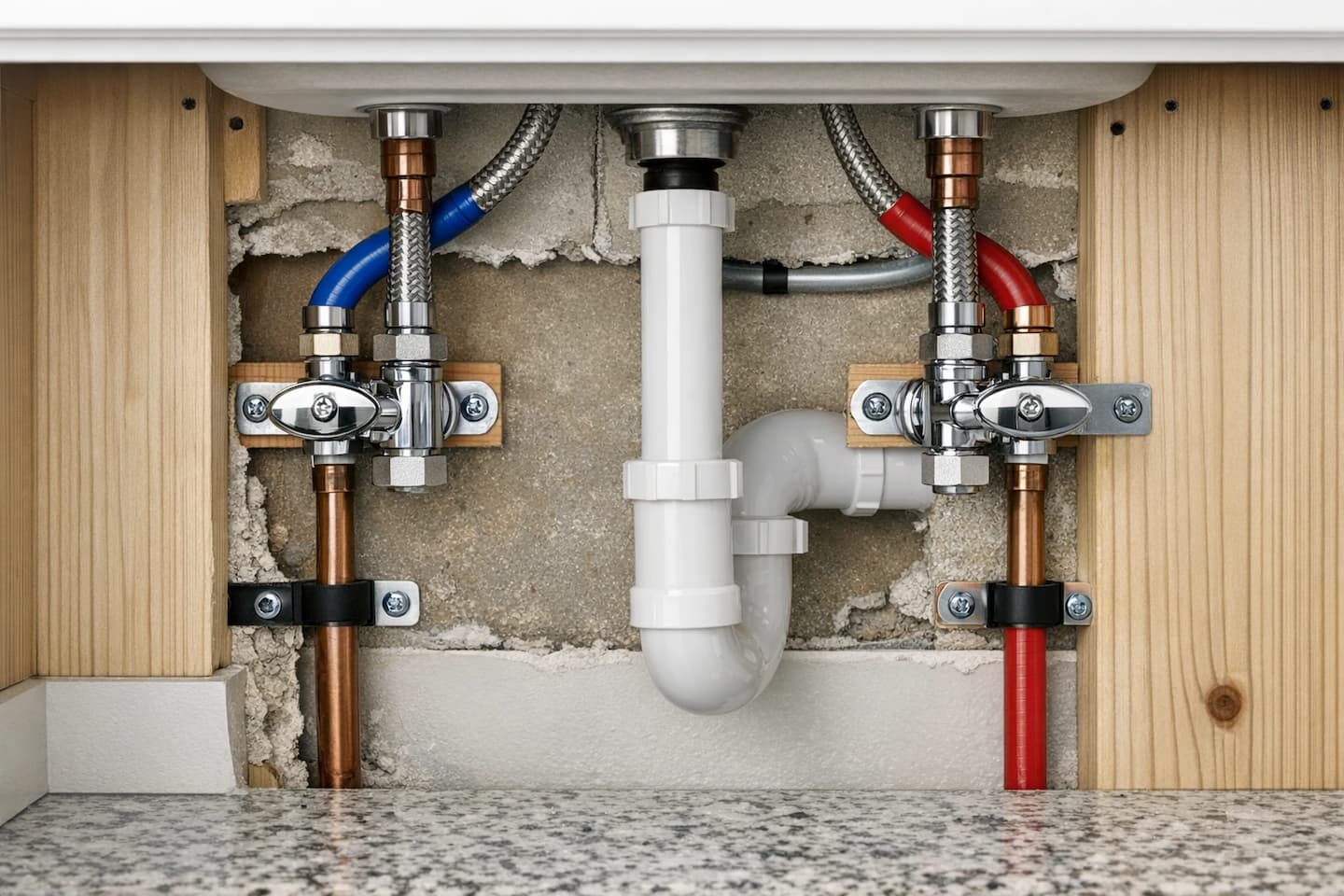
- Main shutoff strategy and fixture shutoff replacements as needed
- Fixture connections: faucets, toilets, showers, laundry, hose bibs
- Appliance feeds: dishwasher, refrigerator/ice maker, filtration
- Water heater tie-in planning (valves, flex connectors, safe layout)
Repiping with minimal wall openings (attic, crawlspace, slab considerations)
Many homeowners worry that repiping means tearing the house apart. In reality, the best approach depends on your home: slab vs. raised foundation, attic access, fixture grouping, and where the main line enters. Our job is to choose the smartest route, keep openings targeted, and deliver a finished system that’s pressure-tested and easy to service.
Vista homeowner tip
If you’ve had slab leak scares or repeated under-floor issues, many repipes can be rerouted overhead (attic/upper walls) to reduce future risk and simplify access for any repairs down the road.
Common access paths we use
Attic routing to drop lines down to bathrooms/kitchens, crawlspace routing for raised foundations, and targeted wall access via closets, behind vanities, or other low-visibility spots. We also plan the cleanest transitions at fixture groups so the system performs consistently.
Why testing & code details matter
A repipe should be pressure-tested and installed with correct supports and transitions. We also evaluate related components that affect performance — like shutoff control and pressure behavior — so the new piping isn’t stressed by avoidable conditions.
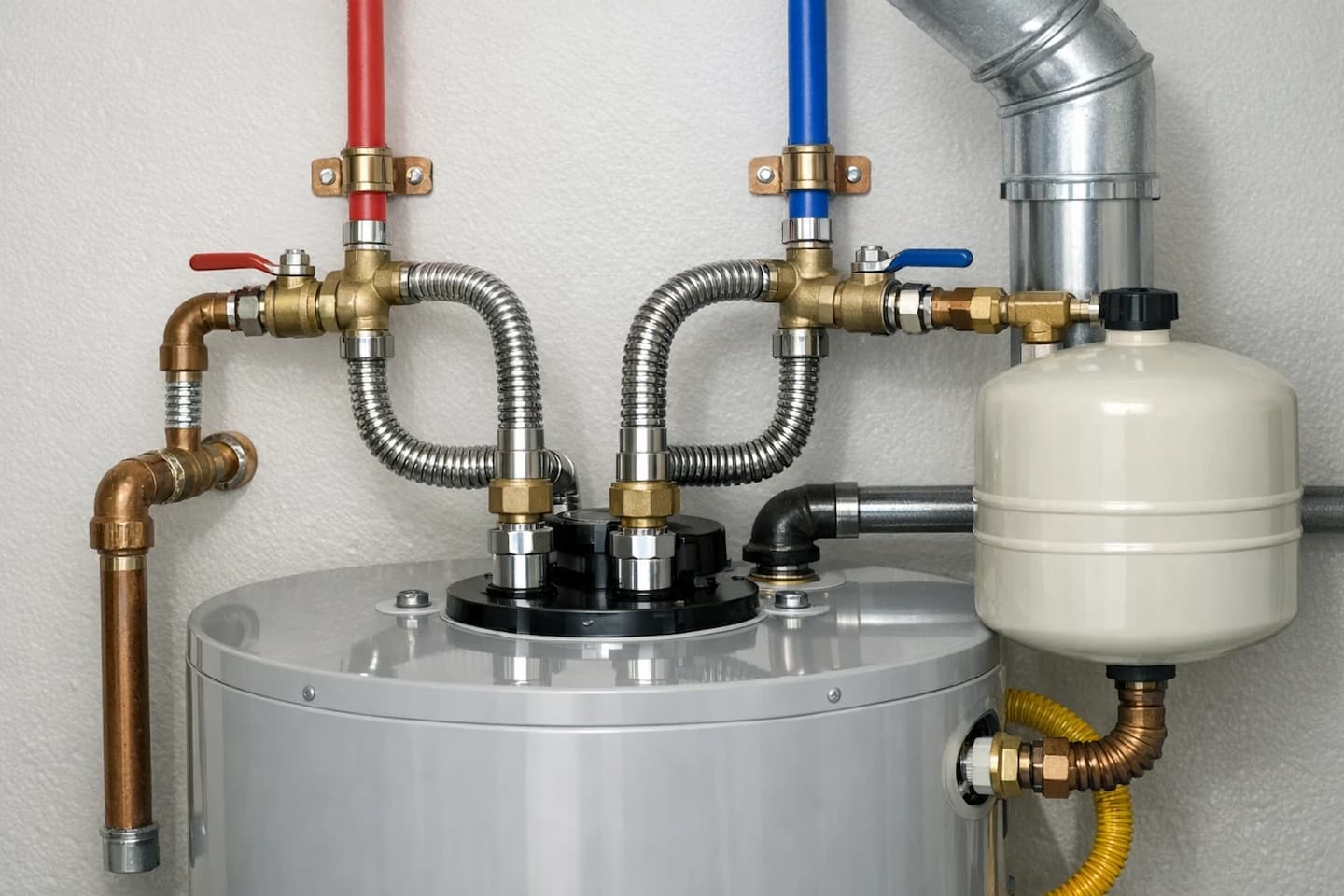
Water heater tie-ins during repiping (hot/cold, valves, and safe layout)
Your water heater is a key junction in the plumbing system — and a common area for future leaks if connections are poorly planned. During repiping, we ensure the hot/cold lines are routed cleanly, shutoffs are practical, and the overall layout supports safe operation and maintenance.
- Clean hot/cold transitions: proper fittings and secure supports reduce strain and vibration at the heater connections.
- Service-friendly shutoff control: we prioritize access so future maintenance (or emergency shutoff) is straightforward.
- Performance check after install: we verify hot water delivery, fixture behavior, and pressure stability after the repipe.
Repiping FAQ
Quick answers before you schedule. Repiping is a planning-driven project — we’ll explain options clearly and keep disruptions manageable.
How long does a whole-house repipe usually take?
Is PEX or copper better for repiping?
Will you have to open a lot of walls?
Do you verify the system after the repipe is finished?
Request Repiping in Vista, CA
Tell us what’s happening (low pressure, rusty water, recurring leaks, old galvanized or polybutylene) and we’ll recommend the right scope — partial repipe or whole-house repipe. We’ll outline material options, routing, water-off windows, and verification steps before work begins.
- Clear repipe scope: whole-home or targeted sections (based on risk)
- PEX or copper options explained with practical pros/cons
- Home protection + organized workflow to reduce disruption
- Pressure testing + performance verification before wrap-up
How it works
Quick Request Form
Share a few details and we’ll reply with next steps. If you have an active leak or need to shut off water, calling is the fastest option.
- Pipe type (if known): galvanized, copper, CPVC, polybutylene, PEX.
- What you’re noticing: low pressure, rust-colored water, recurring leaks, noisy pipes.
- Home layout: slab vs. raised foundation, number of bathrooms, fixture locations.