
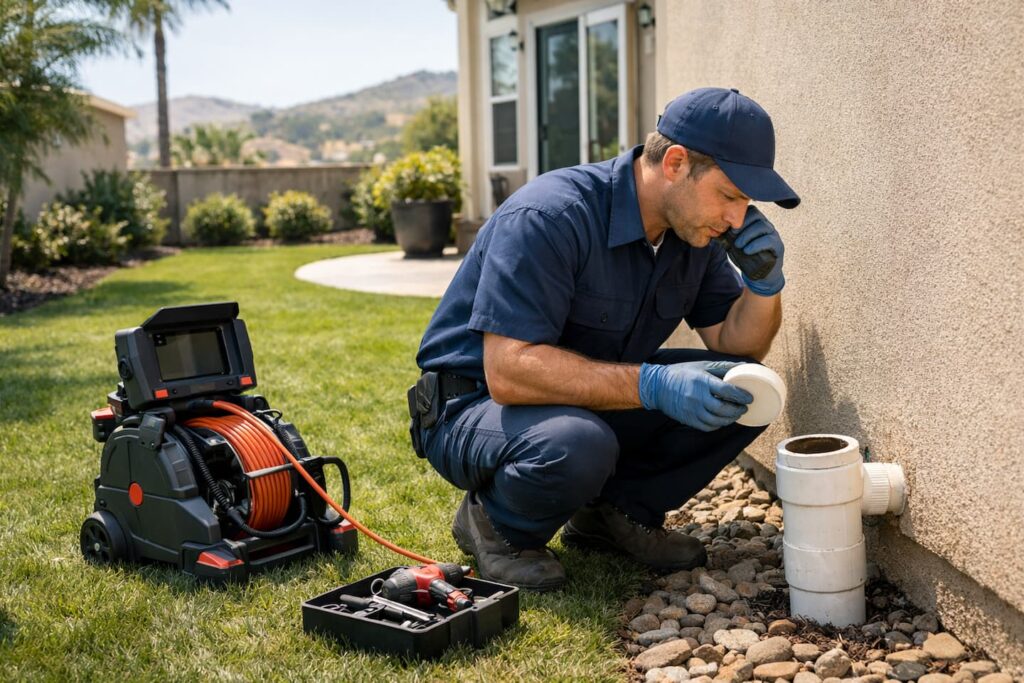
Yes — and in real homes, they clog sewer lines more often than people expect.
The confusion usually comes from the label. If a product says flushable, it sounds like it must be safe. But in plumbing, “flushable” does not mean what most homeowners think it means. It may pass through the toilet bowl — that’s it. It does not guarantee the wipe will move cleanly through your pipes, break down like toilet paper, or avoid creating a blockage somewhere downstream.
That gap between expectation and reality is exactly why wipes are such a common cause of recurring drain and sewer issues. Most problems don’t start with one big mistake. They start with habits that feel harmless — flushing a wipe here and there, combining that with grease from the kitchen, a bit of buildup in the pipes, maybe older plumbing or minor root intrusion. Over time, those conditions stack together. Wipes catch, debris builds, and eventually the system reaches a point where normal use is enough to trigger a backup.
This guide explains why that happens, how wipes behave differently from toilet paper, what warning signs to watch for, and when a wipe-related issue is still a simple clog — versus when it’s becoming a bigger sewer-line problem.
Why the word “flushable” is misleading
The word itself is the problem.
Most homeowners interpret flushable as “safe for my plumbing system.” But in practice, it usually just means the product can physically leave the toilet bowl. It says nothing about what happens after that point — inside your home’s pipes, in the sewer lateral, or further downstream.
That difference matters more than it seems. Plumbing systems are designed around one key assumption: that only toilet paper and human waste are regularly flushed. Toilet paper is engineered to break apart quickly in water. Wipes are not. Even those marketed as “flushable” are built to be stronger, more durable, and less likely to disintegrate — which is exactly what makes them risky once they enter the system.
So while a wipe may disappear from view after flushing, it may still be intact several feet — or several dozen feet — down the line. And that’s where problems begin.
Why wipes behave differently from toilet paper
To understand the issue, it helps to look at what plumbing systems are actually designed to handle.
Toilet paper is intentionally fragile once it hits water. It softens, breaks apart, and moves with wastewater through the system. That breakdown is critical — it reduces the chance of buildup, snagging, or accumulation in pipes.
Wipes are designed the opposite way. They need to stay intact during use, which means they are stronger and more resistant to tearing. Once flushed, that strength becomes a problem. Instead of breaking apart, wipes tend to:
- stay whole as they travel through pipes,
- fold and bunch up in narrow sections,
- catch on rough pipe walls or debris,
- tangle with other wipes or materials,
- and create a base for larger blockages to form.
This is why wipes are rarely the “only” cause of a clog — but they are very often the thing that turns minor buildup into a full blockage.
What actually happens after you flush a wipe
Flushing is just the first step. After that, the wipe still has a long path to travel.
It moves through the toilet trap, into the branch drain, then into larger drain lines, and eventually into the main sewer lateral. At every stage, there are opportunities for it to slow down or get stuck — especially if the pipe isn’t perfectly clean and smooth.
This is why problems often feel delayed. A homeowner may flush wipes for months without noticing anything unusual. Then one day, a toilet backs up or a shower starts filling with water. It feels sudden, but it usually isn’t. The system has been building toward that failure for a while.
In most cases, the wipe you flushed today is not the one that causes the clog tomorrow. The issue is cumulative. Over time, wipes create a line that is easier and easier to block — until normal use pushes it over the edge.
Why wipes and grease are a bad combination
If wipes are one half of the problem, grease is often the other.
Grease from kitchen drains cools and sticks to pipe walls, creating a sticky coating that traps debris. When wipes move through a line that already has grease buildup, they are far more likely to catch and stay there. Once one wipe gets stuck, it acts like a net — catching paper, sludge, and additional wipes.
This combination is one of the most common causes of repeat clogs in real homes. The line isn’t just blocked by one object. It’s narrowed, coated, and loaded with debris. That’s why a simple clearing often doesn’t last.
In these cases, homeowners often move from occasional clogs to recurring service calls. At that point, a more thorough approach like hydro jetting may be needed to actually clean the buildup off the pipe walls instead of just opening a small path through it.
Wipes and older sewer lines: why problems keep coming back
Wipes don’t just create problems — they expose existing ones.
If a sewer line has minor damage, rough joints, scale buildup, or root intrusion, wipes are much more likely to snag there than in a newer, smooth pipe. Once they catch, they accelerate the clogging process by trapping everything that comes after.
This is why some homes deal with repeat backups even after cleaning. The underlying condition of the pipe hasn’t changed. The wipes simply make it worse.
If a line has a history of recurring clogs, backups affecting multiple fixtures, or known root issues, it may need more than cleaning. In those cases, evaluating whether sewer line repair is necessary can save a lot of repeated frustration.
Early warning signs wipes may be affecting your plumbing
Wipe-related problems rarely start with a dramatic backup. They usually show smaller signs first.
Pay attention to patterns like:
- toilets that need frequent plunging,
- slow drains in multiple fixtures,
- gurgling sounds when water is used elsewhere,
- water backing up in tubs or showers,
- sewer odors after heavy water use,
- or clogs that keep coming back after being cleared.
The key signal is when more than one fixture is affected. That usually means the issue is not local — it’s somewhere in the main drain or sewer line.
If you’re already seeing those signs, it’s often better to address the buildup early with proper drain cleaning rather than waiting for a full backup.
Are “flushable” wipes ever safe?
The honest answer: not as a routine habit.
In a brand-new, perfectly clean sewer line, an occasional accidental flush might not cause an immediate problem. But most homeowners don’t know the exact condition of their pipes — and that uncertainty matters.
If there is any buildup, roughness, grease, or minor damage in the line, wipes increase the risk of a blockage. That’s why plumbers and utilities tend to give simple, consistent advice instead of trying to define a “safe” amount.
It’s not about one wipe. It’s about what repeated use does over time.
What to do instead
The simplest solution is also the most effective: don’t flush wipes at all.
Keep a small trash can in the bathroom and treat wipes like any other disposable product. That small change eliminates one of the most common causes of recurring sewer problems.
If your household prefers wipes for convenience or hygiene, this is really about making disposal just as convenient. A lined trash bin near the toilet is usually all it takes to change the habit.
And if you’re dealing with a home that already has older plumbing, past backups, or known drain issues, avoiding wipes becomes even more important. At that point, you’re not just preventing a clog — you’re avoiding a much larger repair down the line.
Frequently Asked Questions
Yes. Even wipes labeled flushable can stay intact in pipes, catch on debris, and contribute to blockages over time.
Toilet paper breaks down quickly in water. Wipes are designed to stay strong, so they don’t break apart easily and can get stuck in the plumbing system.
They can contribute to serious blockages, especially when combined with grease or roots. Repeated clogs may eventually require cleaning or repair of the sewer line.
Usually not by itself, but repeated flushing creates buildup over time. That’s what leads to most real-world problems.
Only toilet paper and human waste. Everything else — including wipes — should go in the trash.
Final thoughts
“Flushable” wipes don’t fail because of one bad flush. They fail because they don’t behave like toilet paper — and plumbing systems are built with that difference in mind.
If your drains are already slowing down, backing up, or showing signs of buildup, it’s better to address the issue early before it turns into a full sewer-line problem. You can start by reviewing your options or reaching out here: contact Smart Plumbing USA.