
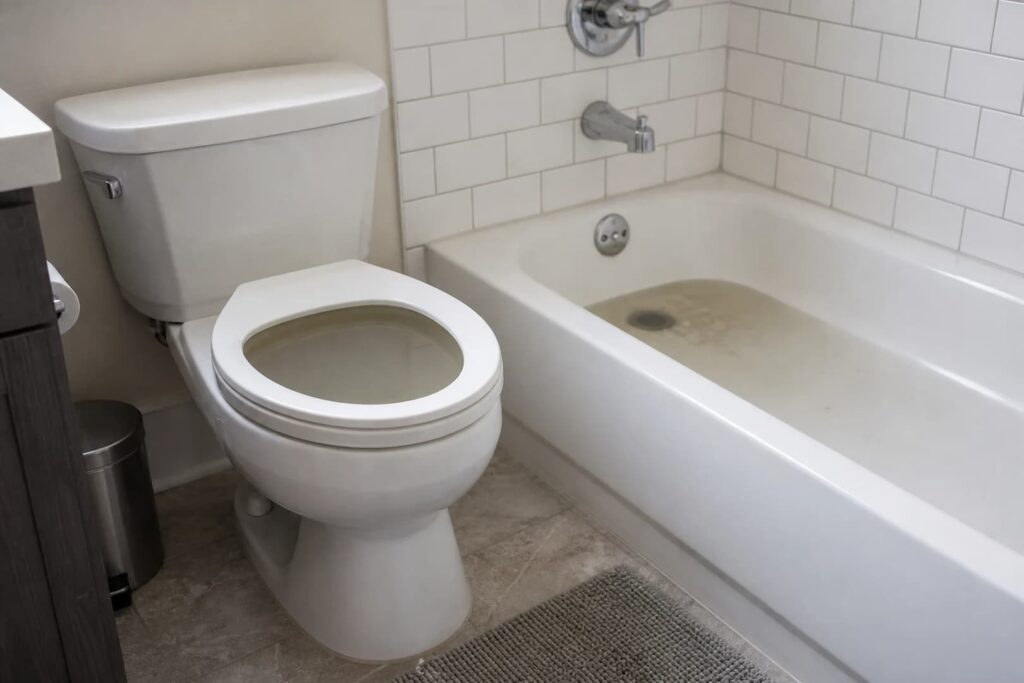
When a toilet backs up into the shower or bathtub, the blockage is usually not inside the tub. It is farther downstream, in a drain section shared by the toilet and the bathing fixture.
A flush sends a large slug of water into the drain in a few seconds. If that water meets a restriction, it needs somewhere else to go. The shower or tub is often the first place you see it because its drain opening sits lower than a sink rim and usually lower than the top of the toilet bowl. Water, air, and sometimes sewage are pushed back through that low opening.
This is different from a little hair clog that makes a shower drain slowly. A toilet-to-tub backup points to a shared bathroom branch, the building drain, or the main sewer lateral. More than one fixture is involved. Continuing to flush, shower, run laundry, or start the dishwasher can add gallons of wastewater behind the obstruction and turn a warning into an overflow.
Stop using water first. Keep children and pets away from the affected bathroom, and do not pour chemical drain cleaner into either fixture. Once the immediate risk is contained, the pattern of affected drains can help narrow the location. Smart Plumbing USA provides professional drain cleaning in Vista, CA and can check whether the restriction is local to one bathroom or deeper in the sewer line.
What the backup usually means
Every fixture has its own trap and short drain connection, but those individual lines eventually join. In many bathrooms, the toilet and tub or shower connect to the same branch before that branch meets a larger building drain. A blockage downstream of the connection affects both fixtures, even though the clog may be several feet away from either one.
The direction of the water offers a useful clue. If the shower simply drains slowly when nobody uses the toilet, hair and soap buildup near the shower may still be the whole problem. If the tub drain gurgles, bubbles, or releases water only when the toilet flushes, the toilet discharge is pressurizing a shared section of pipe. If fixtures in other rooms also react, the likely problem moves farther downstream toward the building drain or sewer lateral.
A vent problem can make drains noisy or slow, but a blocked vent alone does not usually force a meaningful volume of dirty water up through a tub. Visible wastewater is much stronger evidence of a drainage restriction. The vent may be part of the diagnosis, especially if there is persistent gurgling without a backup, but it should not be the first assumption when water is already changing direction.
The tub is not necessarily the source of the sewage. It is acting as the relief point. Cleaning the tub drain opening may remove hair at the strainer, but it will not clear a clog located beyond the point where the toilet line joins.
What to do right now
The safest response is simple, though it can feel inconvenient: stop adding water to the drainage system. That means more than avoiding the problem toilet. A washing machine discharge can release a large volume quickly, and a dishwasher may drain automatically even after you leave the kitchen.
- Do not flush the toilet again. A test flush can be the flush that sends wastewater over the tub edge.
- Pause showers, sinks, laundry, and dishwashing. Ask everyone in the home to limit water use until the line has been evaluated.
- Turn off appliances that may drain on their own. Cancel an active dishwasher or washer cycle according to the appliance instructions.
- Keep people and animals out of the room. Water that came from a shared toilet drain should be treated as contaminated.
- Protect the nearby floor without spreading the water. Use a barrier at the doorway if needed. Do not carry wet towels through the house.
- Call promptly if the level is rising. An active sewage backup can damage flooring, baseboards, cabinets, and wall cavities.
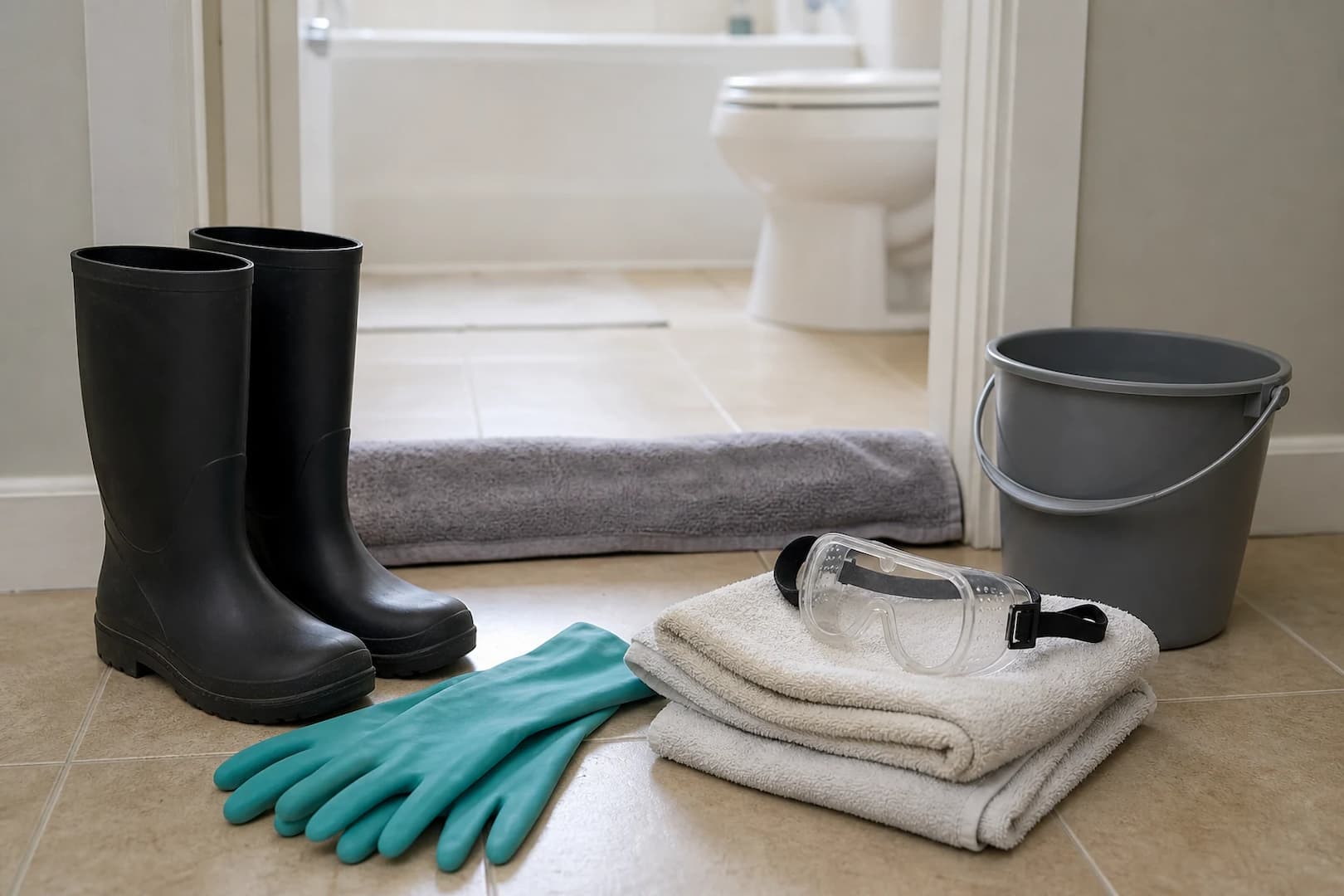
If you must handle a small amount of contaminated water, wear waterproof gloves, boots, and eye protection. Cover cuts with waterproof bandages. For a larger release, porous materials, or wastewater that reached wall cavities, professional cleanup may be appropriate. The CDC’s cleanup guidance recommends protective gear when sewage is involved and keeping children and pets away from the affected area.
Why the shower or bathtub backs up first
Drainage works by gravity. Wastewater follows the available downward path until a blockage stops or restricts it. The pipe begins to fill behind that point. Once the water level in the pipe rises above a connected fixture’s trap, water can move backward through the fixture.
Showers, tubs, and floor drains are common early warning points because their openings are close to floor level. A sink may share the same branch and show no visible backup simply because its rim is several feet higher. The sink might gurgle while the tub fills. That does not mean the sink line is clear; it means the tub gave the trapped water an easier exit.
The exact layout varies from home to home. In a single-story house, the lowest shower may react first. In a two-story home, a first-floor tub or shower may back up when an upstairs toilet is flushed. A garage or laundry floor drain may be lower still. This is why a plumber asks which fixture reacted first and what water was running at the time. Those details sketch the drainage layout before any equipment enters the pipe.
Is it a toilet clog, a bathroom branch clog, or the main sewer line?
The number and location of affected fixtures matter more than the appearance of the water. A local toilet clog, a shared bathroom branch restriction, and a main sewer blockage can begin with similar noises. The pattern usually separates them.
| What you observe | More likely location | What it suggests |
|---|---|---|
| Only the toilet bowl rises; tub and sink stay normal | Toilet trapway or closet bend | A local toilet clog remains possible |
| Toilet flush makes the nearby tub gurgle or fill | Shared bathroom branch | Restriction is probably beyond the toilet-to-tub connection |
| Two bathrooms on the same side of the house react | Larger branch or building drain | Several fixture groups may share the blocked section |
| Toilets, tubs, laundry, or floor drains across the home are slow | Main building drain or sewer lateral | A system-wide restriction is increasingly likely |
| Outside cleanout is holding or overflowing with wastewater | Downstream of that cleanout opening | The sewer lateral may be obstructed toward the street or septic system |
This is a probability guide, not a substitute for inspection. Plumbing layouts can be unusual after additions or remodels. Two rooms that seem far apart may share a branch, while adjacent fixtures may connect separately. A camera or properly placed cable gives a firmer answer than guesswork.
Common causes of a toilet-to-tub backup
Too much paper or a foreign object
A heavy paper load can lodge in a toilet trapway or just beyond it. Toys, personal-care items, cleaning wipes, paper towels, and other objects can travel far enough to catch at an elbow or pipe defect. Even products marketed as flushable do not break apart like toilet paper. If the object reaches the shared branch, plunging the bowl may move it without removing the restriction.
Roots entering the sewer lateral
Tree roots seek moisture and can enter through a cracked pipe, separated joint, or deteriorated connection. Fine roots catch paper first. Over time they form a dense obstruction. A cable may restore flow, but a camera inspection is often useful after clearing because the opening that admitted the roots is still present.
Grease, soap, and accumulated sludge
The main drain carries more than toilet waste. Kitchen grease, food residue, laundry lint, soap, and mineral deposits can narrow a shared line gradually. The house may show weeks of slow drainage and occasional gurgling before the first full backup. That history matters. A sudden problem after years of perfect flow suggests something different from a line that has been warning you every month.
A sag, offset joint, crack, or partial collapse
Cleaning can remove soft material, but it cannot straighten a displaced joint or restore a collapsed section. A low spot, often called a belly, holds water and solids. An offset joint catches debris. Cast iron can scale internally, while older clay sections may crack or separate. Repeat backups at the same interval deserve a look at pipe condition, not just another temporary opening.
A septic system that cannot accept more wastewater
Homes on septic systems can develop the same indoor symptom when the tank, outlet, pump, or drainfield is not accepting flow. Slow fixtures, gurgling, damp soil, or unusually green growth near the drainfield add context. The EPA lists sewage backing up into household plumbing among the signs of a malfunctioning septic system. Avoid opening or entering a septic tank; dangerous gases and structural hazards require trained service.
Safe checks a homeowner can make
Start with observation, not another flush. Note which toilet caused the reaction, whether the sink gurgled, which fixture is lowest, and whether other rooms have been slow. Write down the sequence. “Upstairs toilet flushed, then the downstairs shower filled” tells a plumber far more than “the bathroom is clogged.”
If only one toilet is affected and no other fixture has reacted, a flange-style toilet plunger may clear a local obstruction. Do not plunge a toilet that is already near the rim, and stop if plunging makes water appear in the tub. That response means pressure is reaching a shared line. A toilet auger can address some trapway clogs, but forcing the wrong tool can scratch porcelain or push an object deeper.
You may also locate the exterior cleanout without opening it. Keep the area accessible and tell the plumber whether the cap is wet, displaced, or surrounded by wastewater. Do not stand over a cap while loosening it. A backed-up line can be under pressure, and removing the cap may release sewage suddenly.
A drain snake pushed through the tub is rarely the best response to this symptom. The tub’s trap and overflow assembly limit access, and the clog may lie in a larger pipe beyond the bathroom. The right entry point depends on the layout and suspected blockage location.
What not to do
- Do not keep test-flushing. Each flush adds water behind the blockage.
- Do not run the washer to “push it through.” A pump discharge can flood the lowest drain very quickly.
- Do not mix or use chemical drain cleaners. They seldom solve roots, damaged pipe, or a main-line obstruction and can expose anyone who opens the drain later.
- Do not seal the tub drain to force water elsewhere. The wastewater may emerge from a toilet, floor drain, or weak pipe joint instead.
- Do not remove a pressurized cleanout cap casually. Stand clear and leave a full cleanout to a professional.
- Do not assume clear water is sanitary. Water can look diluted and still have traveled through a sewage-carrying drain.
How a plumber finds and clears the blockage
A useful service visit starts with the fixture pattern. The plumber may run controlled flow tests, check the lowest drains, inspect accessible cleanouts, and determine whether the issue belongs to one fixture group or the main line. The goal is to choose an access point upstream of the suspected clog without creating another spill.
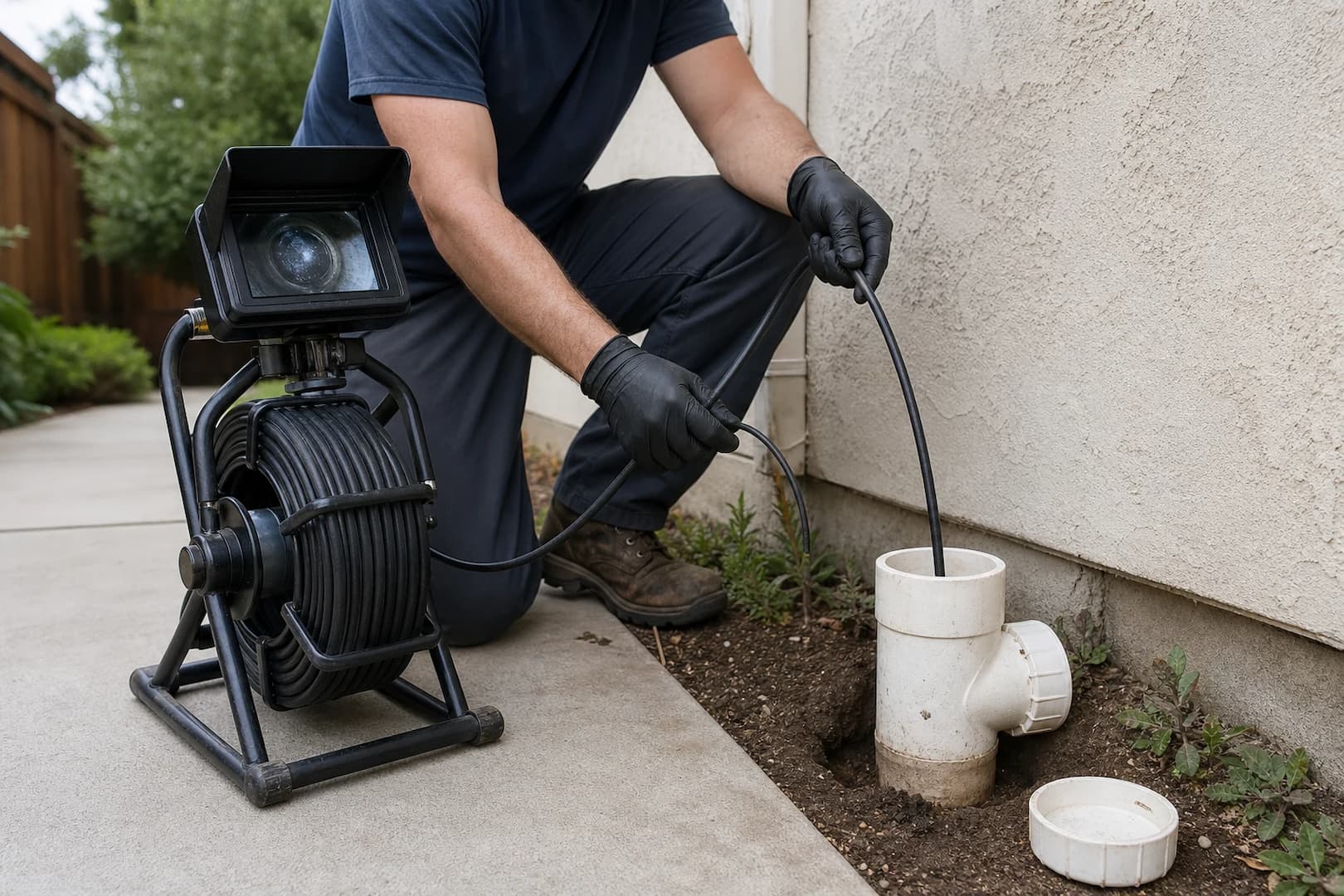
Mechanical cabling or augering can break through paper, soft blockage, and some root masses. Hydro jetting uses pressurized water with a selected nozzle to remove grease, sludge, scale, and loose roots from the pipe wall when the pipe condition and access make jetting appropriate. These tools serve different purposes. Opening a path is not always the same as cleaning the full pipe diameter.
A sewer camera is most informative after enough flow has been restored to see the pipe. It can reveal root entry, an offset joint, a crack, corrosion, a belly, or a collapsed area. The camera head may also be located from above ground, helping define where a repair would occur. If the line only needed routine clearing, the plumber can verify that water now moves without rising in the tub.
Persistent structural defects call for a repair plan rather than endless clearing. Depending on material, depth, access, and damage, that could mean a targeted spot repair, a trenchless option, or replacement of a larger section. Smart Plumbing USA offers sewer line inspection and repair in Vista for recurring backups and confirmed pipe defects.
Cleaning the bathroom after the drain is restored
Do not begin full cleanup until the blockage is cleared and the fixtures have been tested. Otherwise, the next flow test may contaminate the area again. Photograph significant damage before removing materials if you may contact your insurer.
Remove standing wastewater without sending it into another household drain. Clean hard surfaces with detergent and water, then disinfect with a product suitable for the surface and the contamination involved. Follow the product label, ventilate the room, and never mix bleach with ammonia, acids, or other cleaners. Wash reusable tools and protective equipment separately.
Porous items are harder. Bath mats, drywall, insulation, particleboard, and upholstered materials can hold contamination even after the surface looks dry. A small splash on a washable mat is one thing; sewage that soaked a wall base or cabinet is another. When in doubt, a qualified water-damage or remediation company can assess what can be cleaned and what should be removed.
How to reduce the chance of another backup
Flush human waste and toilet paper only. Wipes, paper towels, cotton swabs, dental floss, menstrual products, diapers, and cat litter belong in the trash, whatever a package says about flushability. Use reasonable amounts of toilet paper per flush, especially with older low-flow toilets or a drain line that has known roughness.
Keep kitchen grease and heavy food waste out of the drainage system. The bathroom and kitchen eventually share the building drain, so habits in one room can affect another. Address slow drains and recurring gurgles before the pipe closes completely. If roots have entered once, discuss a monitoring or maintenance interval based on what the camera actually showed; a generic annual schedule is not right for every property.
For septic homes, follow the inspection and pumping schedule recommended for the system and local conditions. Spread high-volume water use through the week instead of running several laundry loads while multiple people shower. No maintenance routine can repair a broken lateral, but sensible use reduces avoidable loading and makes early symptoms easier to notice.
When the situation is urgent
Call for prompt help when the tub level is rising, sewage has reached the floor, more than one bathroom is involved, an outside cleanout is overflowing, or you cannot stop household water use. Strong sewage odors, repeated breaker trips near wet areas, and wastewater near electrical equipment add safety concerns. If water is approaching outlets or powered equipment, stay out of the area and contact the appropriate professional rather than reaching for a plug or switch.
A backup that drains away on its own is not necessarily resolved. A partial clog can release water slowly and then close again during the next flush or laundry discharge. The line needs to pass a normal flow test without gurgling, rising water, or a delayed response at the lowest fixture.
Frequently Asked Questions
The toilet and shower usually share a drain farther downstream. When a blockage stops the flush, wastewater rises through the shower because it is one of the lowest connected openings.
A blocked vent can cause slow drains and gurgling, but visible wastewater coming up through the tub is more consistent with a drain restriction. A plumber may still check the vent if the symptom pattern calls for it.
If the shower already reacts to the toilet, stop flushing and use caution. Plunging may pressurize the shared line or move an object deeper. A simple plunge is more appropriate when only the toilet is affected and its bowl is not near overflowing.
Treat it as contaminated because it traveled through a drain connected to the toilet. Keep children and pets away, avoid skin contact, use protective equipment for minor containment, and consider professional cleanup for a larger release.
No. The blockage may be in the branch serving one bathroom. A main sewer restriction becomes more likely when fixtures in different rooms or on the lowest level are also slow, gurgling, or backing up.
Chemical cleaner is unlikely to solve roots, a foreign object, heavy main-line buildup, or damaged pipe. It can remain in backed-up water and expose anyone who later opens or cables the drain. Avoid it for this symptom.
Water may seep past a partial blockage after household use stops. That does not prove the line is clear. Paper, roots, grease, or a damaged section can restrict the next high-volume discharge and cause the backup to return.
Call promptly if water rises in the tub when the toilet flushes, multiple fixtures are affected, sewage reaches the floor, a cleanout overflows, the problem returns, or you cannot identify and clear a truly local toilet clog safely.
Final thoughts
A toilet that sends water into the shower or bathtub is warning you about a shared drain path. Stop using water, isolate the affected room, and pay attention to which other fixtures react. A single toilet may have a local clog; a tub that fills during a flush points farther downstream; several affected rooms make the main line more likely.
Once the immediate backup is contained, the durable fix is to locate the restriction, clear it with the right access and equipment, and inspect the pipe when recurring symptoms suggest roots or damage. Do not let a temporarily falling water level talk you into one more test flush. The next discharge may be the one that reaches the floor.