
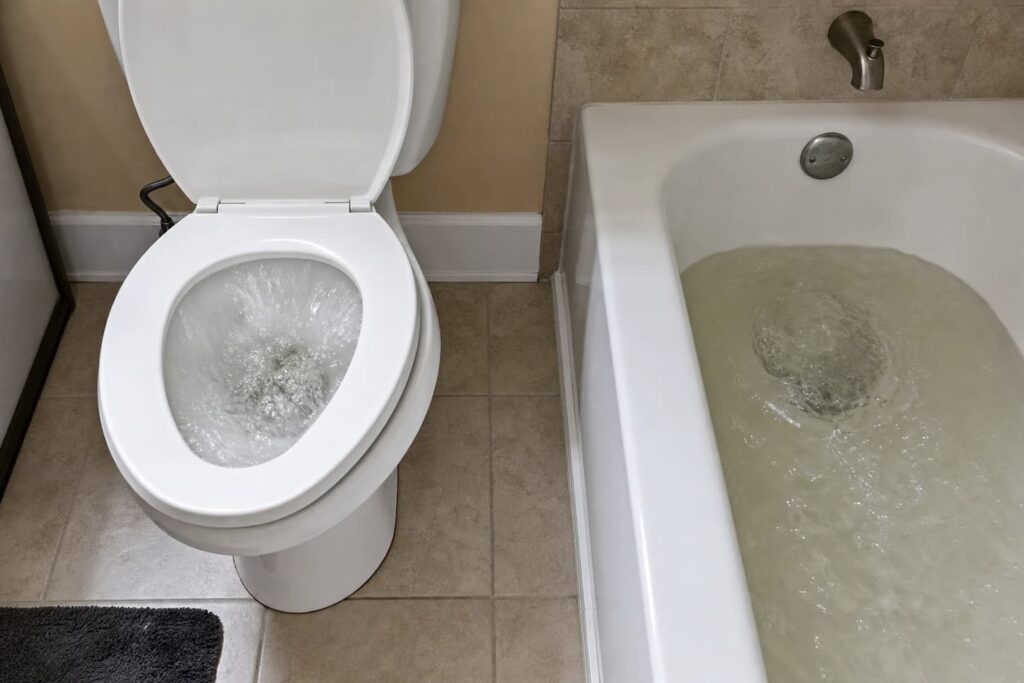
Water coming up through the bathtub drain when the toilet flushes means the toilet’s discharge is meeting a blockage after the toilet and tub drain lines have joined.
A toilet releases most of its flush volume in a few seconds. In an open drain, that surge moves downstream without affecting the tub. In a restricted drain, the water compresses trapped air and raises the water level inside the shared pipe. The bathtub is a convenient escape route because its drain sits low. You may see a bubble, a brief ripple, a puddle around the drain, or enough wastewater to cover the tub floor.
Do not keep flushing to confirm the symptom. The first reaction may be only a gurgle; the next can put sewage into the tub or onto the bathroom floor. Stop using the affected toilet and reduce water use throughout the home until you know whether the restriction serves one bathroom or the main sewer line.
The amount and timing of water at the tub help separate a developing restriction from a line that is nearly closed. For a backup that is active or affects more than one fixture, Smart Plumbing USA provides professional drain cleaning in Vista and nearby North County communities.
Why a toilet flush affects the bathtub drain
The toilet and bathtub do not need to sit back-to-back to share drainage. Each fixture has a trap, then a smaller branch connection. Those connections often meet below the floor or inside a wall before reaching the building drain. Once they join, a downstream obstruction affects both paths.
During a flush, wastewater travels from the toilet trapway into the drain. If the pipe is partly open, some water may squeeze past the restriction while air is pushed backward. The tub drain gurgles or spits bubbles. If the obstruction is tighter, water itself rises through the tub trap. With a complete blockage, the water level keeps climbing until someone stops using fixtures or the lowest opening overflows.
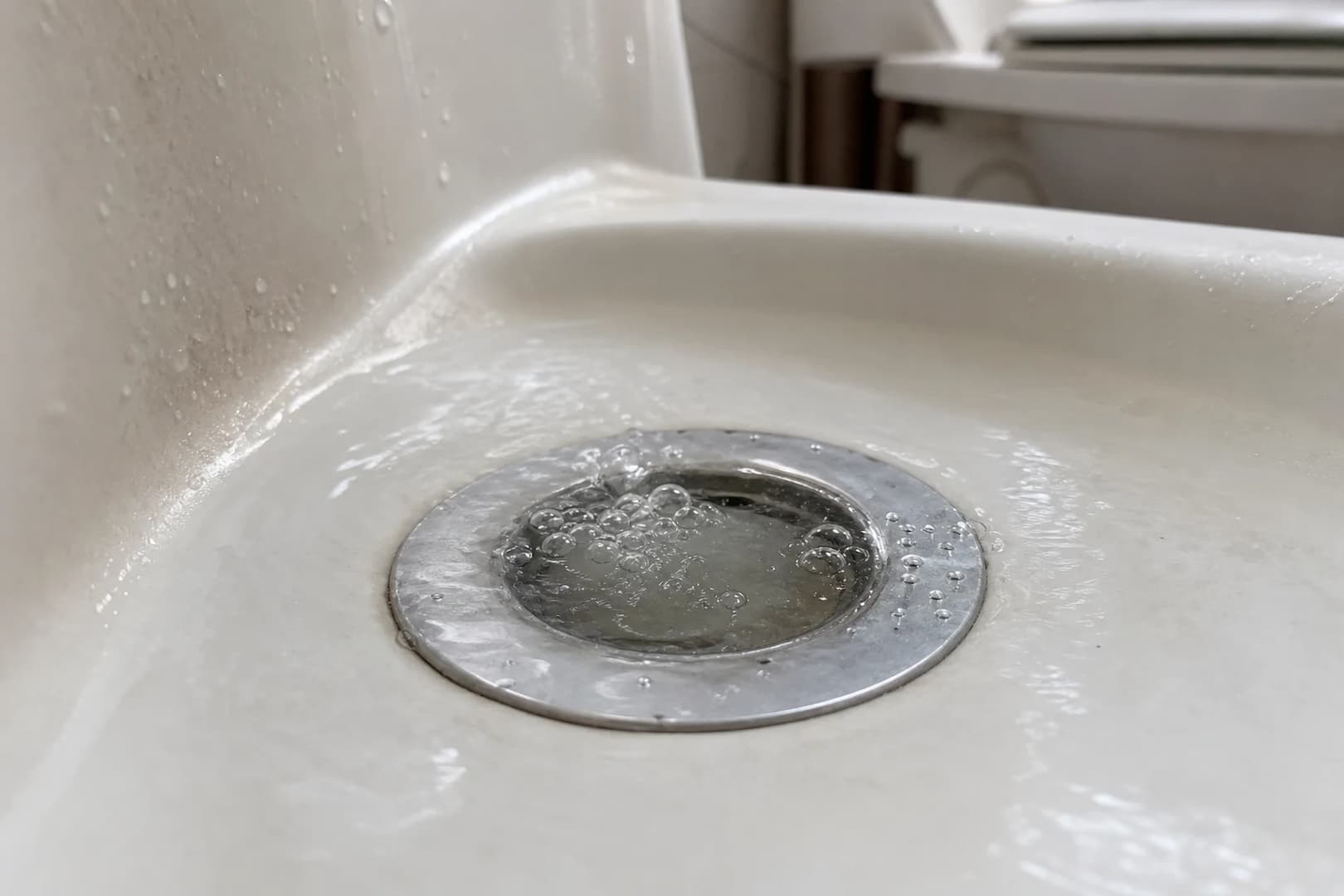
The trap under the tub normally holds clean water and blocks sewer gas. When the shared pipe fills, contaminated water can cross that trap and enter the tub. It may look only cloudy rather than obviously dirty. Appearance is not a reliable safety test; if the water rose in response to a toilet flush, treat it as wastewater.
A blocked plumbing vent can add noise and slow drainage by preventing air from moving normally. It is less likely to explain actual water rising into the bathtub. Once liquid is reversing direction, a drain restriction deserves priority in the diagnosis.
What the amount and timing of water tell you
The response at the tub is not an exact measurement, but it helps describe how restricted the line is. Watch from a safe distance and do not create another test flush. Use what already happened.
- One or two bubbles, then normal drainage: air may be passing a developing restriction, or the fixture group may have a venting issue. Recurrence matters.
- Water rises briefly and then disappears: the pipe is probably partially blocked. It is still passing some flow, just not as quickly as the toilet sends it.
- Water remains in the tub: the shared line is heavily restricted, or the tub’s own slow drain is compounding the problem.
- The tub rises higher with every flush: stop immediately. The available volume behind the obstruction is increasing.
- An upstairs flush affects a downstairs tub: the restriction is likely below the upstairs connection and may involve a stack base, building drain, or sewer lateral.
- Only one toilet makes one nearby tub react: a bathroom branch clog is plausible, though the main line is not ruled out.
Color does not reliably locate the clog. Clear-looking water may be diluted toilet discharge. Dark water may reflect residue already sitting in the tub trap. The fixture pattern and timing are more useful than the color.
Immediate steps before the water rises again
- Take the toilet out of service. Close the lid and tell everyone in the home not to flush it.
- Stop high-volume water use. Pause laundry, showers, baths, dishwashing, and long faucet use. Turn off active appliance cycles according to their instructions.
- Keep the bathroom isolated. Children and pets should not enter an area that may contain wastewater.
- Move clean items away. Remove towels, bath mats, toys, toiletries, and wastebaskets before a second backup can reach them.
- Photograph an overflow. Document the water line and damaged materials before cleanup if insurance may be involved.
- Arrange drain service if the reaction was more than a single isolated gurgle. A visible reversal of water has already shown that normal drainage is unavailable.
You do not normally need to shut off the home’s water supply for a drain clog because the supply line is not causing the obstruction. The practical goal is to keep occupants and appliances from sending more water into the drain. If people may use fixtures accidentally, closing selected fixture stops or the main shutoff can prevent that, but only if you know the valves work and can operate them safely.
Is the clog in the toilet or farther down the line?
A clog inside the toilet trapway usually makes the bowl rise or drain poorly without changing the bathtub. Once the tub reacts, the obstruction is commonly beyond the point where the two drains meet. There is an exception: aggressive plunging on a badly clogged toilet can push pressure into nearby connections. That still tells you to stop and reassess rather than plunge harder.
Check the rest of the home without running water. Ask whether another toilet was sluggish, whether the kitchen sink gurgled, or whether the laundry drain has smelled unusual. Look at water already standing in fixtures. Several affected areas move suspicion toward the building drain or main sewer lateral. If every other fixture has been completely normal, a branch serving that bathroom remains more likely.
Floor level matters too. A first-floor tub that reacts to an upstairs toilet may simply be the lowest relief point for a main-line restriction. Conversely, an upstairs bathroom branch can clog while the first floor works normally if its connection remains downstream and open. A plumber combines elevation, fixture grouping, and flow history to choose an access point.
The most common causes
Paper, wipes, and sanitary products
Toilet paper is designed to disperse, though an unusually large load can still lodge in a narrow or rough pipe. Cleaning wipes, paper towels, diapers, cotton products, and menstrual items remain intact much longer. They catch on roots, scale, and offset joints, turning a partial restriction into a sudden backup.
An object in the toilet or branch
A toy, fragrance holder, plastic cap, washcloth, or grooming item can pass the bowl opening and stick in the trapway or closet bend. If it moves beyond the toilet, it may lodge where the bathroom branch changes direction. Repeated plunging can reposition the object without bringing it back.
Roots and rough pipe interiors
Roots do not enter a sound, sealed pipe simply because a tree is nearby. They exploit a crack or joint opening, then expand inside the moisture-rich line. Cast-iron scale and corrosion create a different problem: the inside diameter becomes smaller and rougher. Both conditions hold paper that a smooth, full-size pipe would carry.
Grease and sludge from other rooms
A bathroom backup can have a kitchen contribution. Grease and food residue coat the building drain, while soap, hair, and lint add more material. The final obstruction may sit well beyond the bathroom branch. That is one reason treating only the tub opening can miss the real problem.
Pipe damage or poor slope
A sag holds water and solids. An offset joint presents a ledge. A cracked or collapsed section reduces capacity. Cleaning may restore temporary flow through these defects, but the physical condition remains. A backup that returns despite proper clearing needs inspection for this reason.
Septic tank or drainfield trouble
On a septic property, the house drain cannot flow normally if the tank outlet, pump, or soil absorption field is failing. Indoor signs can include slow tubs, gurgling toilets, and wastewater backing into fixtures. Outdoor ponding or unusually lush, spongy ground near the system adds concern. Reduce water use and call a septic professional; do not open the tank yourself.
When is plunging reasonable?
Plunging is reasonable when the evidence still points to one local toilet: only that bowl is slow, the tub has not moved or gurgled, the bowl is low enough to work without spilling, and no chemical cleaner is present. Use a toilet plunger with a fold-out flange, not a flat cup made for sinks.
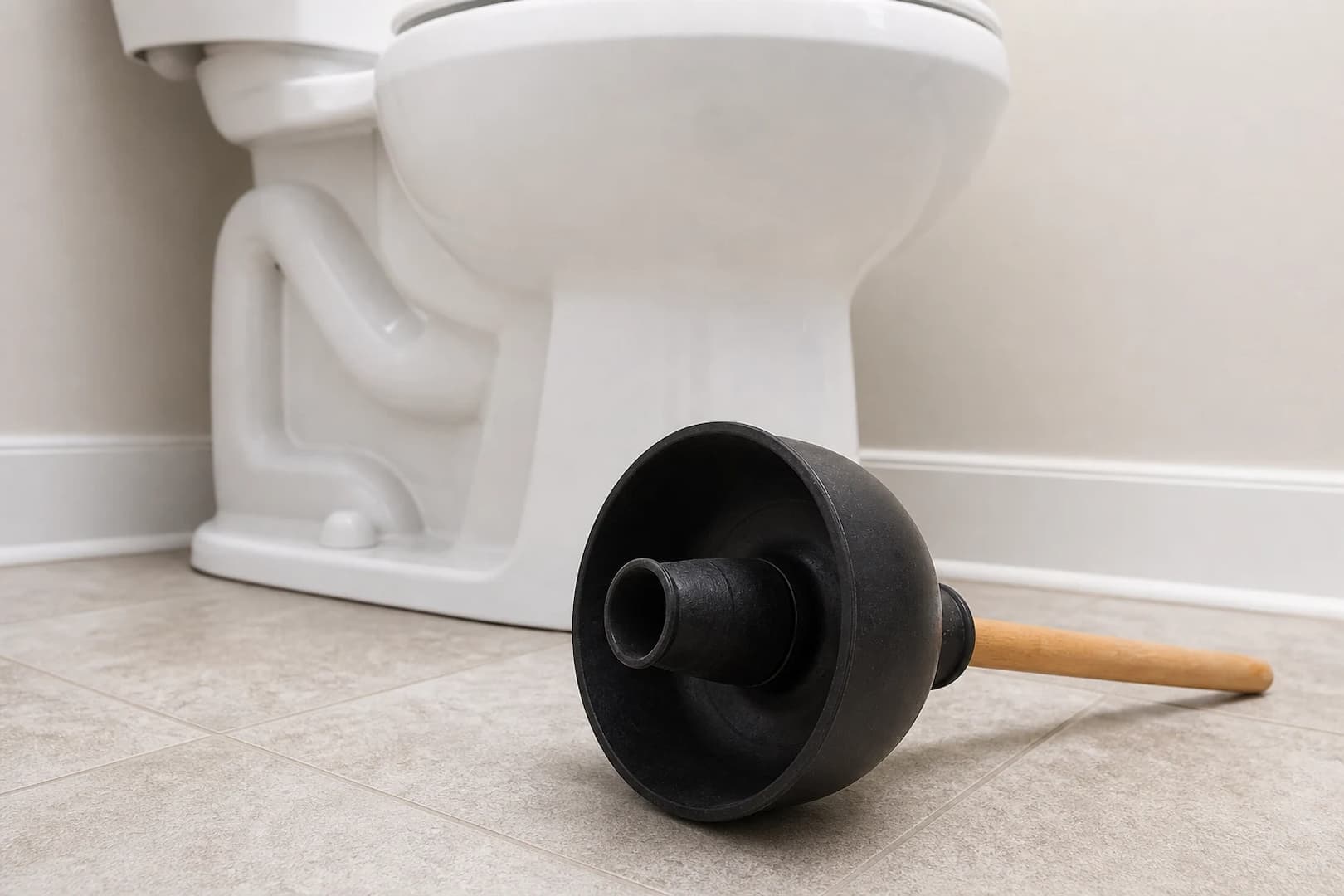
Place the flange into the outlet and begin gently so trapped air does not splash. Build a steady seal and use controlled strokes. Stop if the tub gurgles, water rises elsewhere, the bowl approaches the rim, or the toilet does not improve after a modest attempt. More force is not better when the obstruction may be beyond the toilet.
Do not plunge after pouring chemical cleaner into the bowl. Splashing can cause chemical exposure. Avoid improvised pressure devices and compressed air, which can damage seals or send wastewater out of another fixture.
Why snaking the bathtub may not solve it
A tub snake is well suited to hair and soap near the tub trap or overflow. It is not automatically the correct route to a toilet-related branch blockage. The cable must negotiate a relatively small trap and may never reach the larger shared drain. Even if it pokes through soft material, it may leave the main restriction on the pipe wall.
Professional access may come through a toilet flange after the toilet is removed, a branch cleanout, or an exterior main cleanout. The chosen cable size, head, and direction should match the pipe. For grease and broad buildup, hydro jetting may clean more of the pipe wall after the line and pipe condition are evaluated. For roots or suspected damage, camera inspection helps separate “needs cleaning” from “needs repair.”
How a plumber confirms the blockage location
The visit begins with a sequence: which toilet flushed, where water appeared, what the lowest fixture is, and whether the problem existed before that moment. The plumber may inspect bowl levels, traps, and cleanouts, then run a small controlled amount of water while watching connected fixtures. A full test waits until there is confidence that it will not create an overflow.
A cable can reveal the approximate distance to an obstruction and sometimes the type of resistance. Soft paper feels different from roots or a hard stop, though feel alone is not conclusive. Once flow returns, a camera can show the pipe wall, joints, standing water, and recurring defect. Recording the distance and locating the camera head above ground makes any repair recommendation more specific.
The final test should use enough water to represent normal service while someone watches the bathtub and other low drains. One successful toilet flush is not always enough. The line should accept repeat flow without a delayed rise, bubble, or gurgle.
Cleaning and using the bathroom again
Wait until the drain has been cleared and tested before cleaning the tub. Wear waterproof gloves and eye protection for minor contact, keep children and pets away, and wash hard surfaces with detergent before applying a compatible disinfectant. Follow label instructions and never mix cleaning products.
If wastewater crossed the tub edge, reached drywall or cabinets, or soaked a porous floor layer, cleanup becomes more involved. Take photographs, remove contaminated porous materials when appropriate, and bring in a remediation professional for a significant release. A tub can look clean long before the materials around it are dry.
After service and cleanup, return fixtures gradually. Run a modest amount of water, watch the tub drain, then test the toilet under normal use. If the slightest reaction returns, stop. That immediate feedback is valuable and can prevent a second spill.
Preventing the same pattern
Keep wipes and hygiene products out of toilets. Scrape kitchen fats and heavy food residue into the trash. Catch hair at bathing drains, but remember that a clean tub strainer cannot protect a damaged sewer lateral. Respond to early warnings such as a toilet that needs two flushes, a tub that gurgles, or a floor drain that smells after laundry.
If a camera shows roots, scale, or a structural defect, use that evidence to set a maintenance or repair plan. Do not rely on a calendar chosen without seeing the pipe. A clean, intact PVC lateral and an older clay line with root entry do not need the same strategy.
Frequently Asked Questions
The toilet discharge is meeting a restriction after the toilet and tub drain lines connect. Pressure and rising water in that shared pipe send air or wastewater back through the low bathtub drain.
Treat it as wastewater because it came through a drain connected to the toilet. It may look diluted or only slightly cloudy, but appearance does not make it sanitary.
A vent restriction can cause gurgling and slow drainage. Actual water rising through the bathtub drain is more consistent with a drain blockage, although a plumber may evaluate both systems if the pattern is unusual.
A partial blockage can pass water slowly even though it cannot accept a fast toilet flush. The falling level does not mean the pipe is clear; the next high-volume discharge can make the backup return.
A toilet flange plunger is reasonable for a truly local toilet clog when no other fixture reacts. If flushing or plunging already makes the tub bubble or fill, stop; the obstruction is likely in a shared line.
It may clear hair near the tub trap, but a toilet-related backup is often farther downstream in a larger shared pipe. A toilet flange, branch cleanout, or main cleanout may provide more appropriate access.
No. One bathroom branch can cause the symptom. A main line problem is more likely when drains in different rooms, lower-level fixtures, or an exterior cleanout are also affected.
Treat it as urgent when the tub level is rising, sewage reaches the floor, multiple fixtures are backing up, the exterior cleanout overflows, or household water use cannot be controlled.
Final thoughts
A toilet flush should never change the water in the bathtub. When it does, the two fixtures are communicating through a restricted shared drain. Stop flushing and limit all high-volume water use. The location may be one bathroom branch or the main sewer line; the rest of the home’s fixtures, elevations, and cleanout condition help tell the difference.
A partial blockage can look harmless after the water settles. It is not. Clear the correct section of pipe, verify normal flow under repeat testing, and use a camera when recurring symptoms suggest roots or structural damage. That is how you prevent a brief gurgle from becoming the next bathroom overflow.