
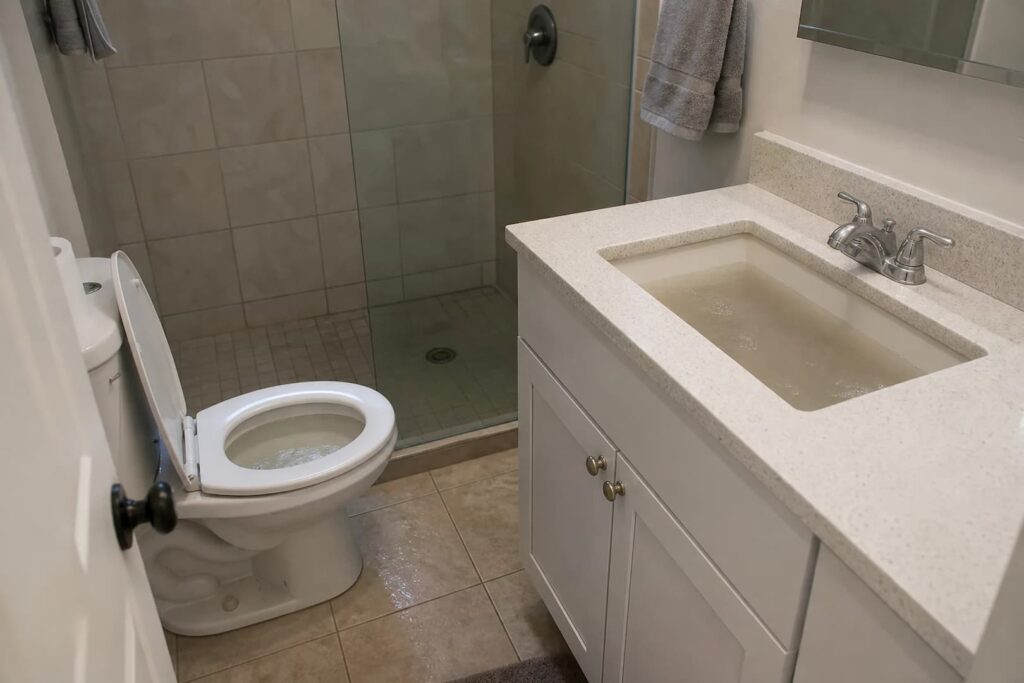
When multiple drains back up at the same time, the blockage is usually in a pipe those fixtures share. If the affected drains are in different rooms or on the lowest level of the home, the main building drain or sewer lateral becomes the leading suspect.
One slow bathroom sink often has a local clog. A toilet that gurgles while the shower fills, a laundry drain that overflows when another fixture runs, or slow drainage throughout the house describes a different scale of problem. Wastewater is reaching a common restriction and returning through whichever opening is lowest or easiest to reach.
Stop using water before you troubleshoot. Do not run another fixture to “see what happens.” A washing machine, bathtub, or repeated toilet flush can release enough water to turn a partial backup into a sewage spill. Pause automatic appliances, keep people away from contaminated water, and arrange service promptly when several fixtures are involved.
Multiple backups do not prove that the entire sewer lateral has failed. A large branch can serve two bathrooms, or a kitchen and laundry may share a line. Fixture location, elevation, and timing keep that distinction from becoming a guess. Smart Plumbing USA offers drain cleaning in Vista for branch and main-line restrictions, with camera inspection when recurring symptoms point to pipe damage.
Why several drains react to one blockage
Household drains form a tree of connections. A sink has a trap and fixture drain. That line joins a branch serving the room, the branch joins the building drain, and the building drain leads to the sewer lateral or septic system. A restriction near a fixture affects one drain. Move the restriction downstream, and every upstream connection can feel it.
Wastewater does not divide itself evenly among blocked fixtures. It rises according to elevation and resistance. A shower pan, floor drain, or first-floor tub often shows water first because its opening sits low. A second-floor sink can remain visually normal even while its discharge contributes to a backup downstairs.
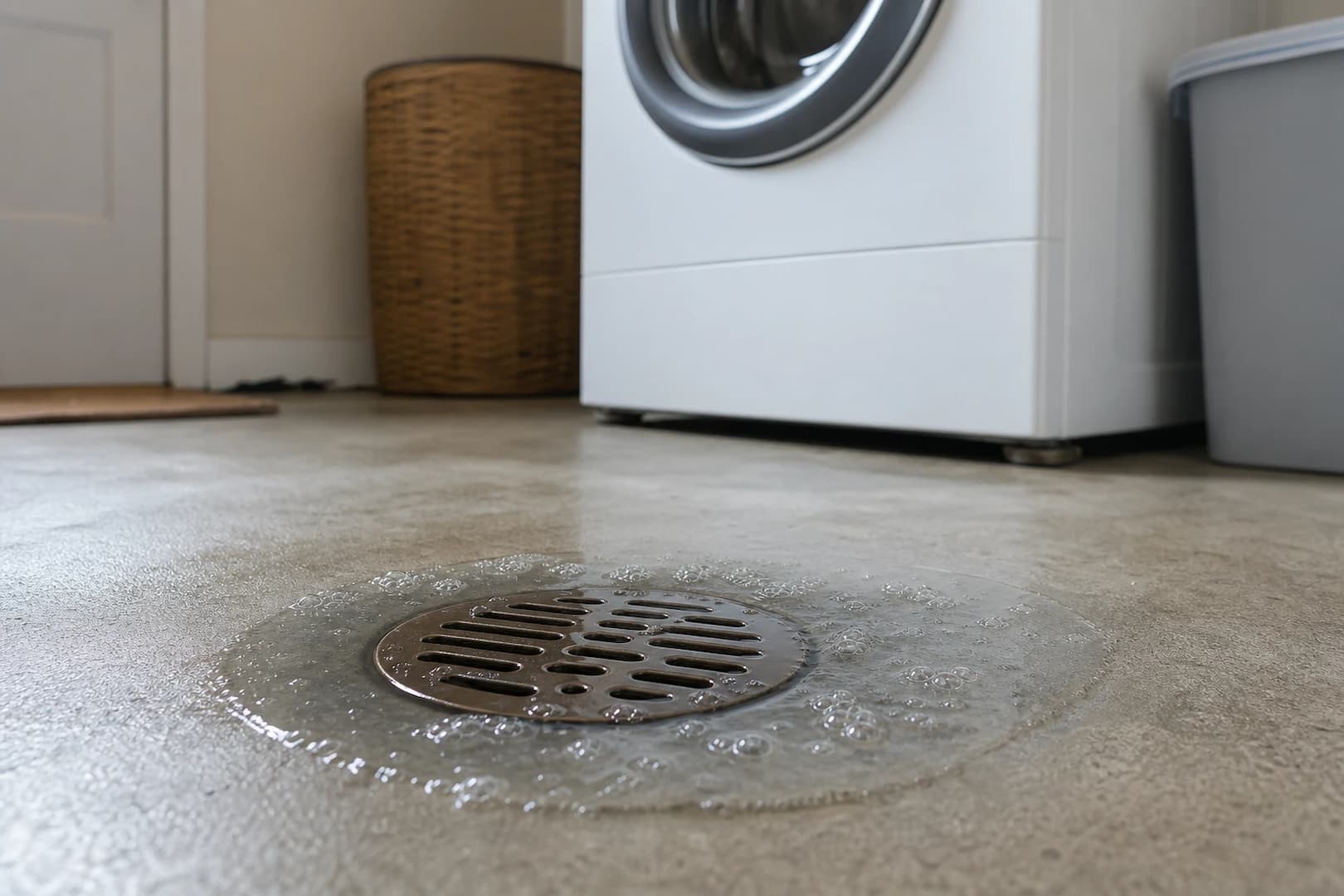
Air movement creates the noises. Water approaching a partial clog pushes air back through traps, producing bubbles and gurgles. Once the pipe fills high enough, water follows. Noise alone can involve venting, but noise plus rising water is strong evidence that the drainage path is restricted.
Immediate steps for a multi-drain backup
- Stop all optional water use. No flushing, bathing, laundry, dishwashing, or long faucet runs.
- Pause pumps and appliances. Cancel an active washer or dishwasher cycle according to its controls before it discharges.
- Protect the lowest fixtures. Remove rugs, towels, boxes, and stored items from nearby floors. Do not plug the drains to force water elsewhere.
- Isolate contaminated areas. Keep children and pets away. Use waterproof gloves, boots, and eye protection for minor containment.
- Look, but do not test. Record which fixtures already contain water, where gurgling occurred, and what was running before the backup.
- Check the exterior cleanout from a distance. A wet or overflowing cleanout is useful information. Do not remove a cap from a full riser.
- Call for drain service. Mention active sewage, multiple floors, an overflowing cleanout, recent rain, and whether neighbors have similar trouble.
Shutting off the water supply does not clear a drain, but it can prevent accidental use if people cannot follow the restriction. Operate the main shutoff only if you know its location and condition. A stuck, corroded, or leaking valve is a separate emergency you do not want to create during a sewer backup.
How to tell a branch clog from a main sewer blockage
The useful question is not simply “How many drains are slow?” It is “Which drains share a route before the restriction?” Two fixtures can be enough to indicate a main line if they sit on different branches. Four fixtures can still point to one large bathroom branch in a compact layout.
| Symptom pattern | More likely location | Reasoning |
|---|---|---|
| One sink or one shower is slow | Fixture trap or local branch | No other connected fixture reacts |
| Toilet and tub in one bathroom react together | Bathroom branch | Restriction may sit after those two drains join |
| Kitchen sink and dishwasher back up, other rooms normal | Kitchen branch | Both discharge through the same sink-side piping |
| Two bathrooms on separate sides or floors are affected | Building drain or sewer lateral | Separate branches share a farther downstream route |
| Lowest shower or floor drain backs up when any fixture runs | Main drainage path | Water is rising to the system’s lowest relief point |
| Main cleanout is full or overflowing | Downstream of the cleanout | House wastewater has reached the access but cannot continue |
Timing sharpens the picture. If the kitchen sink causes a nearby laundry standpipe to gurgle but toilets remain normal, a shared kitchen-laundry branch is plausible. If flushing any toilet changes the lowest shower, the restriction is probably in a larger common line. If symptoms appear only during heavy rain and neighboring homes are affected, the private plumbing may not be the only system involved.
Signs the main sewer line is the likely problem
- Drains in separate rooms slow or back up within the same period.
- A first-floor shower, tub, or floor drain rises when an upstairs fixture runs.
- Several toilets gurgle or their bowl levels change without being flushed.
- The exterior main cleanout is holding water or overflowing.
- The same system-wide backup returns after one fixture was cleared.
- There is a history of root intrusion, older clay or scaled cast-iron pipe, offsets, or a known belly.
- Normal household use overwhelms the drains, while very light use seeps away slowly.
No single sign is conclusive. A camera and controlled flow test provide firmer evidence. Still, a cluster of these signs justifies treating the situation as a main-line backup until proven otherwise, which means minimizing water use throughout the home.
Common causes of multiple drain backups
Wipes, paper, and foreign material
Paper can build at a narrow or rough spot. Wipes and paper towels are more troublesome because they remain strong when wet. Hygiene products, diapers, cleaning cloths, and objects flushed by accident may lodge at an elbow or joint. Once the main path narrows, normal toilet paper catches behind the first material and the blockage grows quickly.
Grease and food-related buildup
Cooking fat coats pipe walls farther from the sink after it cools. Food particles, soap, and sediment adhere to the layer. The kitchen may show symptoms first, but a severe restriction in the building drain can eventually affect toilets, baths, and laundry as well. Hot water can move grease farther; it does not make the grease disappear.
Root intrusion
Roots enter through a defect, not through an intact sealed pipe. Thin roots catch paper, then thicken and branch. Cutting them restores space but leaves the entry point. If the backup has a seasonal pattern or returns after previous root cutting, camera evidence is especially valuable.
Scale, corrosion, and deteriorated pipe
Older cast iron may look large outside while heavy scale reduces the opening inside. Corrosion creates a rough surface that holds solids. Clay joints can separate, and Orangeburg or other aging materials may deform. Cleaning deals with material in the passage; it does not reverse deterioration.
A sag, offset, or collapse
A belly keeps part of the pipe underwater and allows solids to settle. An offset creates a ledge. A partial collapse limits flow; a complete collapse stops it. Repeat backups after thorough cleaning often push these structural causes higher on the list.
Septic or public sewer limitations
A septic tank, pump, outlet, or saturated drainfield can prevent the house from discharging. On a sewered property, a downstream municipal blockage or surcharge can create similar symptoms. Neighbor reports, weather, exterior wastewater, and inspection of the private lateral help establish where responsibility lies.
Safe checks you can make without adding water
Walk through the home and record existing conditions. Note standing water, unusual toilet bowl levels, odors, and the lowest affected fixture. Ask what each person was doing when the backup began. A rough timeline can reveal whether a washer discharge, bath drain, or toilet flush overwhelmed the line.
Look at the main cleanout without touching it. A displaced cap, wet ground, or visible water in an already open riser supports a downstream restriction. Do not loosen a cap that may be holding pressure. Do not enter a crawlspace with sewage or suspected electrical hazards simply to inspect piping.
Check whether nearby homes report a similar problem, especially after intense rain. This is not proof of a public sewer issue, but it changes who should be notified. If you use a septic system, look from a safe distance for ponding, sewage odor, or unusually spongy soil near the tank and drainfield. Do not open the tank.
A homeowner plunger may help one isolated toilet. It is not a main-line diagnostic tool. Plunging several fixtures, running a garden hose into a cleanout, or using compressed-air devices can redirect contamination and damage seals without removing the restriction.
How professionals clear and verify a main line
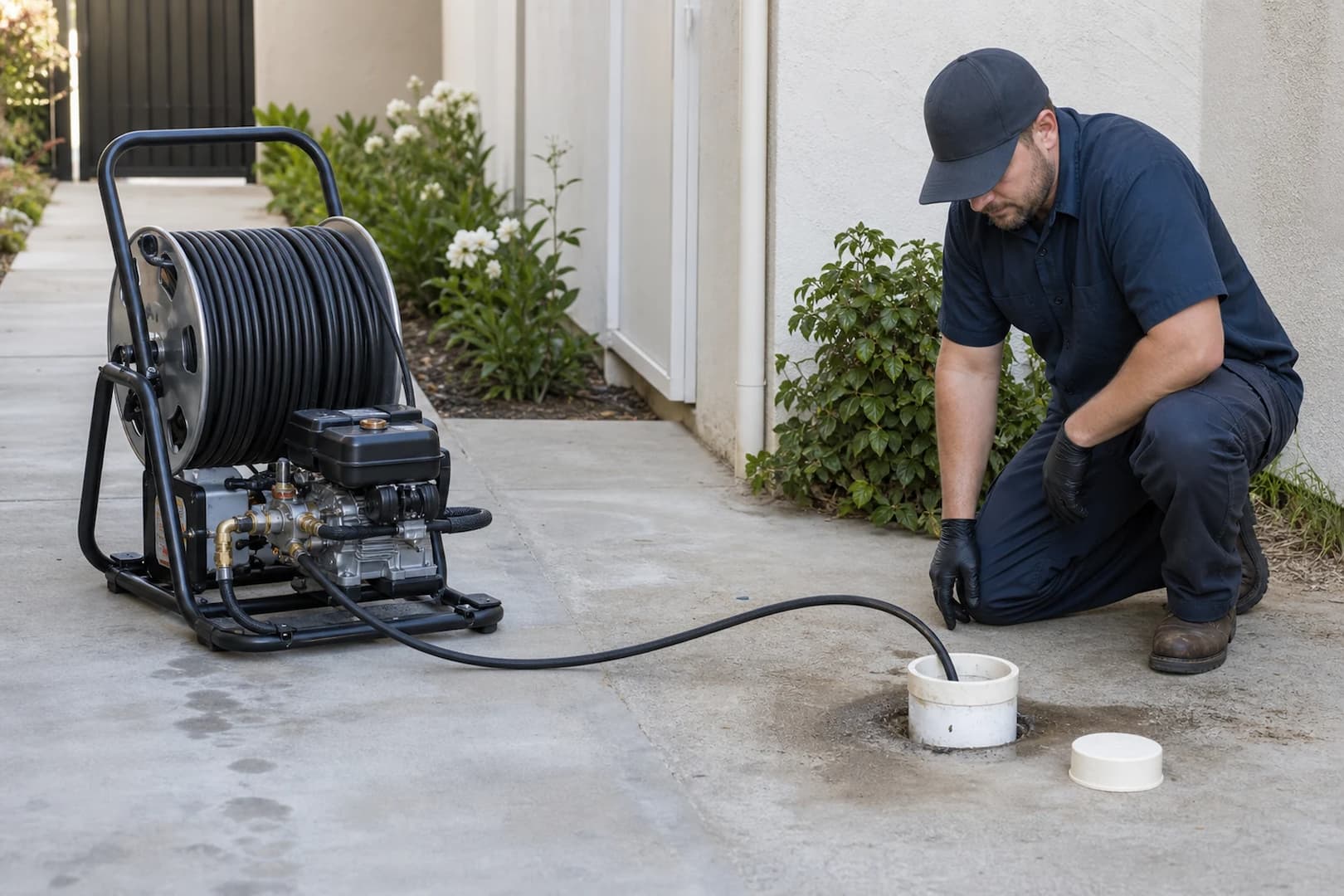
The plumber first chooses access based on the suspected section and pipe direction. A main cleanout is often ideal. In other layouts, access may require removing a toilet or using an interior cleanout. Equipment must be sized for the pipe; a small sink cable may pass through a main-line blockage without cleaning enough diameter to restore dependable flow.
Mechanical cabling opens paper clogs, retrieves or breaks some objects, and cuts root masses with the appropriate head. Hydro jetting uses water pressure and nozzle thrust to remove grease, sludge, scale, and loose roots from a broader area of the pipe wall. The pipe should be evaluated first; fragile, collapsed, or poorly accessible lines may call for another approach.
Camera inspection usually follows restored flow. A camera cannot see through opaque sewage, and pushing it into a blocked line risks muddy footage without a diagnosis. In a cleared pipe, it can reveal roots, joint offsets, cracks, standing water, corrosion, or collapse. A locator can mark a defect and approximate depth above ground.
Verification is a separate step. The plumber runs multiple fixtures or staged high-volume flow while watching the lowest drains and cleanout. The system should accept repeat use without a delayed rise. If the water level drops but the camera still shows a severe defect, the immediate clog is gone while the cause remains.
Cleaning versus sewer repair
Cleaning is the sensible answer when the pipe is structurally serviceable and the restriction consists of removable material. A one-time paper clog, grease layer, or accessible roots may respond well, although roots still imply an opening that should be documented.
Repair enters the conversation when a camera shows a separated joint, recurring root entry, severe corrosion, belly, break, or collapse. The right scope depends on material, length, depth, access, and how much sound pipe surrounds the defect. Options can include a localized repair, trenchless work where suitable, or replacement of a larger run. Smart Plumbing USA can evaluate sewer repair options in Vista after confirming the condition and location.
Repeatedly clearing a structurally failed line may cost less on a single visit but more over time, especially when backups damage finishes. The reverse is also true: replacing a sound pipe because of one removable clog is unnecessary. Inspection keeps the decision tied to evidence.
After the drains are open
Clean contaminated hard surfaces with detergent and water, then disinfect with a compatible product used according to its label. Wear waterproof gloves, boots, and eye protection, ventilate the area, and never mix cleaners. Porous flooring, drywall, insulation, cabinets, or stored goods touched by sewage may need professional assessment or removal.
Return fixtures to service gradually. Start with controlled flow, watch the lowest drain, then test normal household use. If gurgling or a level change returns, stop and report exactly which action caused it. Do not wait for a second full overflow.
How to reduce repeat backups
- Flush only human waste and toilet paper.
- Keep grease, food solids, coffee grounds, and fibrous scraps out of kitchen drains.
- Use drain strainers for hair and debris, then empty them into the trash.
- Respond to recurring gurgles and slow fixtures while the line still passes some flow.
- Keep cleanouts visible, capped, and protected from vehicles or landscaping damage.
- Use camera findings and recurrence history to set any maintenance interval.
- Maintain septic tanks, pumps, and drainfields according to system-specific guidance.
No household product prevents a crushed pipe or closes a root-entry joint. Prevention works best when daily drain habits are paired with a repair plan for defects already found.
Frequently Asked Questions
No. Several fixtures can share one large branch. The main line is more likely when affected fixtures are in separate rooms or on different floors, or when the exterior main cleanout is full.
Wastewater rises behind the blockage until it reaches the lowest connected opening. A shower, tub, or floor drain sits lower than a sink rim, so it often becomes the first visible relief point.
No. Use the symptoms that already occurred. Running more water can increase the backup and contaminate additional rooms. A plumber can perform controlled tests after choosing safe observation points.
A vent restriction can cause gurgling and slow drainage, but wastewater rising through fixtures or a full cleanout points more strongly to a drain blockage. Both may be checked if the evidence is mixed.
A household plunger may clear a local toilet trapway. It is not sized to clean a main line, and pressure may send wastewater through another low fixture when the obstruction is shared.
A partial blockage can let water seep past slowly. The line appears to recover until the next toilet, bath, washer, or combined use sends water faster than the restricted pipe can carry it.
A camera is useful after flow is restored when backups recur, roots are suspected, the cable meets a hard stop, or pipe damage may be present. It shows whether cleaning solved the cause or only the immediate obstruction.
Call promptly when sewage is rising, multiple rooms are affected, a cleanout is overflowing, wastewater is near electrical equipment, or you cannot prevent people or appliances from adding more water.
Final thoughts
Several drains backing up together mean the fixtures share a restricted path. The main sewer line is likely when separate branches or floors are involved, but one large branch can mimic the same pattern. Stop adding water, identify the lowest affected opening, and leave flow testing to a controlled service visit.
The repair decision should follow the evidence. Removable buildup calls for cleaning; roots or recurring blockage call for inspection; a confirmed offset, belly, break, or collapse may need repair. Restoring flow today matters, but knowing why the line lost capacity is what prevents the next house-wide backup.
Pingback: Water Heater Making Noise? Popping, Rumbling & Hissing