
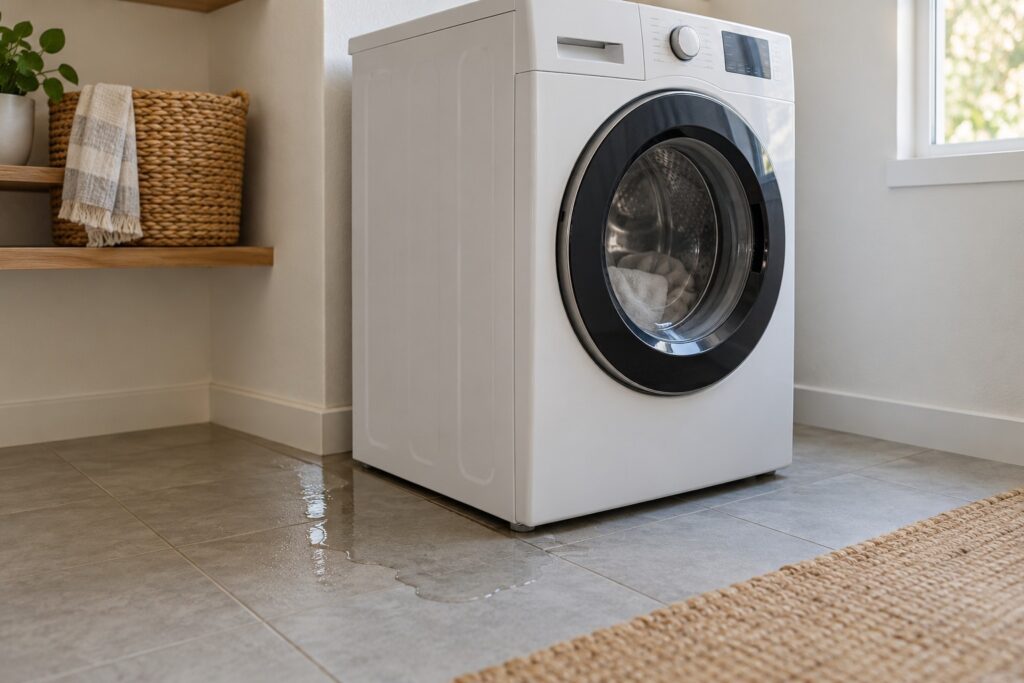
A washing machine drain pipe overflows when water reaches the open pipe faster than the drain can carry it away. A partial clog in the standpipe, trap or laundry branch is a likely cause. Hose placement and a drain that cannot handle the washer’s discharge also need checking.
Before choosing a repair, identify where the water escaped. A pipe backing up around the hose, an overfilled washer tub and a loose hose need different checks. Stop using the machine after an overflow. Another drain-and-spin cycle can put the water still inside the washer onto the floor.
Stop the overflow before checking the drain
If the controls are dry and safely within reach, follow your model’s instructions for stopping the washer. Do not assume that Cancel stops the pump; some controls start a drain routine. If pumping continues, switch off the identified washer circuit only if you can reach the electrical panel from a dry, safe location.
Do not step into standing water to reach a plug, outlet or appliance.
Leave wet electrical equipment alone, keep other people away and get help. Do not pull the washer forward while it is running or while water surrounds it.
Closing the hot and cold supply valves stops additional filling, if the valves are accessible and work normally. It does not stop an operating drain pump or remove water already inside the machine. Never force a corroded valve or reach behind the washer through a wet area.
Keep the washer out of service. Avoid using a nearby laundry sink if it also backs up; stop other household water use if several fixtures are affected.
Wear gloves for minor cleanup, keep children and pets away from drain water, and arrange prompt help for sewage, spreading water or moisture entering walls and flooring. Do not pour collected water back into the overflowing drain.
Confirm which part is overflowing
Use what you saw during the incident. A photo taken from a dry position and a note of the cycle stage can help more than another test. GE’s guidance on rear washer leaks distinguishes water backing out of the standpipe from hose and supply-connection leaks.
| Where water appears | What the pattern suggests | Who should check it |
|---|---|---|
| Water rises out of the pipe around the drain hose during pump-out | The household drain is backing up, or the hose arrangement needs checking | A plumber; include the installer if the washer is new |
| The drain hose has slipped out and discharges onto the floor | A loose or incorrectly secured hose | The installer or an appliance technician |
| The washer tub keeps filling until water escapes | A filling or water-level control problem | An appliance technician; close accessible supply valves safely |
| Water leaks from a hose, fitting, door or underneath the cabinet | A connection or appliance leak, rather than proven standpipe overflow | The relevant installer, plumber or appliance technician |
| Mostly foam escapes while washing or draining | Excess suds may be involved; a restricted drain can coexist | Check detergent use and identify the actual exit point |
Water can travel across a sloping floor before it becomes visible. A puddle in front of the washer does not establish that the door leaked. Trace the first wet point without disconnecting hoses or opening the machine.
Why the pipe overflows when the washer drains
The washer pumps wastewater through its flexible drain hose into a standpipe: the open vertical drain, often inside a recessed wall box. From there, water passes through a trap and into a branch pipe. The trap holds a water seal that helps keep sewer gases out of the room. A pump releases water differently from a lightly running faucet. The drain might pass a small trickle yet fill up during the washer’s discharge. GE’s drain-hose information explains that pump flow and discharge height are related, and directs owners to the instructions for their model.
A partial blockage can let the pipe empty between loads
Lint, soap residue and other debris can narrow the trap or laundry drain. Farther along a shared branch, buildup from another fixture may contribute. When the pump starts, water accumulates behind that restriction and rises to the standpipe opening. Once pumping ends, water may slowly seep past the restriction, leaving the pipe looking empty. It may still back up on the next load. The time it took to overflow is useful information for a plumber, but timing alone cannot locate the clog or determine how deep it sits.
The overflow started after a new washer was installed
If the first overflow followed a washer replacement, check the installation before blaming either the new machine or the old piping. A shifted hose is one possibility. Different discharge behavior can also expose a partly blocked or undersized drain that seemed adequate with the previous washer.
Ask the plumber to compare the new washer’s requirements with the pipe size, condition and arrangement already in place. A taller standpipe may only hold back the overflow briefly. Narrow piping, an unsuitable trap or a restricted branch will still need attention. Avoid adding an improvised hose extension or raising the outlet just to slow the machine’s discharge.
Check the drain hose setup against the washer manual
From a dry, accessible position, look for a hose that has slipped down, pulled out, kinked or become trapped behind the machine. Leave it connected during this first check. If seeing the connection requires moving a full washer or reaching near wet electrics, have the installer or technician inspect it.
The hose needs support so it cannot jump out during pump-out. It also needs the open space required by the installation instructions. Whirlpool’s installation instructions describe a secure but loose fit, with room for air, and warn against forcing excess hose into the standpipe or sealing the opening.
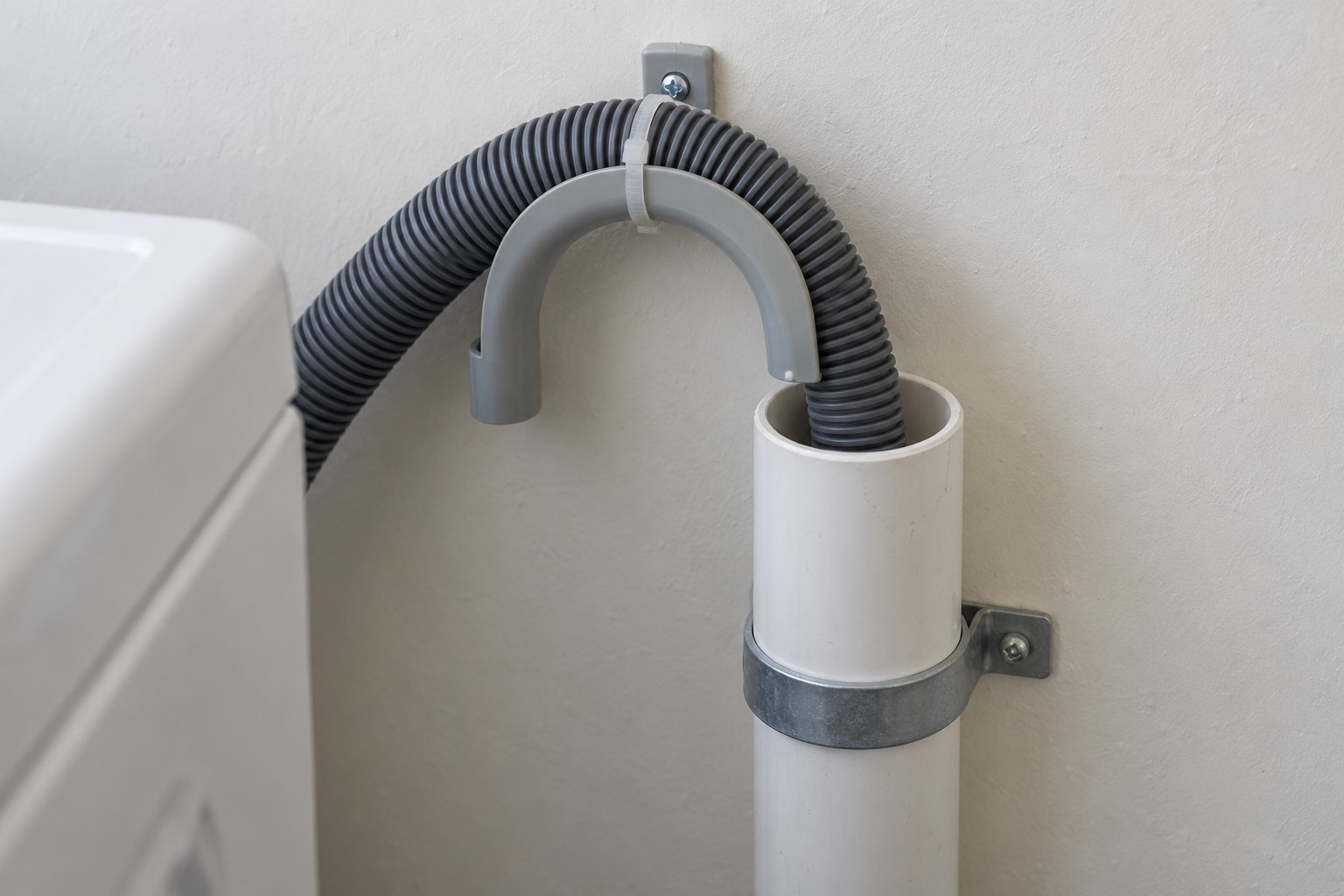
Do not tape, caulk or pack the gap closed to contain an overflow. That conceals the escape point without restoring drainage and can interfere with the intended drain arrangement. Secure the hose with the model’s specified holder or restraint while preserving the required opening.
Insertion depth, outlet height and drain requirements vary among washers. Use the installation manual for the exact model, including where its measurements start. A number from a different front-load or top-load washer is not a substitute. Floor-drain installations may also require components that a standpipe setup does not. Hose placement can cause siphoning, in which water leaves while the washer is still filling. That is a different symptom from a standpipe full of backed-up water. A correct hose setup matters, but repositioning the hose will not remove a clog in the household pipe.
A clogged hose and excess suds need different checks
A restriction inside the flexible drain hose usually reduces the water leaving the washer. You may find water remaining in the drum, wet clothes or a long-drain error. If the washer is sending water into the wall pipe and that pipe overflows, a blocked hose alone would not explain the backup. More than one fault can occur together.
Maytag’s long-drain guidance includes checks for hose kinks, clogs and incorrect insertion. An error code alone does not prove the pump has failed. A technician may need to check the hose, pump and any model-specific filter after making the machine safe and containing the remaining water.
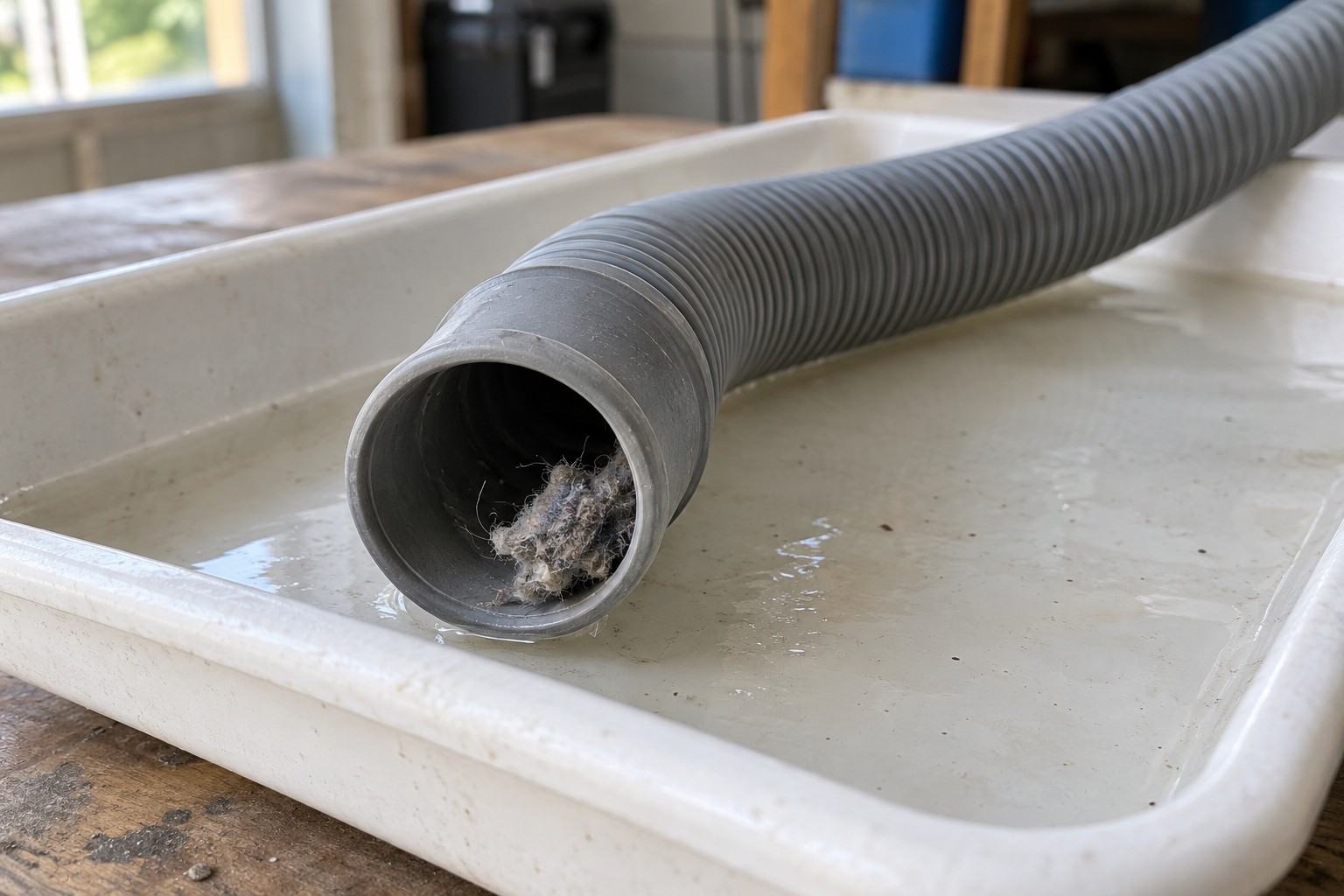
Do not detach a hose or open a pump filter on a full washer expecting only a few drops. Water can escape rapidly. Some machines offer an owner-accessible filter and a prescribed draining procedure; others require service access. Follow the manual rather than assuming every washer has the same arrangement.
Excess detergent can create foam that escapes from the washer or drain area. GE notes that oversudsing is especially common with softened water. Use the detergent type your washer requires, including HE detergent for an HE machine, and measure the dose for the product concentration, load and water conditions. Mention a recent detergent change or new water softener when arranging service. Water rising steadily inside the standpipe still deserves a drain check, even if it contains foam. Reducing detergent cannot clear a blocked pipe, and running extra rinses into a drain that already overflowed can cause another spill.
When the problem extends beyond the laundry drain
If only the washer standpipe overflows, the first checks usually concern that connection and its branch. A laundry sink filling with the washer’s wastewater suggests a restriction after the two drains join. Other fixtures can help establish the scope, but use symptoms that have already happened rather than running water to provoke another backup.
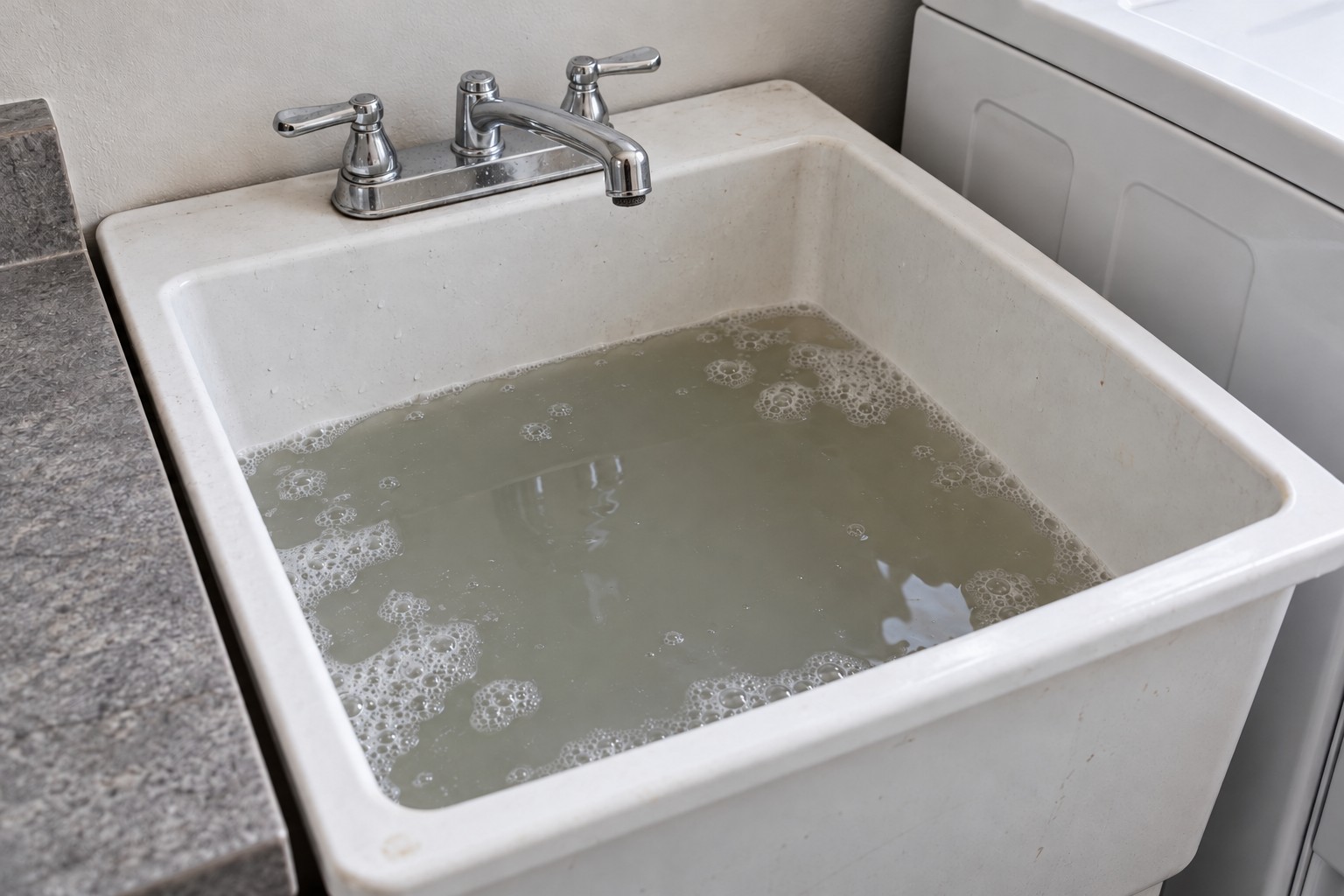
Toilets gurgling in another room, water rising in a low shower, or several fixtures draining slowly can indicate a larger shared obstruction. Read our guide to multiple drains backing up at once for those patterns. Stop adding water and report all affected fixtures when booking service.
The plumbing vent also matters because the drainage system needs air to move properly. Gurgling alone does not prove that a vent is blocked, and overflow alone does not identify a vent fault. A plumber can assess the trap and vent arrangement along with pipe condition and drain capacity. Do not climb onto the roof or dismantle hidden piping to investigate.
Clearing the drain and finding out why it backed up
For confirmed standpipe overflow, a plumber checks the accessible connection, chooses suitable access and clears any obstruction with equipment suited to the pipe. If the trouble returns, further inspection may reveal buildup left behind, a damaged section or an arrangement that needs correction. For an isolated laundry clog, the plumber may be able to identify and correct the fault without a sewer camera.
After repair, the drain needs a controlled test with someone watching the connection. That test belongs after the problem has been addressed and the area made safe. A few cups of water disappearing into the pipe do not establish that it can accept a washer’s discharge.
If the house drain accepts water normally but the washer retains water, leaks internally or displays a persistent pump-related fault, an appliance technician may be the right next call. Describe where water escaped so the service provider can plan for plumbing work or appliance diagnosis.
Cost depends on access, the location and severity of the blockage, pipe condition and whether the job needs a hose correction, drain clearing or changes to piping. Ask about the diagnostic or visit charge, what clearing includes and what would justify additional inspection. If the clog keeps returning, ask what the inspection found and whether clearing alone will address it.
Questions homeowners ask after a washer drain overflow
Can I keep washing smaller loads?
Keep the washer out of service until the fault is corrected. A smaller load may still trigger enough discharge to overflow a restricted drain. Do not use repeated short cycles or drain-and-spin tests as a workaround.
Should I pour drain cleaner into the standpipe?
Do not pour chemical drain opener into a backed-up laundry drain or combine cleaning products. Chemicals can remain in the trapped water and expose the person clearing the pipe. If you already used a product, tell the plumber its name and when you added it.
Will a lint catcher prevent another clog?
Do not attach a stocking or improvised filter to a hose inside a standpipe; it can obstruct discharge. Use only accessories compatible with the washer and drain arrangement. Follow the owner’s manual for any accessible filter. Measure detergent, and have a drain that is getting slower checked before it overflows again.
What should I tell the plumber?
Report the washer model, where water first appeared, the cycle stage and any other affected drains. Mention a recent washer installation, past clearing, detergent changes and any chemicals used. Photos of the accessible connection help; recreating the overflow does not.
Get the laundry drain checked in Vista
Smart Plumbing USA provides drain cleaning in Vista and serves North County homeowners. Call (858) 727-5522 and describe whether water comes from the standpipe, a hose or the washer itself. Mention active flooding or other backed-up fixtures so the problem can be discussed when arranging service.