
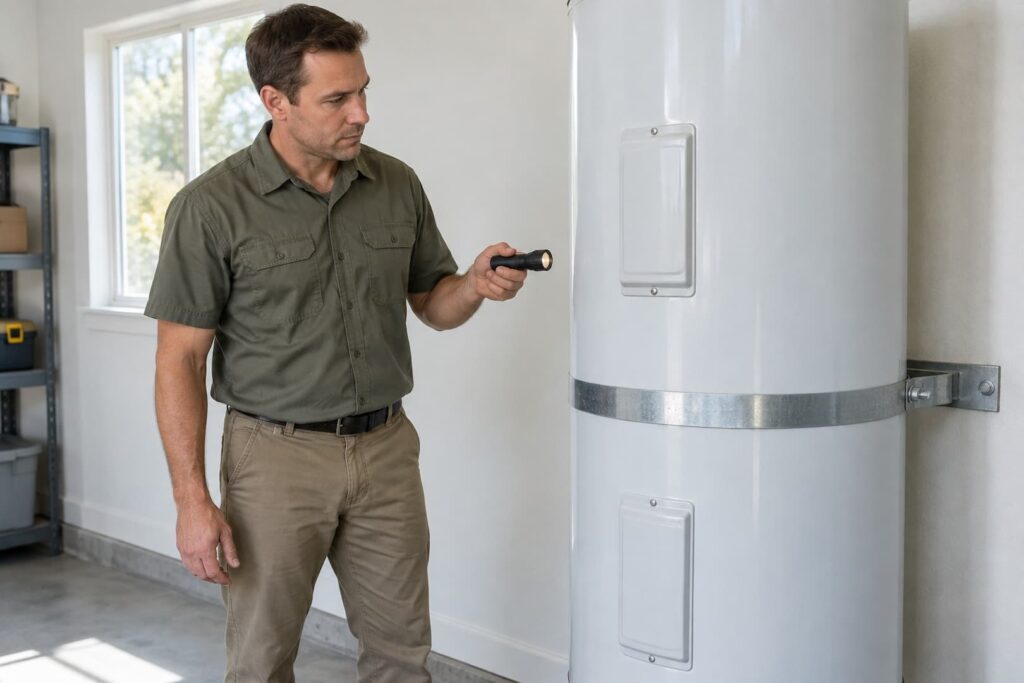
A water heater that pops or rumbles while heating often has mineral deposits inside the tank. A bang when a faucet shuts off points toward water hammer in the pipes. Light clicking or a steady operating hum may be normal for the model. Notice when the noise happens and whether it comes with a leak, an odor, or a change in hot water.
You can learn a lot without opening the heater. A few observations will help you describe the problem and decide how urgently it needs attention.
When noise needs immediate attention
If you smell gas or suspect escaping gas, leave immediately. A new hiss near a gas connection deserves the same response even without an odor. Do not use switches, operate electrical devices, relight the pilot, or stay to record the noise. Call 911 from a safe location outside. SDG&E’s gas leak guidance explains why smell alone cannot rule out a leak.
Steam, uncontrolled hot-water discharge, smoke, sparking, or water reaching electrical parts also calls for urgent help. Keep clear of the heater and any discharge pipe. Shut down the unit only if the correct control is safely accessible and you can follow its instructions without approaching the hazard. Do not attempt a flush or keep resetting a breaker under these conditions.
An occasional pop with otherwise normal operation usually calls for a maintenance check if it persists or grows louder. Noise alone does not establish that a tank is about to fail.
Match the sound to when it happens
Use this table to choose what to report. It identifies possibilities, not a diagnosis from sound alone.
| Sound and timing | Possible explanation | Useful next step |
|---|---|---|
| Popping or rumbling as a storage tank heats | Mineral deposits or sediment | Discuss tank maintenance, especially if the sound is increasing. |
| Sizzling during a gas heater’s warm-up | Condensation or water reaching a hot surface | Report whether visible moisture persists after heating. |
| Sharp bang when a fixture closes | Water hammer | Identify the fixture and request a plumbing pressure check. |
| Creaking after hot-water use, with relief-pipe dripping | Possible thermal expansion or another pressure problem | Have pressure and expansion control checked promptly. |
| Light clicks near the upper connections during water use | Heat-trap movement | Note changes from the heater’s usual sound. |
| Hum from an electric heater; fan sound from a heat pump | Operating components | Compare with normal operation; report new vibration or grinding. |
| Persistent whistle or screech | Restricted flow, valve trouble, or pressure irregularity | Arrange inspection instead of adjusting unknown valves. |
Popping and rumbling while the tank heats
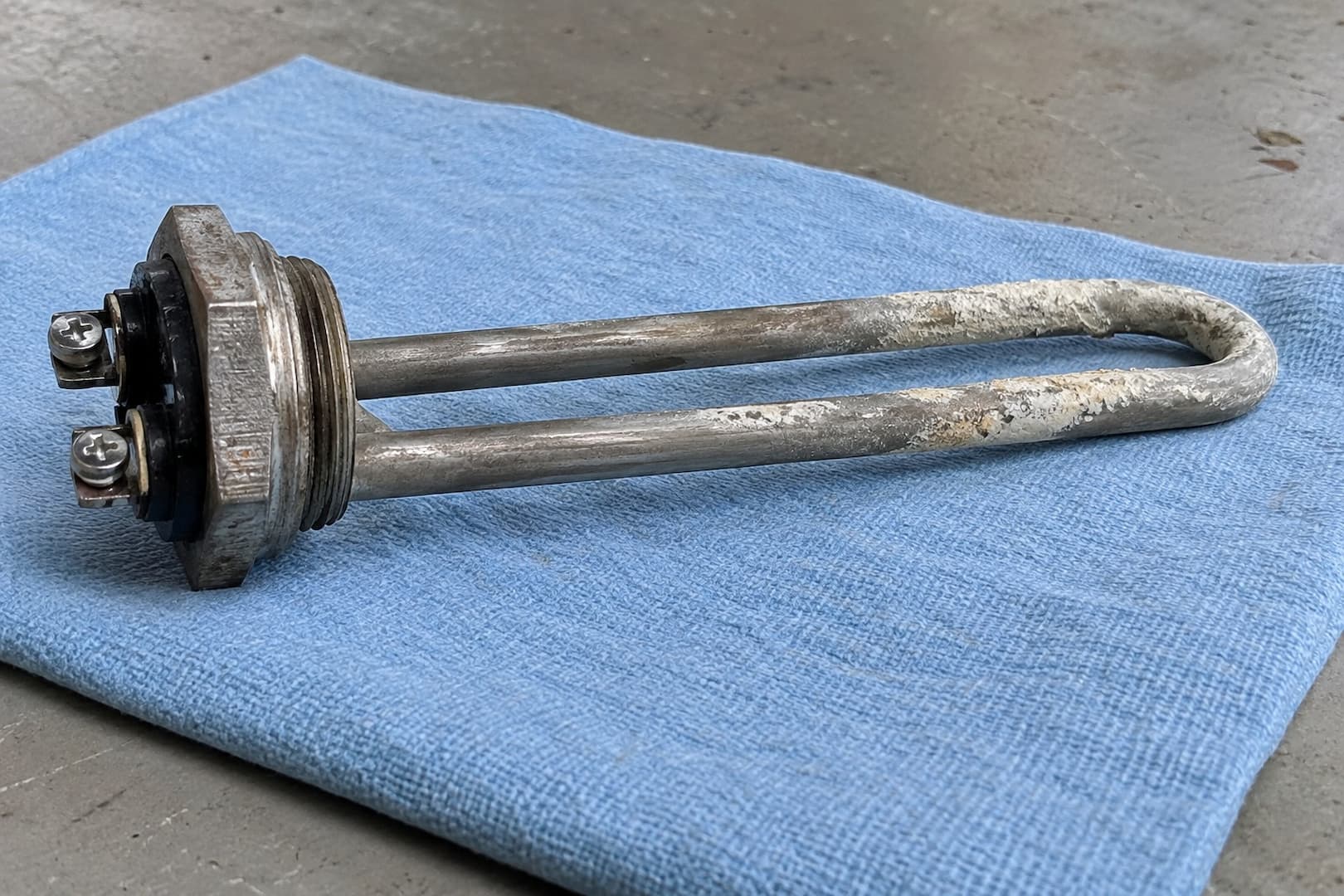
Minerals can collect on the bottom of a storage tank or around electric heating elements. As the heater runs, water trapped near those deposits can produce small steam bubbles and audible pops. A.O. Smith describes this mechanism in its mineral buildup bulletin. Hardness and heavy hot-water use can contribute to the buildup.
You may notice the noise after a shower, as the tank heats incoming cold water. Tell the technician about that timing. It cannot reveal the thickness of the deposits or the condition of the tank. A recording of several seconds, taken from a safe distance, can help distinguish repeated bubbling from a single pipe knock.
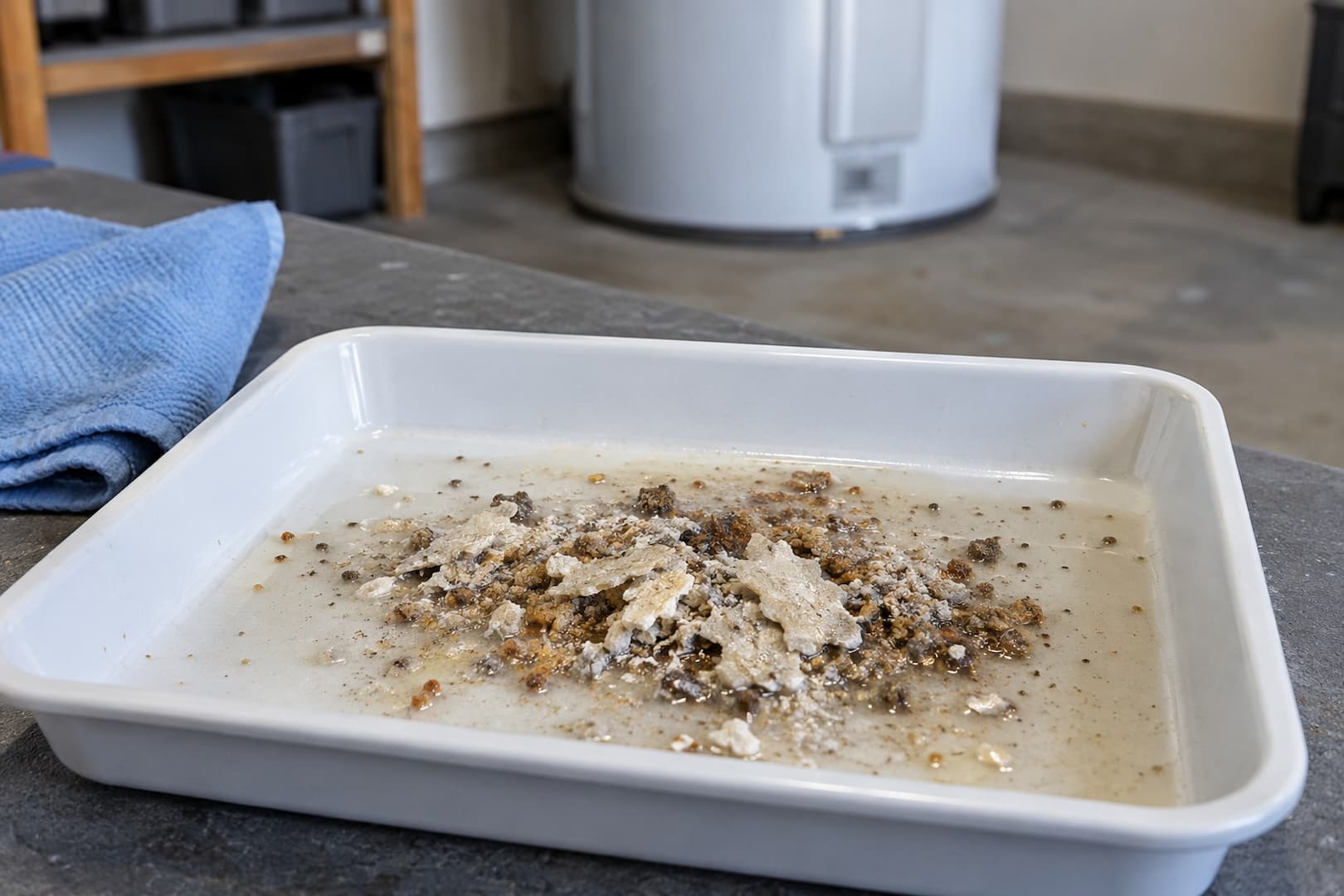
If noise continues after maintenance, ask what came out of the tank and what the inspection showed. Flushing can move loose material while leaving hardened deposits behind. Whether the drain flowed freely also matters when deciding if another treatment would help.
Hissing can come from condensation, scale, or a leak
On a gas storage heater, combustion produces water vapor. When hot exhaust meets a cold surface, some vapor condenses. Droplets reaching a hot surface may sizzle. This can happen during warm-up, particularly after substantial hot-water use. A.O. Smith’s condensation guidance notes that condensation can be mistaken for a tank leak.
Persistent wetness needs a closer look. Water may run down from a connection, escape at a valve, or come from the tank. Note where the moisture first appears, without touching hot pipes or reaching under the heater. Do not assume a puddle is harmless condensation because it appeared during heating. Our guide to a water heater leaking from the bottom explains how the leak source affects the repair decision.
A hiss near gas piping is not something to investigate by ear at close range. Follow the gas-leak precautions above when you suspect gas. On an electric unit, the absence of a burner changes the possible causes, so tell the person scheduling service which type you have.
Banging pipes and pressure changes
A bang exactly when water stops
Water hammer occurs when moving water stops abruptly and sends a pressure wave through the piping. A washing machine valve, dishwasher valve, or quickly closed faucet can trigger it. The sound may seem to come from the heater because connected pipes carry the vibration. A.O. Smith’s water hammer bulletin describes this sudden-stop pattern.
A plumber can check the triggering fixture and the pipe supports, measure supply pressure, and determine whether a hammer arrestor is needed near the source. Replacing the water heater without tracing the bang can leave the original problem in place. Avoid repeatedly snapping a valve shut to reproduce a violent knock.
Pressure that rises during a heating cycle
Thermal expansion follows a different pattern. Water expands as it heats. In a closed plumbing system, that extra volume needs a suitable place to go. Creaking or relief-valve dripping after hot-water use, while all fixtures are closed, can justify checking the expansion tank and household pressure. These are among the symptoms in A.O. Smith’s thermal expansion bulletin.
Never cap, plug, or obstruct the temperature-and-pressure relief valve or its discharge pipe. The valve is a safety device, not a routine way to manage expansion. A dripping valve also has other possible causes. Pressure measurements are more useful than guessing from the noise, and a hammer arrestor does not replace properly designed expansion control.
Clicks, hums, and sounds specific to your heater
Clicking near the top of the tank
Some heaters have heat traps at their water connections to reduce unwanted heat loss. Movement caused by changing flow or pressure can make them click or tap. A.O. Smith’s heat-trap bulletin also explains how that sound can travel through pipes and framing. Do not remove components simply to quiet them. A technician can confirm the source and check the model’s approved options.
Electric elements that hum or hiss
A light operating hum can be normal in an electric heater. Scale around an immersed element can also cause a singing or hissing sound, as Bradford White explains in its internal-noise guidance. Cleaning or replacing an element requires safe electrical isolation and the correct service procedure. Leave the access panels closed when checking the sound yourself.
A persistent whistle deserves inspection, especially if flow has changed. Rheem identifies restricted flow and pressure irregularities among the possibilities in its water-heater noise guide. Do not turn unfamiliar valves or adjust the thermostat to experiment with the sound.
Heat pumps and tankless units
A heat-pump water heater has a fan and compressor, so it has an operating sound that a conventional electric tank does not. A.O. Smith describes those components in its heat-pump overview. Compare the current sound with the unit’s usual cycle. New grinding, scraping, strong vibration, or an error message is a reason for service, not proof that ordinary fan noise is a fault. Keep air openings clear and follow the manual for accessible filter care.
Tankless heaters need a different diagnosis because they heat water as it flows rather than storing a full tank. Record any displayed code and whether the noise starts when a hot tap opens. Our tankless water heater troubleshooting guide covers problems involving temperature swings, error codes, and loss of hot water.
What you can check without opening the heater
- Write down the fuel type and model number from an accessible label.
- Note whether the noise begins during heating, with a particular fixture, or after all taps close.
- Look from a safe distance for moisture in the pan, around visible fittings, or near the discharge-pipe outlet.
- Record changes in hot-water supply, displayed errors, and when maintenance was last performed.
Leave burner covers, electrical panels, and vent connections alone. You do not need to demonstrate the fault repeatedly. A description such as “three pops after each shower, no visible water, hot water still normal” gives the technician specific clues to check.
Will flushing stop the noise?
It may help when loose sediment is the cause. It will not correct water hammer, a failing valve, or a mechanical problem in a fan. Bradford White notes that a flush may leave lime formations behind and that the sound can return. The result depends on the condition of this particular heater.
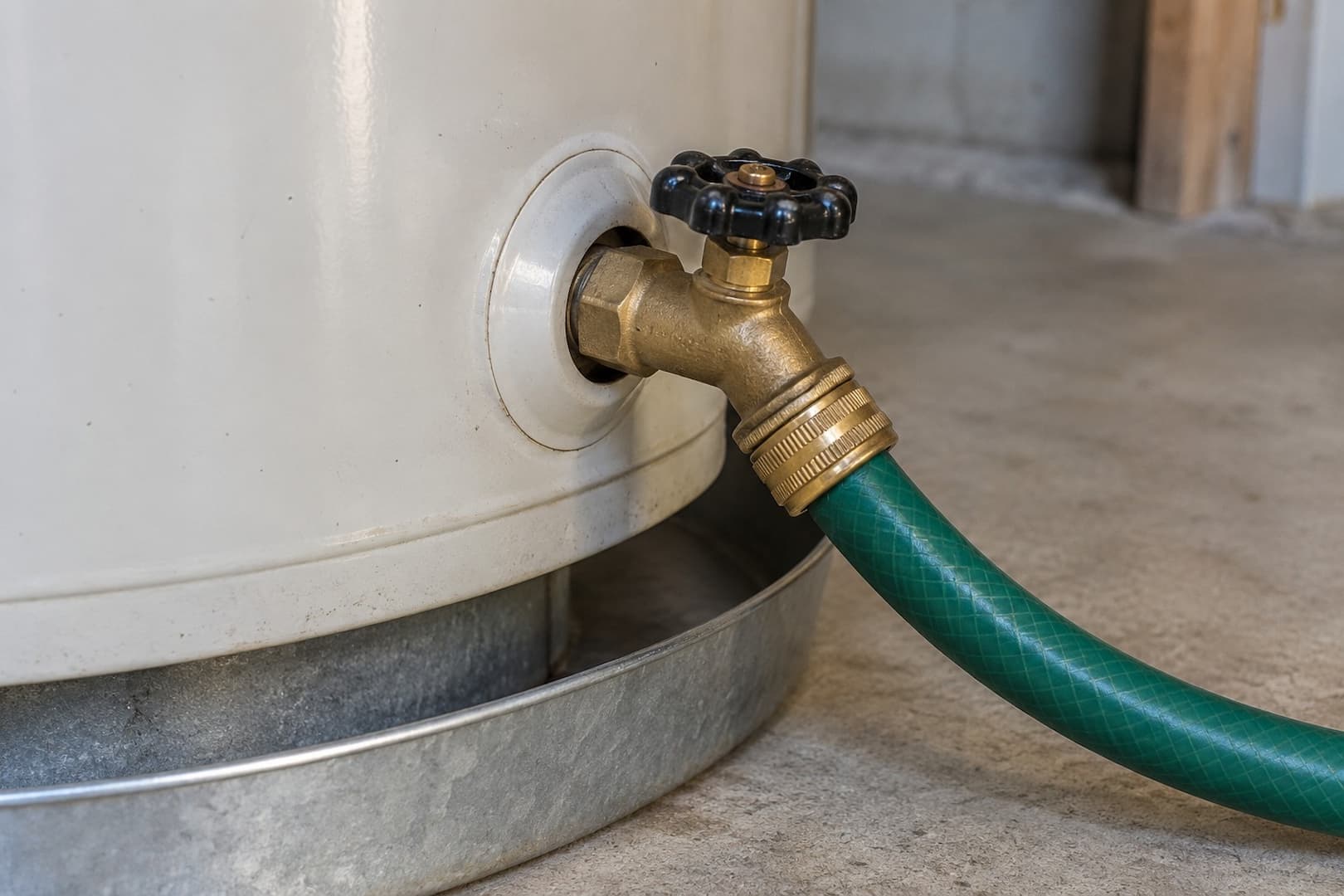
Flushing can release scalding water. Follow your model’s procedure for shutting down, cooling, draining, and restarting the heater. Its maintenance schedule is the starting point; water conditions and use may call for a different interval. Have a neglected or corroded drain valve inspected before opening it. Do not force a blocked drain or improvise a chemical treatment.
For electric tanks, power must remain off during draining and until the tank has been completely refilled and air purged as the manual directs. Energizing an empty or partly empty tank can damage its elements. A.O. Smith’s electric water heater use and care guide emphasizes this requirement. Gas models have their own shutdown and restart instructions. If those instructions are unclear, have a qualified professional handle the maintenance.
Getting a noisy water heater checked in Vista
Ask the plumber to identify the source of the noise before choosing a repair. The explanation should connect the sound to a finding, such as deposits or a measured pressure change. If replacement is recommended, ask what condition makes repair impractical. Loudness alone cannot answer that question.
Smart Plumbing USA provides water heater repair in Vista and serves North County homeowners. Call (858) 727-5522 with the heater type, the sound you hear, and when it happens. Mention any visible moisture or change in hot-water performance when arranging the visit.