
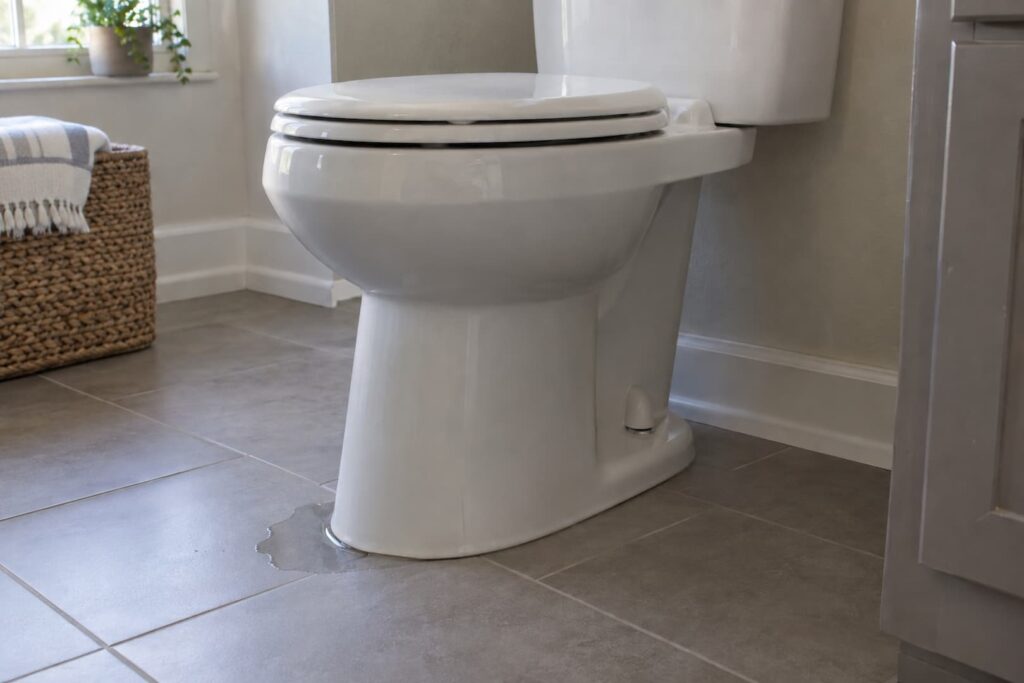
Water around a toilet does not automatically mean the wax ring has failed. If water comes out from under the bowl during a flush and the tank and supply connections stay dry, the drain seal or flange needs attention. If the puddle grows between flushes, look higher up: a tank gasket, supply connection or sweating tank can send water down to the same spot.
Stop using the toilet until you know where the water starts. A small puddle can hide a larger leak beneath the flooring. The timing of the leak, the first wet surface and whether the toilet moves are more useful clues than the puddle’s shape.
What to do as soon as you find water
Do not keep flushing to see whether the leak happens again. Close the toilet’s water shutoff if you can reach and operate it safely. A conventional round handle usually turns clockwise; a quarter-turn valve moves only through its normal short travel. Do not force a stuck handle or turn it with pliers.
If the valve will not close or water keeps flowing from the supply, use the home’s main shutoff if you can locate and operate it safely.
Closing the supply stops new water entering the tank. It does not empty the tank, seal a crack or prevent the water already in the tank from escaping. Leave the toilet out of service and tell everyone in the household.
Keep children and pets away from the wet area. Treat water that may have come through the toilet drain as contaminated, even if it looks clear. Wear waterproof gloves for minor cleanup and wash your hands afterward.
Sewage-soaked flooring or water inside a wall or ceiling calls for professional assessment and cleanup. EPA guidance on contaminated water explains why cleanup may need specialist help.
Call for urgent plumbing help if water is spreading, sewage is backing up, or the ceiling below is wet or sagging. Stay clear of wet electrical equipment. In an apartment or rental, notify the property manager promptly so they can arrange access and any shared shutoff.
Find where the water starts
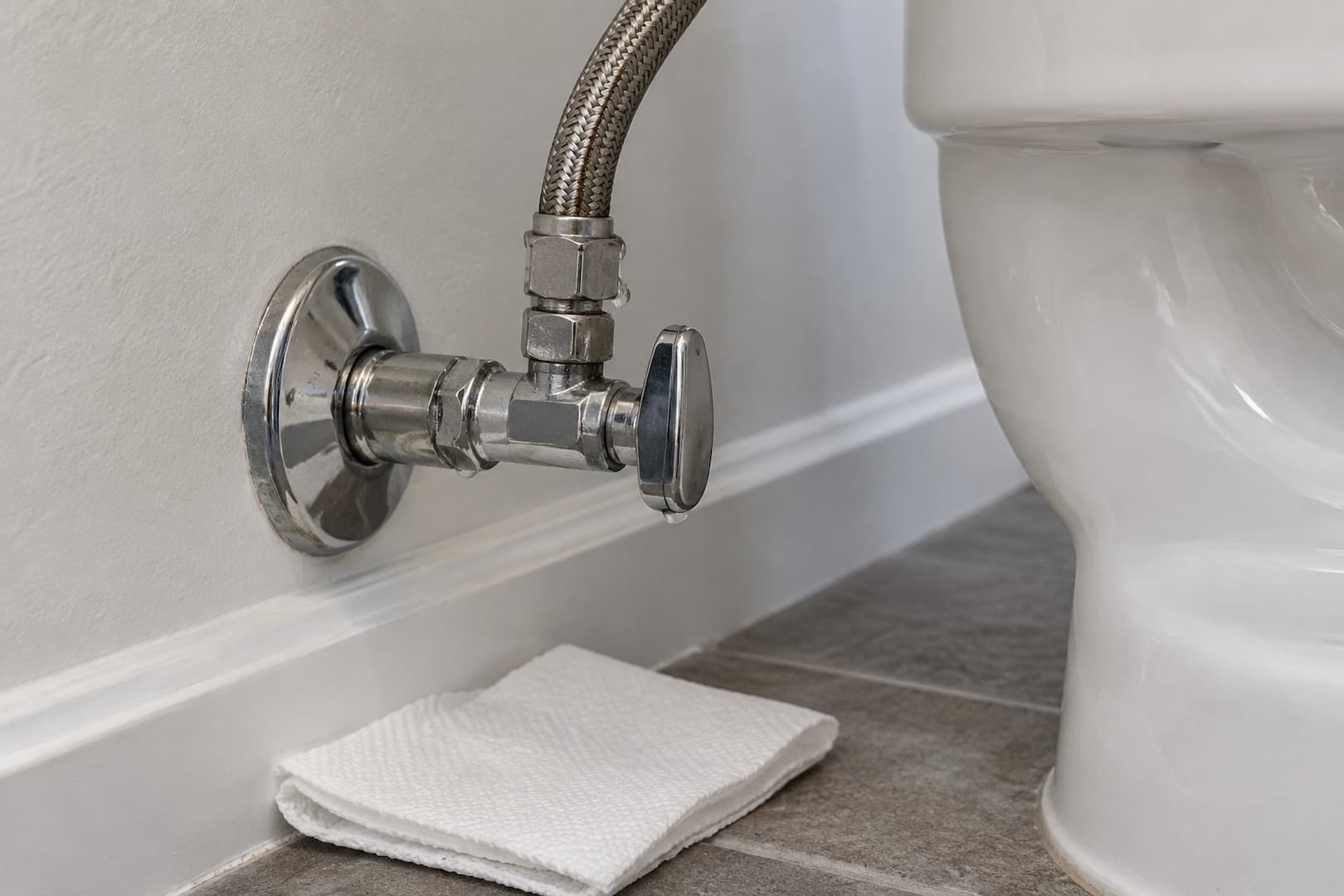
Once the immediate leak is contained, dry the accessible outside surfaces. With a flashlight and dry paper towels, check behind the bowl, under the tank and around both supply-hose connections. A fresh wet mark on a towel can reveal a slow drip that is difficult to see against glossy porcelain. Leave the fittings connected during this check.
Work from the highest wet point downward. Water from the tank can follow the back of the toilet and emerge at the front edge of its base. Note what happened during the last flush; there is no need to repeat a known leak just to confirm the pattern.
| What you notice | What it suggests | What needs checking |
|---|---|---|
| Water emerges from beneath the bowl during a flush; surfaces above stay dry | A leaking drain seal or damaged flange | Seal contact, flange condition and bowl support |
| A drip begins under the tank or at the tank-to-bowl joint | A tank gasket, bolt seal or fill-valve connection leak | The exact wet connection and the toilet’s matching replacement parts |
| The hose or shutoff is wet even without a flush | A supply-side leak | Hose, connector nuts, valve stem and valve body |
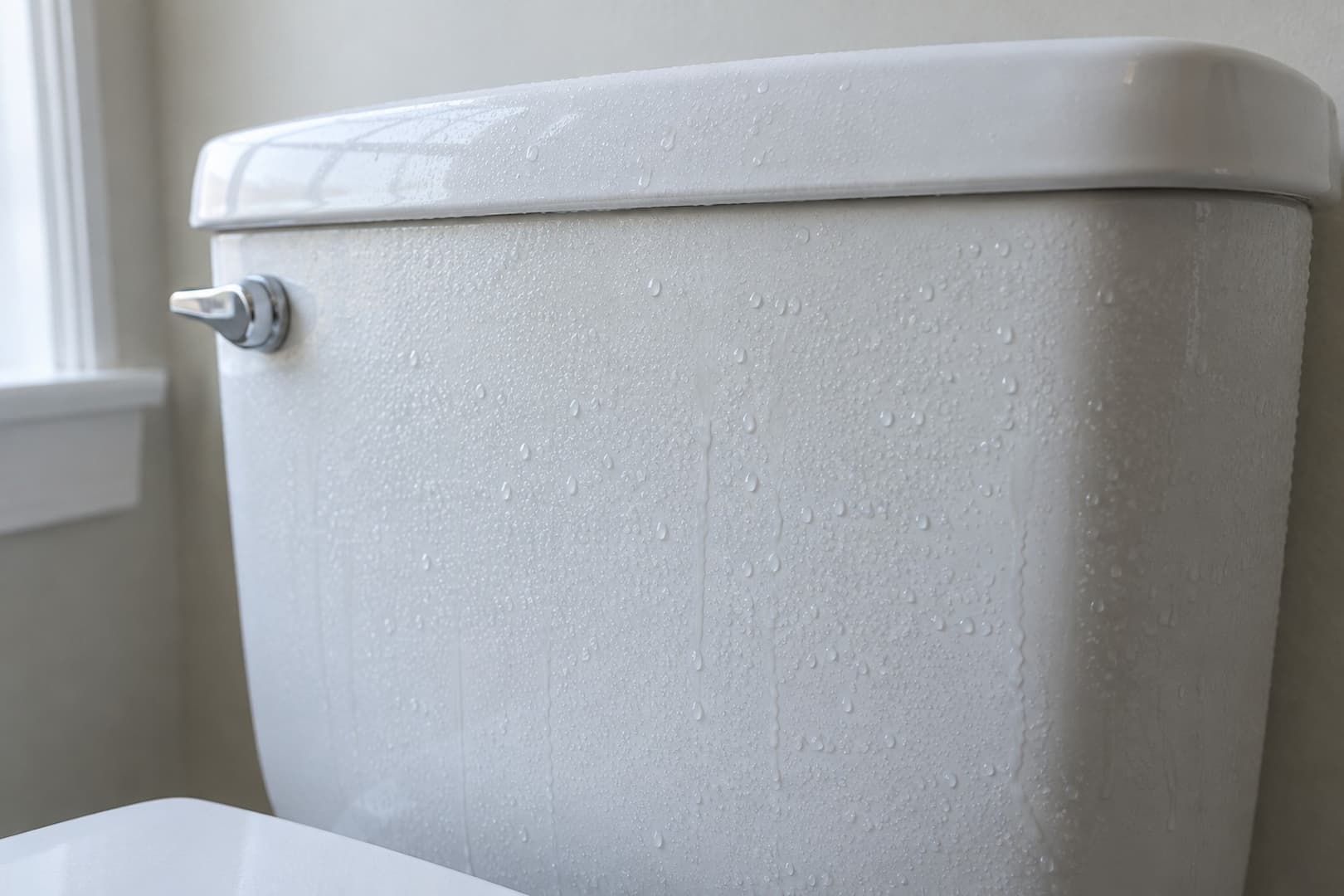
| Fine droplets cover much of the tank exterior | Condensation may be running down the porcelain | Bathroom humidity and whether the toilet keeps refilling |
| Water seeps from a visible line in the porcelain | A possible cracked tank or bowl | Whether the damaged component requires replacement |
These clues narrow the search; they do not prove the cause. More than one fault can exist, particularly after a toilet has moved or a bathroom floor has been replaced.
When the toilet leaks at the base only when flushed
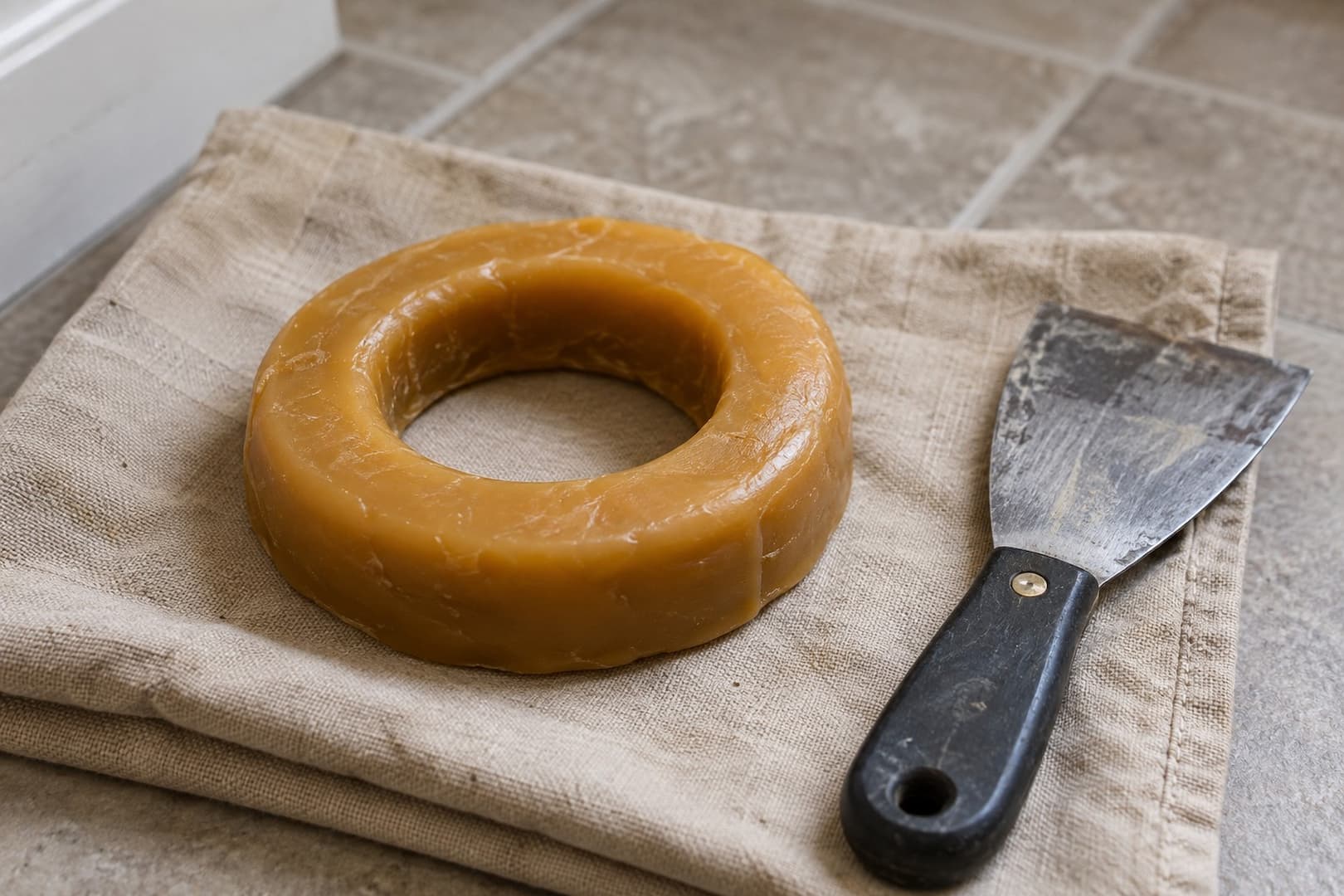
A floor-mounted toilet drains through an outlet beneath the bowl. A wax ring or compatible wax-free seal closes the gap between that outlet and the closet flange, the fitting that connects the toilet to the drain and holds its mounting bolts. When the seal loses contact, flushing can push water into the space under the toilet.
Water may escape at just one edge, or it may disappear into a gap around the drain. Below an upstairs bathroom, a ceiling stain can be the first sign. A sewer odor may accompany a failed seal, but the absence of an odor does not rule one out.
A damaged seal may be the result of movement
A toilet should stay steady when someone sits on it. If yours already rocks, stop using it; do not rock it deliberately as a test. Uneven flooring, loose anchoring, a broken flange or a weakened subfloor can allow movement that disrupts the seal.
Resist the urge to keep tightening the two floor bolts. The flange or floor may need repair, and excessive force can crack the bowl. A plumber checks what supports the toilet before deciding whether it needs suitable shims, flange work or repairs to the flooring beneath it.
New flooring can leave the flange too low
Adding tile or another layer of flooring changes the distance between the toilet outlet and the existing flange. A ring that suited the old floor may no longer make proper contact. Too much height at the flange can also prevent the toilet from resting correctly on the floor.
The repair depends on the actual height and condition of the connection. A suitable flange extension or a seal rated for that arrangement may be appropriate. Do not assume that stacking wax rings will solve the problem. Oatey’s flange installation guidance explains why finished-floor height and firm anchoring matter.
Leaks above the base that look like a failed wax ring
On a two-piece toilet, the tank bolts pass through sealed openings, and a larger gasket connects the tank outlet to the bowl. Worn rubber or an incorrectly seated gasket can let water drip behind the bowl. A tank-to-bowl leak may appear mainly during flushing, so timing alone cannot distinguish it from a drain-seal leak.
Check beneath the fill valve too, where the supply hose meets the tank. This connection is separate from the tank bolts. Tank gaskets vary by model, and tightening every visible nut can damage porcelain or plastic fittings. Fluidmaster’s repair-kit instructions show separate checks for bolt leaks and tank-to-bowl gasket leaks.
A wet supply hose or shutoff valve points to a different repair. Water can follow the hose before it falls, so check both ends. Corrosion, a damaged connector or a leaking valve needs attention before the toilet returns to use. Keep the supply isolated rather than leaving a towel to collect a continuing drip.
Could the tank simply be sweating?
Warm, humid bathroom air can leave condensation on a tank chilled by incoming water. Unlike a single leaking connection, condensation often appears as scattered beads over a wider area. After drying the tank, look for droplets forming across the surface, especially after showers or frequent flushing.
Use the bathroom exhaust fan and address excess humidity. If the toilet keeps running or refilling between uses, have that problem repaired too. Persistent sweating may call for a compatible insulated tank or another model-specific solution. Insulation can reduce exterior condensation, but it cannot repair a leaking gasket.
What a lasting repair involves
If the leak comes from the drain connection, the toilet usually needs to come off. The repair should include inspection of the flange, mounting points, floor support and porcelain outlet. Replacing a ring while ignoring a loose flange can bring the same puddle back.
A compressed wax ring is single-use. Once the toilet is lifted, it needs a fresh ring before resetting. Wax-free products have their own fit and spacer requirements; follow the particular manufacturer’s instructions. Fluidmaster’s wax-free seal instructions, for example, change the arrangement according to flange depth.
After securing the bowl and reconnecting the supply, the plumber checks for leaks while the tank fills and during flushing. Fastening and finishing the base should follow the toilet manufacturer’s instructions. Applying silicone around a leaking toilet does not restore the hidden drain seal. It may only hide water that is still escaping underneath.
A leaking crack in the bowl generally means replacing the bowl or toilet. A cracked tank on a two-piece model may have an approved replacement, depending on availability and compatibility. Do not rely on glue or caulk to keep damaged porcelain in service. If a suspected crack is wet, stop using the fixture and have it assessed.
The cost depends on what the inspection uncovers: a supply connector, a straightforward toilet reset, a damaged flange, or a floor that no longer supports the fixture. Access, the toilet design and any water damage also affect the scope. Ask whether the quote includes removal and resetting, necessary parts, flange repairs and testing.
An intact toilet with serviceable parts does not automatically need replacement because it leaked.
Questions about water around a toilet
Why is it still leaking after a new wax ring?
The seal may not suit the flange height, the bowl may still move, or the flange may be damaged. KOHLER’s installation guidance also warns that lifting or rocking a toilet after placement can break the wax seal. Recheck the source before another reset: a tank or supply leak will continue even after a correctly installed new ring.
Can a clogged toilet make water come out at the base?
A blockage can back water up and expose a weak drain connection. If the bowl rises unusually high, stop flushing. If multiple drains back up at once, stop other water use too; the problem may extend beyond the toilet. Clearing a clog does not repair a damaged seal. Both problems need checking when water has escaped beneath the bowl.
Does clear water mean the leak is safe to ignore?
No. Water from the bowl can look clear, and a small supply leak can still damage the floor. Identify the source, keep the fixture out of use while it is leaking and arrange repair. The color of the water cannot tell you whether the area under the toilet is clean or dry.
Toilet leak repair in Vista and North County
Smart Plumbing USA provides toilet repair and installation in Vista and serves nearby North County communities. Call (858) 727-5522 and describe where you first see water, whether it appears during flushing and any recent toilet or flooring work. Mention a rocking bowl, a shutoff that will not close, or damage below the bathroom when arranging the visit.